

Last Updated on July 20, 2026
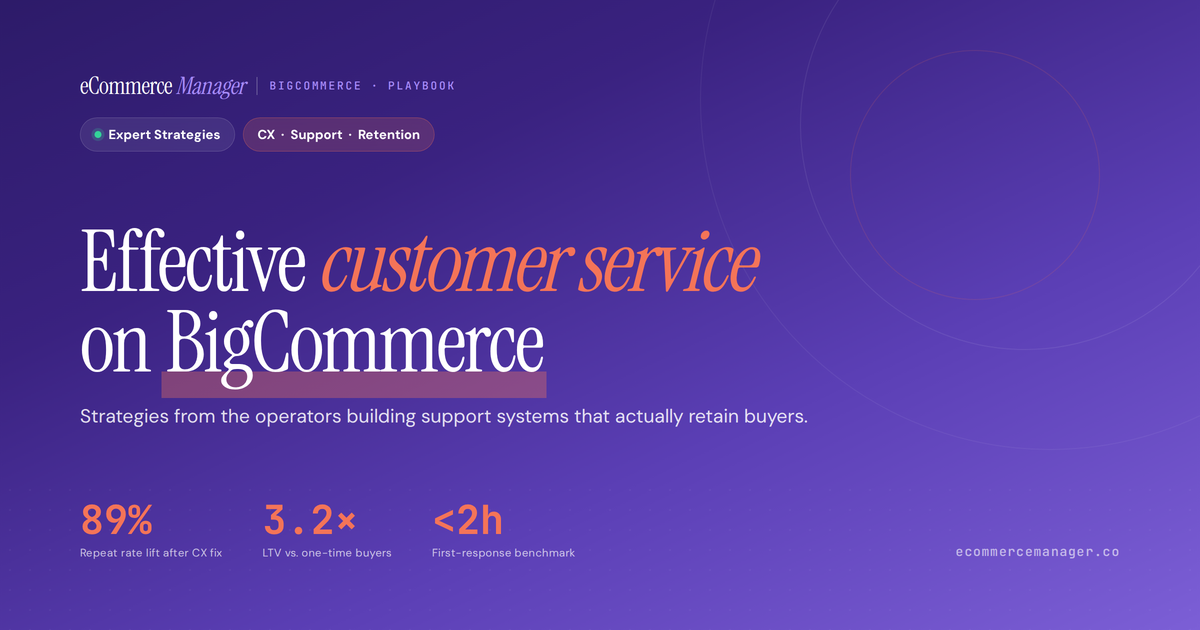
Effective Customer Service on BigCommerce: Strategies from the Experts
Running a successful BigCommerce store requires more than just great products—it demands exceptional customer service that keeps shoppers coming back. This article brings together proven strategies from industry experts who have mastered the art of supporting online customers. Learn how to streamline your service operations, balance automation with personal touch, and organize support workflows for faster resolution times.
- Tag Tickets To Accelerate Answers
- Prioritize Value Via Hybrid Automation
- Unify Service Around Purchase Context
- Automate Shipment Updates Across Channels
- Set Response SLAs And Uphold Standards
- Build A Clear Searchable Help Center
- Streamline Returns Through BigCommerce RMA
- Deploy Proactive Chat On Key Pages
The State of eCommerce in 2026
Tag Tickets To Accelerate Answers
My team tags every incoming customer service ticket with a product category and an intent label before anyone responds. That tagging is the single thing that cut our average response time close to half on our BigCommerce store. When a ticket comes in about sizing on a foot care product, for instance, the tag routes it to whichever rep already has the answer loaded, and it also feeds a shared document we update weekly with the most common questions per SKU.
Beyond faster replies, that tagging data showed us which product pages were doing a poor job of answering questions before checkout. We rewrote maybe a dozen product descriptions and added measurement guides based purely on what customers kept asking about. Ticket volume on those SKUs dropped within a few weeks.
The Complete 2025 E-commerce Manager Career Guide: From Entry-Level to Executive
I run customer service as a feedback loop that edits the storefront in near-real time. The same data that helps my reps respond faster also tells my content team exactly where the site is falling short, so we can fix a product page before the next round of tickets comes in.

Prioritize Value Via Hybrid Automation
Implementing a hybrid-automation framework to manage the high volume of customer service inquiries on e-commerce platforms with a primary focus on categorizing customer interactions using their value rather than their speed is the most beneficial strategy.
Throughout my 15 years in managing BPO operations, the largest misunderstandings or mistakes made by e-commerce companies are the attempt to deflect every customer interaction from a Tier-1 customer service agent. I use AI to facilitate the processing of Tier-1 routine inquiries including order tracking, return policy questions, and shipping updates which make up the vast majority of the volume in my BPO operations, allowing human resources to spend their time engaging on issues that drive revenue and retention; i.e. nuanced product inquiries, high-value claims, or specific troubleshooting requests.
Marketing Calendar: A Complete Guide
The key to the seamless hand-off from an AI application to a customer service agent has been ensuring that if someone gets stuck in a loop with a chatbot and finally gets a human agent, the human agent should have the entire record of the chat directly available to them. Nothing destroys brand loyalty faster than having to tell a person that they have already explained to a machine, their frustration.
By using automation to filter for level of complexity rather than just volume, you will provide the opportunity for your human team to offer empathy and judgment only in those areas that they can actually salvage or elevate a brand moment. The foundation of treating support as a growth engine is to know specifically when to remove technology and apply the human element.

Unify Service Around Purchase Context
One strategy that works really well is treating customer service like part of the buying experience, not something that happens after the sale. On a BigCommerce store, I like to centralize support so customers can reach out through chat, email, or order forms, but the team still sees everything in one place. That keeps replies faster, avoids duplicate answers, and gives the customer a more consistent experience.
A tool like Gorgias or Zendesk can make a big difference because it connects order history with the support conversation. For example, instead of asking a customer for their order number, the support team can immediately see what they bought, where the order stands, and what issue they’re having. That small improvement can turn a frustrated customer into someone who feels heard, helped, and willing to buy again.

Automate Shipment Updates Across Channels
Real time order updates reduce anxiety and keep customers from opening tickets. Automated messages at each stage, such as confirmed, shipped, out for delivery, and delivered, set clear expectations. Branded tracking pages and links to the carrier give quick access without guesswork.
Proactive delay notices with a new ETA and a small apology perk can prevent churn. After delivery, a review or NPS request closes the loop and surfaces issues to fix. Set up automated, branded status updates across email and SMS today.
Set Response SLAs And Uphold Standards
Clear response SLAs set the tone for speed and care on every channel. Targets can differ by channel, such as minutes for chat and a few business hours for email, so teams can plan well. Dashboards and alerts help leaders spot backlogs before they break the promise.
Escalation paths and on call plans protect the standard during peak season and holidays. Publishing SLAs on the store builds trust and creates a fair bar for refunds or credits when missed. Define channel SLAs, staff to meet them, and start tracking today.
Build A Clear Searchable Help Center
Concise FAQs and step by step tutorials deflect common questions before they slow the queue. A searchable help center with simple language and clear headings makes answers easy to find on mobile. Rich snippets and schema can help key answers show in search, which brings shoppers straight to help.
Short videos and GIFs can explain sizing, setup, and care faster than long text. Feedback widgets and search logs reveal gaps to fix in the next update. Build a tidy, searchable help hub and keep it fresh each release.
Streamline Returns Through BigCommerce RMA
An easy returns process reduces support tickets and lifts trust on every order. The BigCommerce RMA portal lets customers request returns without emailing support, which cuts wait time and errors. Return reasons, windows, and outcomes can be set to match margins and item types, so costs stay in check.
Prepaid labels and real time inventory updates keep warehouse work simple and clear. Insights from return reasons help fix product pages and sizing guides before the next launch. Turn on the RMA portal and publish a clear, fair returns policy today.
Deploy Proactive Chat On Key Pages
Proactive chat on key pages turns quiet interest into clear action. Triggers based on dwell time, cart value, or exit intent let agents step in when help matters most. Short, friendly prompts and quick reply buttons speed answers without pressure.
Routing rules can send questions to product experts or billing staff, which shortens resolution time. Performance can be tracked with chat-to-order rate and saved carts, and it can be refined each week. Add targeted chat to high intent pages and set smart triggers now.
Related Articles
- Shopify Customer Service: Tips & Tools From The Pros
- Effective Shipping Strategies for Your BigCommerce Store
- Building Brand Loyalty on BigCommerce: 8 Proven Strategies from Top Sellers