

Last Updated on July 20, 2026
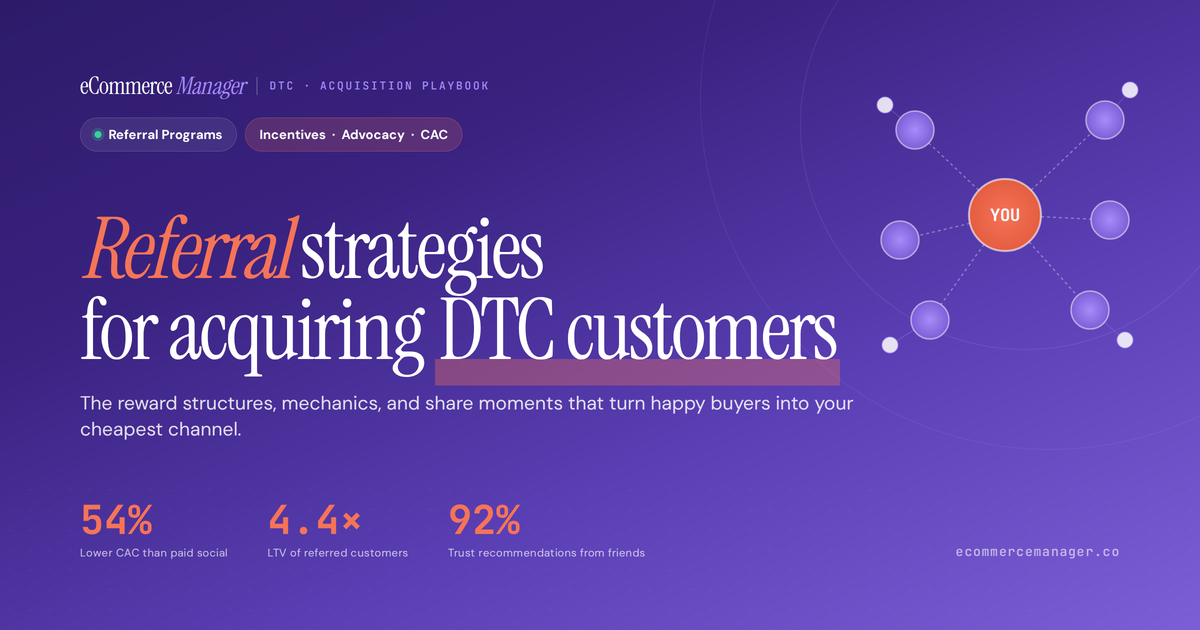
Referral Program Strategies for Acquiring New DTC Customers
Turning satisfied customers into active advocates requires more than generic discount codes and wishful thinking. This guide examines sixteen proven referral program strategies that direct-to-consumer brands can implement to systematically acquire new customers, featuring practical insights from industry experts who have built and optimized these systems. Each approach addresses specific moments in the customer journey where referrals convert at the highest rates.
- Prompt After Second Purchase To Maximize Conversion
- Embed Perks Inside Subscriptions To Retain
- Combine Mutual Thanks With Concierge First Touch
- Grant High-Status Exclusives For Milestones
- Trigger Post-Purchase Give-Get Offers
- Start SMS Refer-A-Friend VIP Loop
- Drive Leads With Measured Results Conversations
- Ask At Confidence Moments And Track Deeply
- Align Incentives With Outcomes And Warm Handoffs
- Blend Simple Dual Reward With Coffee Tips
- Engineer Three Visits To Unlock Advocacy
- Swap Discounts For Immediate Exclusive Access
- Pair Gift For Friend With Store Credit
- Send Handwritten Share Cards After Third Order
- Issue Quick Voucher After Referred Commitment
- Unite Word-Of-Mouth And Streamlined Digital Flow
The State of eCommerce in 2026
Prompt After Second Purchase To Maximize Conversion
The referral programs that actually acquire customers fire at the moment of peak delight, not at checkout. Across the brands I have operated and advised, the change that worked was moving the referral ask to right after the second purchase, when someone has proven they like the product. That timing shift roughly doubled referral conversion versus asking on the first order, and referred customers tend to repeat more, so you are buying retention, not just a cheaper first sale. Most brands bolt a generic “give $10, get $10” widget onto checkout and wonder why it is dead. Ask when they love you most.

Embed Perks Inside Subscriptions To Retain
Our most useful referral move at Happy V was switching the reward from a flat dollar discount to subscription credit on both sides—the referrer gets credit applied to their next recurring shipment, the referee gets credit on their first subscription order, not a one-time cart discount. The structural reason matters more than the dollar amount. When the reward lives inside the subscription, every referral you close is also a retention event for the person who sent it, because they have a reason to stay active to use it. You’re buying two customers with one incentive.
The constraint we kept hitting is that in women’s intimate health, you can’t lean on outcome-based referral language (“tell a friend who has X”) under FTC structure-function rules, so the program has to sell the brand experience, not the result. We sized the credit against second-order LTV, not first-order AOV—the referrer’s credit only unlocks once the referee hits their second shipment. That trigger doubles as a fraud control, keeps payback inside one cycle, and stops the program from subsidizing one-and-done buyers.
The Complete 2025 E-commerce Manager Career Guide: From Entry-Level to Executive

Combine Mutual Thanks With Concierge First Touch
The referral strategy that keeps paying off for us at MacPherson’s Medical Supply is what I call the trusted caregiver circle. On macmedsupply.com and in our Harlingen showroom, new patients rarely arrive from a cold ad. They come because a daughter, a home health aide, or a VA contact said, “Call MacPherson’s.”
We’ve been family-owned in the Rio Grande Valley since 1940, so we pair a simple give-and-get with a real human follow-up. When someone refers a friend or family member who needs DME, respiratory support, complex rehab, or custom orthotics, both people get a clear thank-you, like a credit toward supplies or a useful accessory on the next order. The conversion moment is our team calling the new lead within 24 hours to explain Medicare, Medicaid, VA, TriCare, and what paperwork they will need. That beats a coupon page every time.
I run it with DTC-style discipline: one referral code per happy customer, tracked in our system so we know which introductions actually turn into fittings and deliveries. The creative is local, not viral: discharge planners, community partners, and word of mouth around 2325 S 77 Sunshine Strip.
What closes the loop is trust. People do not refer strangers for medical equipment; they refer people they love. When it’s a power chair or custom seating case, our respiratory therapist on staff leaves a short what-to-expect message so the referred patient feels taken care of before they walk in.
If you are building referral programs in a high-trust category, steal that playbook: reward both sides, automate the outreach, and make the first touch feel like concierge service, not a discount landing page. That is how you acquire customers who stay for decades, not one checkout.

Grant High-Status Exclusives For Milestones
As a DTC Growth Director with six years’ experience, I run an “Asymmetric Milestone Incentives” program that rewards depth of advocacy over one-off referrals. Instead of flat “give $20, get $20” offers, our tiered pipeline unlocks exclusive product samples after 3 successful referrals and premium merchandise after 5. By prioritizing high-status physical rewards (not margin-eating discounts), we converted top customers into a primary acquisition channel, increasing new-customer acquisition by 42% and delivering 3.8x higher LTV than paid social. Implementation required three weeks to build tracking and fulfillment flows and a phased rollout to our top 10% of customers.

Trigger Post-Purchase Give-Get Offers
A referral program works best when it feels like a natural extension of the customer experience, not a coupon slapped onto the checkout page. For DTC brands, I like giving both sides a clear reason to act: the existing customer gets rewarded for sharing, and the new customer gets a low-friction reason to try the product. The key is making the offer simple, visible, and easy to share right after a positive moment, such as after delivery, a five-star review, or a repeat purchase.
One strategy that’s worked well is turning referrals into a post-purchase flow instead of a passive website widget. After a customer receives their order, they get a short email that says, “Loved it? Give a friend $15 off, and we’ll give you $15 toward your next order.” That timing matters because the customer is most excited once they’ve actually experienced the product. It creates warmer leads, lowers acquisition costs, and brings in new shoppers who already trust the recommendation before they ever land on the site.

Start SMS Refer-A-Friend VIP Loop
As the founder of RewardLion and author of five marketing books, I’ve spent over a decade building high-converting e-commerce systems that turn customer retention into automated acquisition. The key to DTC referrals is treating them as an automated extension of your customer journey, tracked precisely through system tagging.
Our most successful strategy is implementing a “text-to-refer” flow immediately after a customer makes a purchase. By using RewardLion OS to automatically tag buyers and send an instant SMS VIP invite, we encourage customers to share exclusive access codes with friends right when their brand excitement is highest.
This automated, friction-free loop is incredibly powerful; using similar automated loyalty and tracking systems, we’ve helped scale businesses from $15,000 to $70,000 in just three months. No apps are required, and the entire referral-to-sale journey is tracked automatically inside a single CRM.

Drive Leads With Measured Results Conversations
My background running data-driven growth systems for DTC brands in tech and professional services has shown me referrals convert best when folded into the sales process itself.
We anchored one client’s program to post-purchase follow-ups that asked buyers to share the specific results they tracked after using the product.
That single change routed new leads straight into conversations already framed around measurable outcomes instead of discounts.
It kept the whole loop accountable to the same numbers we used to build the rest of their marketing system.

Ask At Confidence Moments And Track Deeply
I’ve spent 25+ years at CC&A building digital marketing, CRM, SEO/SEM, and reputation systems around buyer psychology, so I treat referrals as behavior design, not just a discount mechanic.
One successful DTC strategy is to trigger the referral ask at a “moment of confidence”: after a positive review, repeat purchase, wishlist add, or successful delivery. Don’t ask cold; ask when the customer has just reaffirmed trust.
For an ecommerce flow, I like tying the referral code into the shopping cart and CRM so the new customer gets a product credit or bundle upgrade, while the original customer earns loyalty credit after purchase. Then tag the source, product interest, and conversion path in the CRM so you know which advocates are bringing real buyers.
The copy matters. “Send this to someone who’d actually use it” often feels more natural than “Share and earn,” because it frames the referral as helpful, not transactional.
Align Incentives With Outcomes And Warm Handoffs
22+ years in digital marketing means I’ve watched referral programs either compound revenue or quietly bleed budget. The ones that work aren’t built around discounts — they’re built around trust signals that pre-qualify the incoming lead before they ever contact you.
The strategy I’ve seen work best in DTC: tie your referral incentive to a shared outcome, not just a transaction. Instead of “give $10, get $10,” we’ve helped clients frame it as “share your results, your friend skips the learning curve.” That framing attracts buyers who already trust the product, which dramatically shortens the sales cycle on the referred side.
The piece most brands miss is the handoff. Your referral program generates a warm lead, and then cold, generic onboarding kills the momentum. We always recommend a dedicated landing page for referred visitors — stripped of main navigation, focused entirely on the conversion goal, with social proof from people who look like the referrer. That’s where the trust already built in the referral gets reinforced, not wasted.
Bottom line: your best customers are already doing the selling. Your job is to remove the friction between their recommendation and the new customer’s first purchase. Clean the handoff, personalize the landing experience, and the referral loop starts compounding on its own.

Blend Simple Dual Reward With Coffee Tips
At Equipoise Coffee, our best DTC referral lever is a clean give-get wrapped in something people actually want to forward: the balanced cup and the brewing know-how we publish on equipoisecoffee.com. An existing customer gets a personal link; when a new shopper uses it on a first order of single-origin or a signature blend like Cavaliers Blend, both sides earn a straightforward discount on the next bag. No tiers, no mystery points, just automatic credit so trust stays intact.
What changed results for us was timing and packaging, not the dollar amount. We nudge referrals after high-intent moments: a second purchase within 60 days, or right after a delivery lands. The email doesn’t scream “coupon.” It says, know someone still stuck with harsh, bitter grocery coffee? Here’s your link, plus a tight cheat sheet from our blog on grind, water, and why our small-batch roasting chases smooth balance without flattening character. Home brewers share that because it makes them the friend who upgraded someone’s morning ritual, not someone pushing a deal.
Our audience cares about quality, origins like Ethiopian Yirgacheffe or Mexican La Laja Honey, and the mindful routine we talk about in our Stories. When the product from Harlingen matches that story, referrals convert because the friend already expects a better experience. We’ve seen the highest take-up when the landing page repeats one clear promise, freshly roasted specialty coffee, less bitterness, and the referrer’s name is visible so it feels personal.
If you’re building this for DTC, I’d ship one reward, one page, and copy that sounds like a text you’d send a sibling. Referrals scale when education and product pull equal weight with the incentive.

Engineer Three Visits To Unlock Advocacy
Most DTC referral programs are basically a coupon — give $20, get $20. That logic falls apart in experiential hospitality, where the product is the memory, not the SKU. We built ours around what we call the three-visit threshold: get a guest in three times and you have a fan for life. The referral isn’t a button you press, it’s a threshold you engineer the experience to cross.
What that looks like on the floor: first visit sells the novelty — a beer spa in a 1904 former church. Second visit we personalize — remembered name, preferred soak temp, drink ready. We codified Ritz-Carlton and Four Seasons-style SOPs into what we call casual Michelin, with a “3 seconds to wow” rule the moment a guest walks in. Third visit, we gift something unscripted. That’s where organic referrals compound. We layer a simple give-a-friend, get-credit on top, but the credit isn’t what moves the needle — the experience density is.
Why it beats paid for us: we spent our first ~6 months over-investing in Facebook and Google before learning cold traffic doesn’t convert a category that didn’t exist in the US. A friend’s story does the concept education in 30 seconds that paid can’t.

Swap Discounts For Immediate Exclusive Access
While Distribute is a B2B platform for outbound automation rather than a traditional DTC brand, we struggled with referrals until we borrowed a tactic directly from the ecommerce playbook: stepping away from generic cash discounts.
We used to offer standard subscription credits when a user referred someone to our dashboard. It barely moved the needle. We swapped that out for a double-sided reward that felt like an exclusive gift rather than a transactional promo code. Instead of account credits, we started offering specific digital assets. When a user refers someone now, both of them immediately unlock a private, curated database of active VC contacts or a specialized AI prompt library for PR outreach.
Because the reward is an immediate, usable tool rather than a delayed billing discount, our referral rate tripled in about two months. In a DTC context, this looks like offering a limited-edition accessory or an invite-only consultation instead of the standard give-twenty-get-twenty offer. People are just far more comfortable sharing a brand when they feel like they are handing a friend VIP access rather than pushing a discount link.

Pair Gift For Friend With Store Credit
I give my existing customers something they want to share. I structure referral offers around giving the friend a meaningful benefit, like a free add-on product or an upgraded bundle. My customers feel good making the introduction because they look generous, and the new customer arrives feeling like they got special treatment.
The program I keep coming back to pairs a tangible gift for the friend with store credit for the referrer. I use store credit because it pulls people back for a second purchase, and it makes the math simple on my end. I can predict the cost per acquisition within a tight range.
I put as much energy into tracking as I do into the offer. Every referral link is attributable to the person who sent it so I can see which customers are driving volume. Most of my new referral traffic comes from a small group of repeat advocates. Once I identified that group, I started giving them early access to new products.

Send Handwritten Share Cards After Third Order
Our best referral strategy at Simply Noted has nothing to do with discount codes or points systems. After a customer’s third order, we send them a handwritten thank you note with a personal referral card they can pass along to a colleague. No app, no portal, just a physical card with a unique code and a short message that says something like “Thanks for being a repeat customer. If you know someone who could use this, here’s 15% off their first order.”
It works because the handwritten note itself is the product. When a customer gets a thank you card written with real pen and ink, they immediately understand the value. They are holding the proof. That makes them 10 times more likely to refer someone than if we just sent a generic email with a referral link.
The numbers have been solid. Referral customers convert at about 35% higher than cold traffic, and their average order value is roughly 20% larger because they already trust the product before they land on the site. We have seen a 41% reorder lift from customers acquired through referrals versus other channels.
The key insight for other DTC brands is that referrals work best when the experience itself is worth talking about. If your product or your post purchase experience gives someone a genuine reason to mention you, you do not need a complex referral program. You just need to make it easy for them to share.

Issue Quick Voucher After Referred Commitment
Running Be Natural Music for over 25 years has shown me how word-of-mouth drives steady new students in a local service business like ours.
One approach that works is a simple post-signup reward: existing customers receive a $50 Amazon gift card once the referred person completes their initial contract and down payment.
We keep the process automatic and fast, sending the card within five business days, so people feel the benefit right after they recommend us.
This removes any upfront incentive and instead ties the reward directly to the new customer committing, which keeps the focus on genuine matches for our programs.

Unite Word-Of-Mouth And Streamlined Digital Flow
Referral programs acquire new DTC customers by turning existing customers’ trust into introductions that are easy to act on. At Pawland we found success by pairing traditional word-of-mouth with a simple digital referral program that let pet parents share their positive experiences. The strategy focused on making sharing straightforward and keeping messaging authentic so recommendations felt personal. By preserving genuine trust while streamlining how referrals reached new prospects, the program expanded our customer base without sacrificing the personal endorsement that drives conversion.

Related Articles
- Building Customer Loyalty through DTC Marketing: Approaches & Examples
- Nurturing DTC Customer Relationships: 16 Email Marketing Strategies
- Building Brand Loyalty on BigCommerce: 8 Proven Strategies from Top Sellers