

Last Updated on June 7, 2026
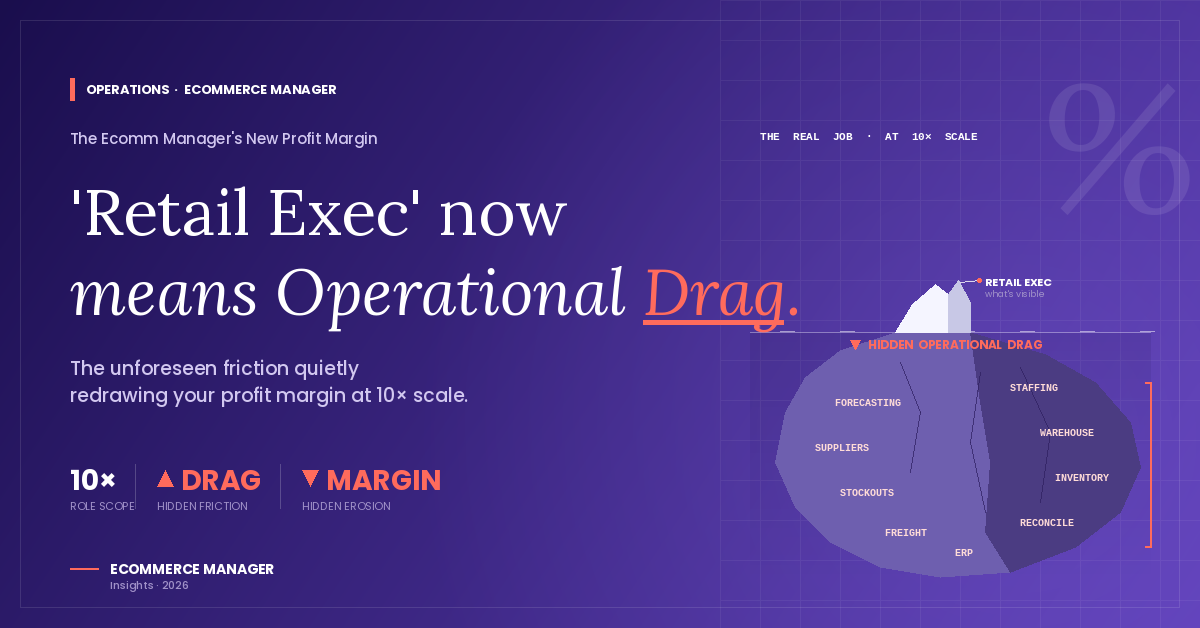
The Ecomm Manager’s New Profit Margin: Why “Retail Exec” Now Means Unforeseen Operational Drag
The landscape of e-commerce has fundamentally reshaped retail management. What was once a focused role now demands a far broader operational understanding.
Managers are no longer just overseeing a segment. They are orchestrating a complex ecosystem. This shift extends beyond digital storefronts.
The State of eCommerce in 2026
It encompasses the entire customer journey. Integration across channels is paramount. This complexity introduces new layers of operational drag.
The Evolving Role of the Modern Retail Executive
The rise of e-commerce has redefined what it means to be a retail executive. The traditional boundaries have dissolved. Managers must now navigate a hybrid environment.
The Complete 2025 E-commerce Manager Career Guide: From Entry-Level to Executive
This hybrid space blends physical stores with digital platforms. It requires a holistic view of operations. Understanding this evolution is key to managing profit margins effectively.
From Siloed Operations to Integrated Ecosystems
Historically, retail operations were often siloed. Online sales teams worked separately from brick-and-mortar staff. Inventory management lacked true unification.
Marketing Calendar: A Complete Guide
This separation led to inefficiencies. It created friction points for customers. The digital era demands an integrated ecosystem.
Every touchpoint must be seamless. This includes marketing, sales, and fulfillment. Managers are the conductors of this orchestra.
The Demand for Omnichannel Expertise
Customers expect a consistent experience. They interact across websites, apps, and physical stores. This omnichannel approach is non-negotiable.
The State of eCommerce in 2025!
A retail executive must ensure this consistency. They need to oversee unified inventory systems. Real-time data across all channels is vital.
Customer service must also be integrated. Support agents need full visibility. They should access customer history anywhere.
Unforeseen Operational Drag in E-commerce Integration
While e-commerce offers immense potential, it also introduces significant operational challenges. These challenges can erode profit margins if not managed proactively.
The complexity of integrating disparate systems is a major factor. It requires a deep dive into operational processes.
Unified Inventory Management Complexities
Maintaining a single, accurate view of inventory is difficult. This challenge spans multiple warehouses and retail locations. Stock discrepancies are common.
Lost sales occur due to stockouts. Overstocking ties up capital. This directly impacts profitability. Technology plays a crucial role here.
Real-time synchronization is essential. It prevents overselling. It optimizes stock allocation across channels. This requires robust data processing services.
Customer Service Channel Integration
Customers contact businesses through various channels. They expect immediate and consistent responses. Managing these diverse channels is taxing.
Phone, email, chat, and social media all require attention. Agents need access to unified customer data. This ensures context is maintained.
A fragmented approach leads to frustration. It damages brand perception. It also increases support costs. This is where advanced customer support operations shine.
Leveraging 24/7 business process outsourcing support can be a strategic advantage. It ensures constant availability without proportional in-house overhead.
Data-Driven Decision-Making Hurdles
E-commerce generates vast amounts of data. This data is a goldmine for insights. However, collecting and analyzing it is a challenge.
Data silos prevent a clear picture. Different departments may have their own systems. This hinders comprehensive analysis. Managers need to consolidate this information.
Turning raw data into actionable insights requires skill. It involves advanced analytics tools. It also requires a strategic approach to data management.
Understanding customer behavior is crucial. Analyzing sales trends informs inventory and marketing. This analytical capability is vital for profit margin improvement.
Leveraging Technology for Operational Efficiency
Addressing these operational drags requires smart technological solutions. Technology can streamline processes. It can also enhance customer experience.
The focus must be on integration and automation. This frees up managerial bandwidth.
AI-Augmented Operations
Artificial intelligence is transforming retail operations. AI can automate repetitive tasks. It can also provide predictive analytics.
AI can optimize inventory forecasting. It can personalize customer interactions. This reduces manual effort. It improves accuracy significantly.
AI agents can handle customer queries. They can escalate complex issues. This improves response times. It lowers operational costs.
Assessing AI readiness is important. The IT leader’s AI readiness scorecard helps gauge BPO process maturity for successful AI agent deployment.
Digital Marketing and Growth Strategies
Effective digital marketing is crucial for e-commerce success. It drives traffic and conversions. It also builds brand loyalty.
Targeted campaigns reach the right audience. Data analytics inform marketing spend. This maximizes ROI.
Personalization in marketing is key. It resonates with individual customer needs. This boosts engagement rates.
A strategic approach to industrial marketing can yield significant results. Understanding the target market deeply is essential.
Supply Chain Optimization
The supply chain is the backbone of e-commerce. An inefficient chain leads to delays. It increases costs and customer dissatisfaction.
Optimizing logistics is a continuous process. It involves route planning and carrier management. It also includes last-mile delivery solutions.
Strategic sourcing can improve margins. It involves negotiating with suppliers. It ensures quality and reliability.
The ultimate guide for strategic sourcing process offers valuable insights. It helps businesses build resilient supply chains.
Transforming Retail and Manufacturing with IT
The impact of IT in retail and manufacturing is profound. It enables the integration necessary for modern e-commerce operations. These industries have been particularly revolutionized.
Technology drives efficiency and innovation. It allows for greater agility in response to market changes. This IT transformation is fundamental to competitiveness.
The Role of ERP and Automation
Enterprise Resource Planning (ERP) systems are foundational. They integrate core business processes. This includes finance, HR, and supply chain management.
Automation further enhances ERP capabilities. It reduces manual data entry. It speeds up workflows significantly.
Process optimization is a direct benefit. Businesses can operate more leanly. This improves overall operational efficiency.
The Evolution of Document Workflows
Digital transformation impacts document management. E-signatures have revolutionized workflows. Compliance is easier to manage.
Streamlined document processes save time. They reduce errors and paper waste. This contributes to operational cost savings.
Secure and efficient document handling is vital. It ensures business continuity. It supports regulatory requirements.
Strategic Sourcing and Virtual Recruitment
Effective management of resources is critical. This includes both physical goods and human capital. Strategic sourcing and virtual recruitment offer solutions.
Sourcing ensures cost-effective procurement. It builds strong supplier relationships. This is vital for profitability.
Virtual recruitment addresses talent acquisition. It expands the talent pool. It also reduces hiring costs.
The virtual recruitment definition, strategy, and process are essential for modern HR. Accelerating the hiring process with virtual recruiting is a tangible benefit.
This can be further enhanced by understanding a virtual recruitment process outline.
Data Processing and Animation Design
Data processing underpins many e-commerce functions. It informs customer insights and operational decisions. The six stages of data processing provide a structured approach.
In parallel, creative elements are crucial for engagement. This includes visual content and branding. Animation design plays a key role.
The evolution of animation and renderings from sketch to screen showcases technological advancements. A guide about animation design and their process offers practical knowledge.
These seemingly disparate areas are interconnected. They both contribute to the overall customer experience and operational success.
Conclusion
The modern retail executive role is multifaceted. It demands a deep understanding of integrated operations. Technological solutions are essential for managing complexity.
By embracing AI, digital marketing, and optimized supply chains, businesses can mitigate operational drag. This strategic approach is key to sustainable profit margins.
The continuous evolution of IT and data processing provides the tools. Managers must adapt to lead effectively.
“The true measure of an e-commerce manager’s success lies not just in driving sales, but in building a resilient and efficient operational backbone that supports sustainable growth.”