

Last Updated on June 7, 2026
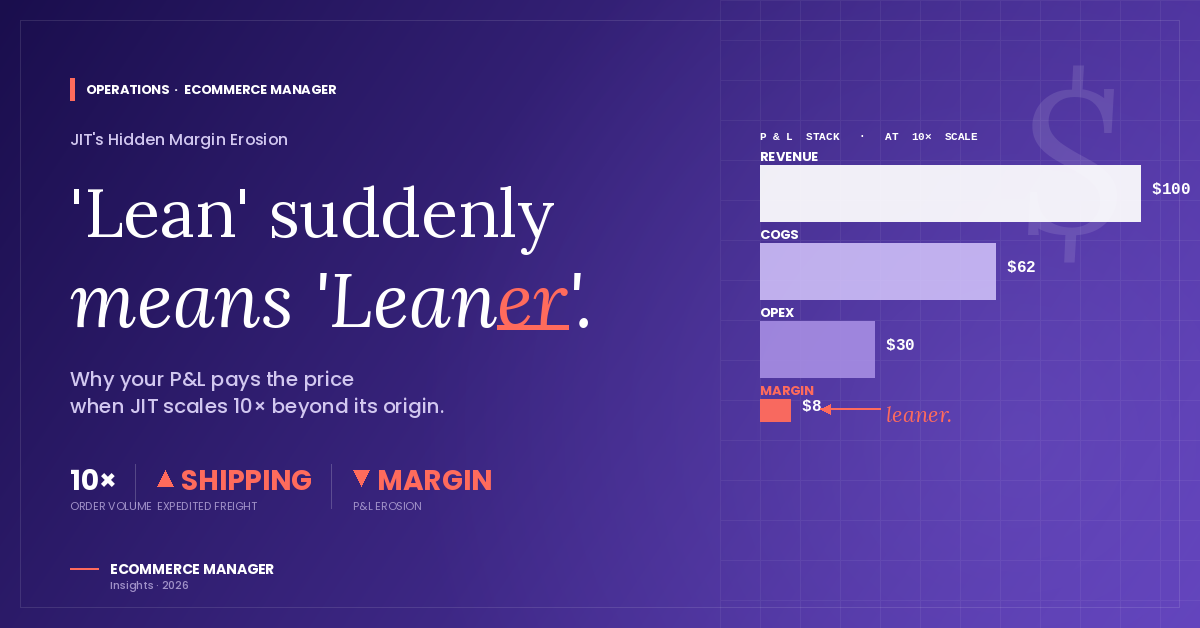
JIT’s Hidden Margin Erosion: Why “Lean” Suddenly Means “Leaner” in Your P&L
The pursuit of efficiency in inventory management has long centered on Just-In-Time (JIT) principles. This methodology aims to streamline operations by receiving goods only as they are needed in the production process. The intended outcome is reduced carrying costs, minimized waste, and improved cash flow. Historically, “lean” operations implied a more robust bottom line.
However, recent economic shifts and supply chain volatility have introduced a new dynamic. The very mechanisms designed to create lean margins are now revealing their own vulnerabilities. What was once a clear path to profitability is now a complex challenge. Businesses are finding that an overly rigid adherence to JIT can, paradoxically, lead to diminished financial performance.
This shift necessitates a deeper examination of how JIT inventory strategies interact with the broader operational and technological landscape. Understanding these complexities is crucial for maintaining and even enhancing profitability in today’s unpredictable market.
The State of eCommerce in 2026
The Evolving Landscape of Inventory Management
Just-In-Time inventory management emerged as a powerful strategy in stable economic periods. Its core promise was to eliminate excess stock. This meant lower storage costs. It also meant less risk of obsolescence.
Companies embraced JIT to optimize working capital. Reduced inventory frees up cash. This cash can be reinvested elsewhere. It drives growth and innovation.
The Complete 2025 E-commerce Manager Career Guide: From Entry-Level to Executive
However, global events have disrupted established supply chains. Geopolitical instability and unforeseen logistical bottlenecks are now commonplace. These disruptions expose the fragility of JIT systems.
When Supply Chains Become Unreliable
A key tenet of JIT is the assumption of reliable, predictable supply. When this assumption falters, the system breaks down. Unexpected delays become the norm.
Marketing Calendar: A Complete Guide
Shortages can halt production lines. This leads to lost sales. It also incurs expediting fees. These costs eat into profit margins.
The cost of stockouts can be significant. It impacts customer satisfaction. It can also damage brand reputation. Rebuilding trust takes time and resources.
The True Cost of Expediting
When JIT dictates minimal buffer stock, any disruption forces immediate action. Companies resort to expedited shipping. This is a costly measure.
The State of eCommerce in 2026
Air freight is often the only option. Its price is substantially higher. This directly impacts the cost of goods sold.
These emergency measures erode the very cost savings JIT was designed to achieve. The margin that was “lean” is now “leaner” due to these hidden expenses.
Technology’s Role in Modern JIT
Effective JIT implementation in the current environment relies heavily on advanced technology. Real-time data is no longer a luxury; it is a necessity. Enterprise Resource Planning (ERP) systems provide the backbone for this visibility.
These integrated systems offer a unified view of operations. They connect various business functions. This allows for better decision-making.
Sophisticated ERP solutions enable precise inventory tracking. They monitor stock levels in real-time. This is critical for accurate reordering.
Leveraging ERP for Real-Time Inventory Tracking
An ERP system provides a centralized database for all inventory-related data. This includes incoming shipments, current stock, and outgoing orders.
Real-time updates are crucial. They reflect every transaction as it happens. This eliminates information lag. It prevents decisions based on outdated data.
This granular control ensures that businesses know exactly what they have and where it is. This is fundamental to any efficient inventory strategy.
Demand Forecasting and Supplier Integration
Modern ERP platforms integrate advanced analytics. These capabilities extend to demand forecasting. By analyzing historical data and market trends, businesses can predict future needs more accurately.
This predictive power helps in planning procurement. It allows for proactive adjustments to JIT schedules. It reduces the likelihood of unexpected shortages.
Marketing Calendar: A Complete Guide
Furthermore, ERP systems facilitate seamless integration with suppliers. Direct connections enable automated order triggering. This ensures timely replenishment based on real-time demand signals.
Automation in Order Management
Automation is key to the speed and accuracy required for JIT. ERP systems can automate the creation of purchase orders. This happens when stock levels fall below predefined thresholds.
Automated triggers reduce manual intervention. This minimizes human error. It ensures that orders are placed promptly.
This rapid response capability is vital. It helps maintain production continuity. It keeps the supply chain moving efficiently.
System-Level Challenges and Solutions
Implementing and maintaining a successful JIT strategy requires more than just technology. It demands discipline across the entire organization. Data accuracy and system integration are paramount.
Any weakness in these areas can undermine JIT’s effectiveness. It can lead to the very inefficiencies it aims to prevent.
Addressing these challenges requires a holistic approach. It involves people, processes, and technology working in concert.
The Imperative of Data Accuracy
JIT systems are highly sensitive to data integrity. Inaccurate inventory counts lead to incorrect reorder points. This can result in stockouts or overstocking.
Regular audits and cycle counts are essential. These processes ensure that system data matches physical stock.
Implementing barcode scanning or RFID technology further enhances accuracy. These methods automate data capture at key points.
Ensuring Seamless System Integration
For JIT to function optimally, all relevant systems must communicate effectively. This includes inventory management, production planning, and procurement modules.
An integrated ERP system is designed for this purpose. It breaks down data silos. It ensures a unified flow of information across departments.
Poor integration means delays and errors. It creates friction in the supply chain. This can cripple a JIT strategy.
Process Adherence and Organizational Discipline
Technology alone cannot guarantee JIT success. Employees must adhere to established processes. This requires clear training and consistent enforcement.
A culture of continuous improvement is also beneficial. It encourages ongoing evaluation of JIT performance.
Organizational discipline ensures that procedures are followed. This discipline is what transforms a technological framework into an operational reality.
Rethinking “Lean” in a Volatile World
The concept of “lean” is undergoing a redefinition. In today’s environment, it must encompass resilience alongside efficiency. Simply reducing inventory without considering potential disruptions is no longer a sound strategy.
Businesses need to build agility into their operations. This involves strategic buffer stock for critical components. It also means diversifying supplier bases.
The goal is to achieve a balance. This balance ensures cost-effectiveness without sacrificing operational continuity.
The Strategic Role of Safety Stock
While JIT aims to minimize inventory, strategic safety stock is essential. This buffer protects against unforeseen supply chain interruptions.
Determining the right level of safety stock requires careful analysis. It depends on lead times, demand variability, and supplier reliability.
An ERP system can help model these factors. It assists in calculating optimal safety stock levels. This ensures protection without excessive carrying costs.
Supplier Relationship Management
Strong relationships with reliable suppliers are critical. This is true for any inventory strategy, but especially for JIT.
Collaborative forecasting and planning can mitigate risks. Sharing data openly builds trust. It allows for joint problem-solving.
A diversified supplier network also adds resilience. Relying on a single source increases vulnerability.
Agility and Responsiveness
The ability to adapt quickly to changing conditions is paramount. Businesses must be able to shift production or sourcing as needed.
This agility is fostered by streamlined internal processes. It is also supported by flexible technological infrastructure.
An ERP system that supports real-time decision-making is crucial. It empowers management to respond effectively to market shifts.
The Financial Implications of JIT’s Evolution
The erosion of JIT’s margin-enhancing reputation stems from its financial consequences when disruptions occur. The initial cost savings are often overshadowed by emergent expenses.
Stockouts lead directly to lost revenue. This is perhaps the most immediate financial hit.
Increased expediting fees add to operational costs. These are direct reductions in profit margins.
Finally, the cost of lost customer loyalty can have long-term financial repercussions. It impacts future sales and brand value.
Quantifying the Impact of Stockouts
The direct loss from a stockout is the profit margin on the unfulfilled order. However, the indirect costs are often greater.
Customers may seek alternatives. They may not return even after the product is available again.
Reputational damage can affect sales across all product lines. This is difficult to quantify but has a real financial impact.
Analyzing Expediting and Premium Freight Costs
Expediting orders incurs significant additional costs. These include premium shipping rates and potential overtime for receiving and processing.
When these costs become a regular feature of operations, the entire cost structure changes.
The initial efficiency gains are nullified. Profitability suffers directly from these increased expenditures.
The Long-Term Value of Operational Resilience
Investing in operational resilience, rather than just minimal inventory, yields long-term financial benefits. It ensures business continuity.
This resilience can translate into a competitive advantage. Companies that can reliably meet demand during crises attract and retain customers.
The strategic use of technology, such as robust CRM management and ERP software, is foundational to building this resilience.
By integrating sales, inventory, and forecasting, businesses can better navigate uncertainty. Similarly, robust sales management ERP software ensures that market feedback is rapidly incorporated into operational planning.
Conclusion
Just-In-Time inventory management, while a cornerstone of efficiency, faces unprecedented challenges in the current global climate. Its “lean” promise of enhanced margins is threatened by supply chain fragility and the subsequent rise in expediting and stockout costs.
Modern businesses must adapt. They need to integrate advanced technologies, particularly ERP systems, to gain real-time visibility. Automation, accurate data, and strong supplier relationships are no longer optional.
The focus must shift from merely minimizing inventory to building operational resilience. This strategic rebalancing will ensure that “leaner” operations translate to sustainable profitability, even amidst volatility.
“The true measure of lean is not the absence of inventory, but the presence of resilience and adaptability.”
— Girish Songirkar, ArionERP