

Last Updated on July 20, 2026
10 Best Buy Now, Pay Later Platforms in 2026
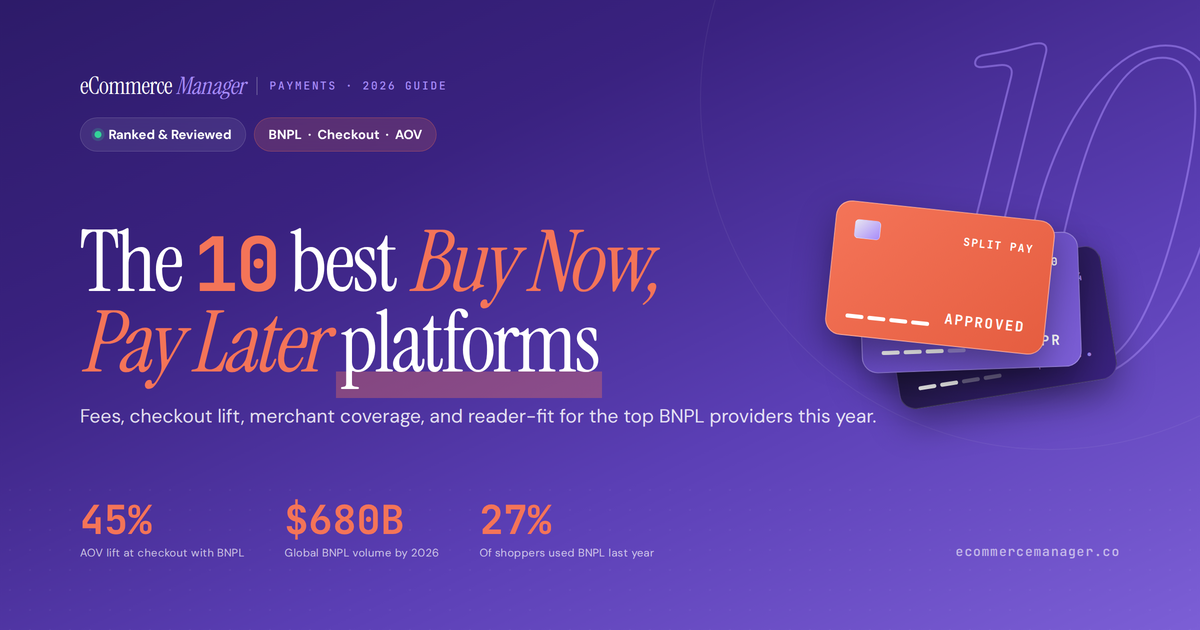
Buy Now, Pay Later stopped being a novelty a while ago. The global BNPL market is forecast to reach around 0.75 trillion dollars in 2026, up from roughly 0.65 trillion the year before, and for an online store the question is no longer whether to offer it but which provider to put at checkout. I look at this the way a marketer looks at any conversion lever. The right BNPL option lifts average order value and recovers carts that would otherwise stall at the price. The wrong one adds fees and confusion for little gain.
Here is an honest, merchant-facing look at ten platforms worth considering in 2026, what each is actually good at, and where each one costs you. None of these is a paid placement, and the right pick depends entirely on your basket size, your margins, and your customers.
1. Klarna
The most recognized name in much of the world, with around 150 million customers globally and partnerships with retailers like Amazon, Walmart, and Sephora. Klarna is strong for mid to high value baskets and brings its own shopping app that can send traffic your way. The trade-off is that its brand and shopping app can pull the customer relationship toward Klarna rather than you. Best when reach and recognition matter more than owning the checkout experience.
2. Afterpay
Built around small, interest-free installments across a large merchant network. Afterpay skews younger and works well for fashion, beauty, and lower-ticket impulse buys. It charges no interest to the shopper, which reduces friction, but merchant fees are the cost of that simplicity. Best for stores with a younger audience and frequent, smaller purchases.
3. Affirm
Accepted at more than 300,000 merchants including Amazon, Walmart, and Expedia, Affirm is the go-to for higher-ticket, considered purchases where a longer installment plan makes sense. Its transparent terms build trust for expensive items. The longer plans and underwriting make it less suited to small impulse baskets. Best for higher average order values and products people plan to buy.
4. PayPal Pay Later
If you already accept PayPal, Pay in 4 and its longer options are the lowest-friction way to add BNPL, because it rides on infrastructure millions of shoppers already trust. Coverage is essentially everywhere PayPal is accepted. The trade-off is less specialization than a dedicated BNPL brand. Best as a default when you want BNPL without adding a new provider.
5. Shop Pay Installments
For Shopify merchants, this is the most native option, powered by Affirm and built directly into the Shop Pay checkout that already converts well. The advantage is speed and a checkout customers recognize. The limitation is that it is tied to the Shopify platform. Best for Shopify stores that want BNPL without bolting on anything external.
6. Zip
Formerly Quadpay, Zip is known for flexibility, including options that work for shoppers with thinner or weaker credit histories. That widens your addressable audience. The trade-off is that broader approval can come with a different risk and fee profile. Best when you want to serve customers other providers decline.
7. Sezzle
With tens of thousands of active merchants and a base that includes Target and GameStop, Sezzle focuses on flexible rescheduling and a shopper-friendly experience. It leans toward younger, budget-conscious buyers. As with other installment-first providers, the merchant fee is the cost of the conversion lift. Best for mid-market stores wanting a flexible, forgiving option for shoppers.
8. Splitit
Splitit takes a different approach, letting shoppers pay in installments using the credit they already have on their card, with no new application or credit line. That means no new approval friction and it suits higher-value purchases. The catch is that it requires the customer to have available credit, so it is not a tool for expanding access. Best for premium products and shoppers who already have cards but want to spread the cost.
9. Perpay
Perpay ties repayment to a shopper’s paycheck, which appeals to a specific segment building or rebuilding financial stability. It is more niche than the big names, so it will not fit every catalog. Where it fits, it reaches customers other options miss. Best for stores whose audience values paycheck-aligned budgeting.
10. Sunbit
Focused on in-person and service-heavy purchases like auto repair, dental, and specialty retail, Sunbit is built for higher-approval financing at the point of sale rather than typical ecommerce carts. If your model blends physical service with retail, it is worth a look. For a pure online fashion store, it is probably not the right tool. Best for service and in-person retail with larger tickets.
How to actually choose
Do not pick on brand recognition. Pick on your numbers. Three questions settle it most of the time.
What is your average order value? Small and frequent baskets favor Afterpay, Sezzle, or Zip. Large considered purchases favor Affirm or Splitit.
What can your margins absorb? Every BNPL provider charges the merchant, and that fee has to be paid for by the lift in conversion and order value. If your margins are thin, model the fee against the expected lift before committing.
Where are your customers already? If most already use PayPal or you run on Shopify, the native options remove friction you would otherwise have to overcome.
Conclusion
The best BNPL platform in 2026 is not a single winner. It is the one that matches your basket size, your margins, and the shoppers you already have. Offer it well and it lifts conversion and average order value. Offer the wrong one and you have added cost and a confusing checkout. Start from your own data, test one option against your real traffic, and let the numbers, not the logo, make the call.
FAQs
Does offering BNPL actually increase sales?
It can, mainly by lifting average order value and reducing cart abandonment at the price barrier. The lift is real but not automatic. It depends on matching the provider to your basket size and audience, and the merchant fee has to be earned back by that lift.
How much does BNPL cost a merchant?
Providers typically charge the merchant a fee per transaction, often higher than a standard card fee, in exchange for the shopper paying in installments interest-free. Treat it as a conversion cost and model it against the expected increase in orders and order value.
Can I offer more than one BNPL provider?
Yes, and larger stores often do, pairing a high-ticket option like Affirm with a small-basket option like Afterpay. Just avoid cluttering the checkout with so many choices that you create decision friction, which can hurt conversion more than it helps.
Which BNPL is best for a small Shopify store?
Shop Pay Installments is usually the simplest starting point because it is native to the Shopify checkout customers already trust. Test it against your real traffic before adding anything external, and only expand if your data shows a clear gap it does not cover.