

Last Updated on July 31, 2026
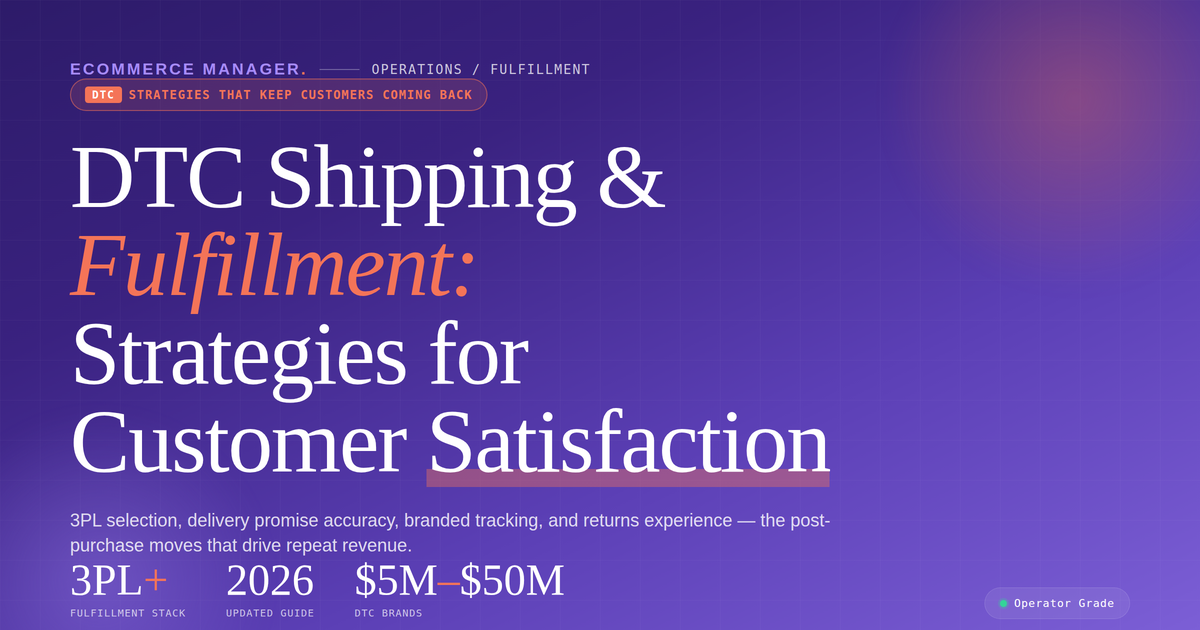
DTC Shipping & Fulfillment: Strategies for Customer Satisfaction
Getting products from warehouse to doorstep can make or break customer loyalty in direct-to-consumer retail. According to industry experts, successful DTC brands treat shipping and fulfillment as critical touchpoints that require the same strategic attention as marketing and product development. The following strategies reveal how leading companies turn logistics into a competitive advantage while keeping customers satisfied from checkout to delivery.
- Check Fit Before Dispatch
- Set Honest Dates And Duties
- Match Messages To Urgency
- Keep Shoppers Informed Throughout
- Provide Realistic Freight Expectations
- Guarantee Swift No-Cost Returns
- Communicate Early And Personally
- Invest In Transit-Proof Packaging
- Call Every New Buyer
Check Fit Before Dispatch
We ship everything in-house, and the whole approach is built around one fact: an EV charging cable is heavy, costly to post, and worthless to the buyer if it is the wrong one. So we do not optimise fulfilment for speed first. We optimise it for not despatching the wrong cable.
The strategy is a pre-despatch fitment check. We added an optional field at checkout asking what car the cable is for, and the packing step compares that answer against the connector type and power rating on the order. When the two do not line up, the parcel is held and I send a short message before it goes anywhere. It delays a handful of orders by a few hours and it spares those customers a wasted week.
I built it after one order I still think about. A chap bought a three-phase cable for a car that could only ever draw single-phase power. It went out same day, he was delighted with how fast it arrived, and then it did nothing useful on his driveway. Quick delivery of the wrong item is not good service. It is an expensive way to disappoint someone, and with something this heavy the return leg costs us both.
Wrong-cable returns fell by roughly 35% once the check was running properly. The wider point for anyone shipping direct is that satisfaction is decided before the parcel leaves the building, not by how quickly it lands. Put the check where the mistake happens. A held order with a friendly question beats a fast parcel coming straight back.

Set Honest Dates And Duties
My approach is to remove every surprise from the delivery. Two things wreck satisfaction on a direct-to-consumer order: a date you miss, and a bill the customer wasn’t expecting. Packaging, tracking design and the note in the box are decoration on top of those two.
So we quote the date we can hit on a bad week, not a good one. The courier’s best case is a marketing number, and the fulfilment centre’s backlog isn’t the customer’s problem. We take the pessimistic end, publish that, and then beat it on around 90% of orders. Arriving two days early is the cheapest goodwill available to a small brand and it costs nothing but honesty in the estimate. The alternative, an aggressive promise you hit most of the time, means every miss lands as a broken word rather than a delay.
The specific one I’d single out came from selling internationally. We shipped an early run of orders into the UAE on a duty-unpaid basis, which is how most small brands ship without thinking about it. The parcels arrived and the courier asked our customers for a customs charge at their front door. Every one of those people wrote to us, and they were right to. From where they sat, a brand they’d already paid had sent a stranger to their home to ask for more money. We moved to duty-paid shipping and priced it into the product, and those complaints stopped completely.
The principle underneath both: the customer bought a delivered product, not a dispatched one. Everything that happens between your warehouse and their hand is still your brand talking, whoever is carrying the box. Own the whole promise or don’t make it.

Match Messages To Urgency
I sell products that people buy because something hurts. A bunion pad or a heel insert that shows up damaged or late leaves someone sitting with the problem they paid to fix. So my fulfillment standard starts from that. Every order is a promise that relief is on the way, and the window between purchase and delivery is when trust builds or breaks.
We stock inventory close to where orders cluster. When I looked at my direct site orders alongside what was moving through larger retail channels, the overlap in geography told me where to position inventory so transit times stayed short. Shorter transit means fewer damaged units, fewer reships, and fewer support tickets. Each avoided problem compounds into margin I can reinvest into packaging that protects the product.
What moved my satisfaction numbers most was confirmation messaging that told customers exactly what was coming and when. A person waiting on something for pain relief checks their inbox more than someone waiting on a candle. I matched my communication cadence to that urgency, and my “where is my order” inquiries dropped while repeat purchases rose.

Keep Shoppers Informed Throughout
Shipping and fulfillment are part of the overall brand experience, so we treat them with the same attention as product development and customer support. Customers don’t separate the quality of the product from the delivery experience. If an order arrives late, contains the wrong item, or communication is poor, it affects how they perceive the brand as a whole. That’s why we invest in reliable fulfillment partners, accurate inventory management, and clear internal processes to minimize mistakes before an order even leaves the warehouse.
The strategy that has had the biggest impact on customer satisfaction is proactive communication. Customers receive updates throughout the fulfillment process, from order confirmation to shipping and delivery notifications, so they always know what to expect. We’ve found that even when an unexpected delay occurs, customers are far more understanding if they’re informed early rather than having to ask where their order is. Building trust through transparency has proven just as valuable as improving delivery speed itself.

Provide Realistic Freight Expectations
Shipping heavy, bulky steel cabinets is a different challenge than shipping small DTC goods. Freight damage and delivery delays are the real risks, not just “will it arrive.” Our approach is being upfront about it rather than hiding the complexity: we give customers realistic delivery windows instead of overpromising fast shipping we can’t consistently hit for freight-class items.
One strategy that’s worked well is proactive delivery communication. Customers get tracking updates and a heads-up before a freight delivery actually arrives. Since these aren’t small parcels a driver just leaves on a porch, they often need someone home to receive them. Setting that expectation early has cut down on missed deliveries and frustrated customers significantly compared to treating it like a normal parcel shipment.

Guarantee Swift No-Cost Returns
I scaled WristWorks into a 100% online operation shipping luxury watches nationwide after years in hands-on sales and a tough early lesson losing money to a scam. That forced tighter systems around every high-value transfer.
We confirm orders quickly, clear funds, then process and ship within two days using standard or express options with full tracking provided. Every watch gets in-house authentication and testing first so nothing moves until verified.
A strategy that keeps satisfaction high is our clear returns window on damaged or mismatched items at no cost within a day, plus assistance filing carrier claims if needed. This turns potential stress into straightforward resolutions that match the transparency buyers expect.

Communicate Early And Personally
At JULO, we believe shipping and fulfillment are just as important as the products themselves. Our goal is to provide a reliable, transparent experience by processing orders quickly, communicating clear shipping expectations, and keeping customers informed every step of the way.
Whenever possible, we strive to ship orders the same day they’re placed so customers receive their purchases as quickly as possible. Every order is carefully packed to ensure products arrive safely and in excellent condition.
We also believe the little details matter. As founder, I personally include a handwritten note with each order to thank our customers for their support and create a more personal, intentional shopping experience.
One strategy that has helped us improve customer satisfaction is proactive communication. If there are any unexpected delays or inventory issues, we reach out to customers as quickly as possible with updates and solutions. We’ve found that clear communication and thoughtful touches build trust and create a better overall customer experience.
As we continue to grow, we’re focused on refining our fulfillment processes while maintaining the speed, quality, and personal service our customers have come to expect.

Invest In Transit-Proof Packaging
Since we manufacture and ship metal furniture and cabinets ourselves rather than relying on third-party fulfillment, we have more control over the process than a typical DTC brand, and we lean into that. Shipping directly from our own facility means we can catch quality or packaging issues before they become a customer’s problem.
The strategy that’s made the biggest difference is investing in proper freight packaging built for our specific products, rather than generic boxing. Metal furniture that arrives dented or scratched creates returns and unhappy customers regardless of how good the product is. Getting packaging right upfront, even though it costs more per shipment, has meaningfully reduced damage claims and returns, which ends up cheaper than dealing with the fallout of a bad unboxing experience.

Call Every New Buyer
Running Mercha taught me that the single most important shipping and fulfillment strategy isn’t about logistics at all—it’s communication. Early on, we had a head of marketing at a Melbourne construction company place an order, and we went completely silent on her. The order ran late, we hadn’t called her like we promised, and she heard nothing. She nearly walked forever.
That failure forced us to build what we call a “high tech, high touch” model. The platform handles the transactional heavy lifting—instant mockups, automated confirmations, tracking updates—but a real human calls every new customer after their order lands. Not a bot, not an email. A call.
The result? That Melbourne customer is still with us today. She came back specifically because we owned the mistake, sent flowers, and rebuilt her trust personally. No fulfillment software in the world replaces that.
If you’re running any kind of product business, map every single silence point in your customer’s journey—every gap between “order placed” and “order received”—and fill it with a human touchpoint. That’s where satisfaction is won or lost.

Related Articles
- DTC Customer Service: 22 Strategies for Ensuring Customer Satisfaction
- Creating a Seamless Checkout: Ecommerce Tips From The Pros
- Building Customer Loyalty through DTC Marketing: Approaches & Examples