

Last Updated on June 7, 2026
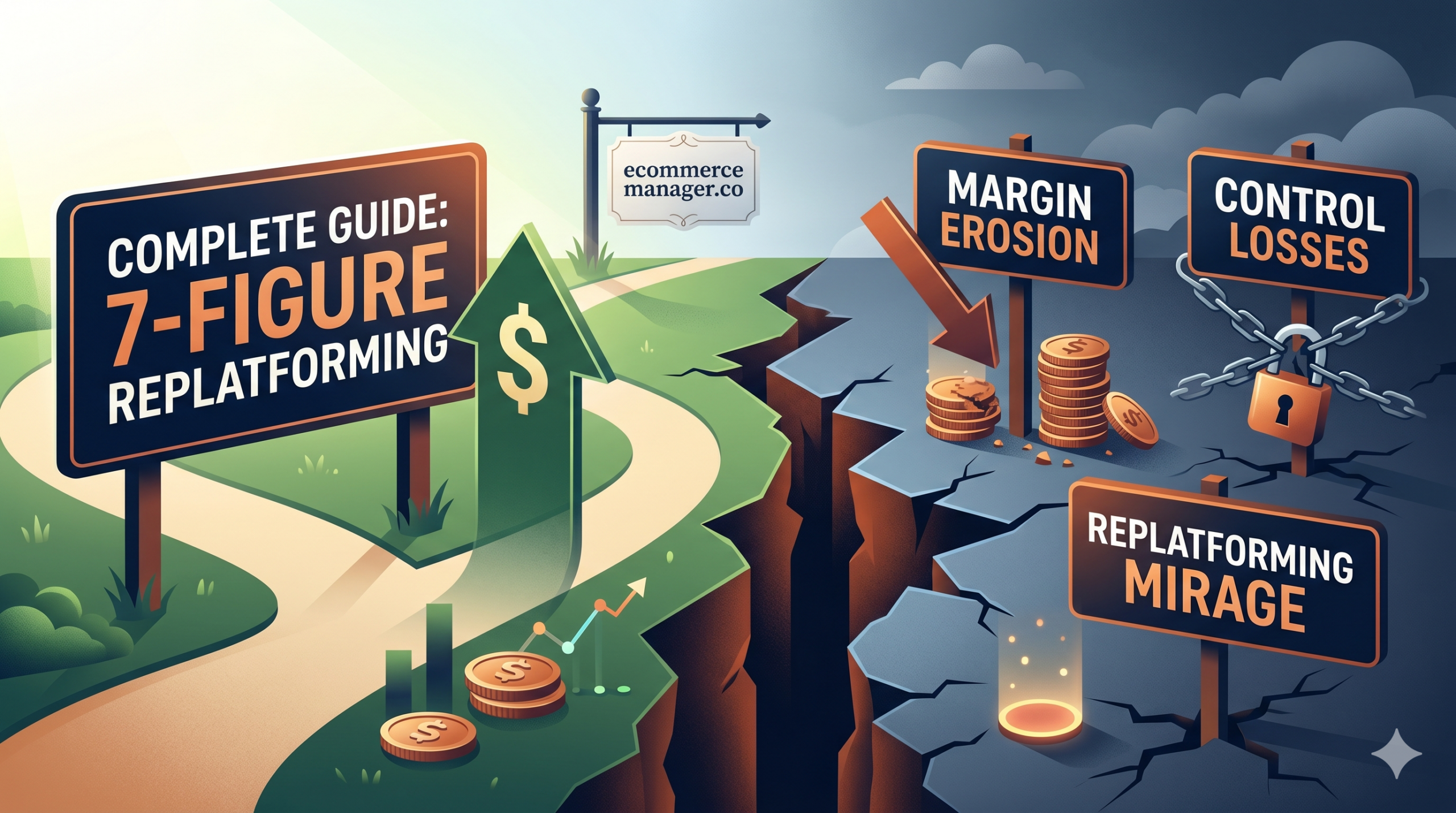
The 7-Figure Replatforming Mirage: Why “Complete Guides” Hide the Real Margin Erosion and Control Losses
The allure of a major e-commerce replatforming project is undeniable. Businesses envision a seamless transition to a modern, agile system. They anticipate enhanced customer experiences and streamlined operations. Often, these initiatives are driven by the promise of future growth and competitive advantage.
However, the journey is rarely as simple as the aspirational “complete guides” suggest. Beneath the glossy surface lies a complex landscape. Hidden costs and unforeseen challenges can significantly erode profit margins. Loss of operational control is a common, yet often unacknowledged, consequence.
This disconnect between perceived simplicity and actual execution demands a deeper strategic examination. Understanding the true implications of replatforming is crucial for sustainable success.
The Illusion of the “Off-the-Shelf” Solution
Many businesses are drawn to the idea of a quick fix. They look for platform replacements that promise immediate benefits. The notion of a comprehensive guide offering a step-by-step blueprint can be misleading.
These guides often focus on the technical implementation. They might outline phases of development or migration. However, they frequently overlook the intricate operational and strategic shifts required.
Platform Selection Complexities
Choosing the right platform is a critical early decision. The spectrum ranges from Software-as-a-Service (SaaS) solutions to fully custom-built systems. Each carries distinct advantages and disadvantages.
SaaS platforms offer faster deployment and managed infrastructure. Yet, they can impose limitations on customization. This can hinder unique business processes. Custom solutions provide ultimate flexibility. But they demand significant investment in development and ongoing maintenance.
Monolithic vs. Microservices Architectures
The architectural approach to the new platform is another major consideration. Monolithic architectures consolidate functionality. They are often simpler to develop initially. Microservices architectures break down functionality into smaller, independent services.
This granular approach offers greater scalability and resilience. It also allows for independent updates. However, microservices introduce significant complexity in management and orchestration.
Data Migration: The Unsung Hero
Migrating vast amounts of data is a monumental task. Customer data, order history, product catalogs—all must be transferred accurately and efficiently.
Incomplete or corrupted data can cripple operations. It can also lead to severe customer dissatisfaction. The risk of data loss during migration is a constant threat.
Integration Challenges
An e-commerce platform does not operate in a vacuum. It must seamlessly integrate with numerous other systems.
These include Enterprise Resource Planning (ERP) systems, Customer Relationship Management (CRM) tools, and marketing automation platforms. Each integration point represents a potential failure or bottleneck.
The Hidden Costs of Replatforming
Beyond the initial software license or development costs, several hidden expenses emerge. These can dramatically inflate the total project expenditure.
Operational disruptions during the transition are a prime example. Downtime directly translates to lost revenue. Rework due to unforeseen technical issues adds further costs.
Change Management Overhead
Implementing a new system requires significant change management. This involves training staff, redefining roles, and adjusting workflows.
Resistance to change can derail even the best-planned initiatives. The cost of overcoming this resistance is often underestimated.
Vendor Lock-in and Hidden Fees
Some platform providers may impose long-term contracts. These can lead to vendor lock-in. Subsequent modifications or expansions might incur exorbitant fees.
Careful review of all contractual obligations is essential. This includes understanding data ownership and exit clauses.
Technical Debt Accumulation
Rushed implementations or compromises made during development can lead to new technical debt. This is the implied cost of future rework.
Addressing technical debt is a continuous process. Failure to manage it can lead to system fragility and performance issues over time.
Loss of Control: A Strategic Erosion
A primary concern in replatforming is the potential loss of direct control. This impacts agility and long-term strategic direction.
When relying heavily on SaaS solutions, businesses cede control over the underlying infrastructure and development roadmap.
Customization Limitations
Proprietary SaaS platforms often have restricted customization options. This can prevent the implementation of unique business logic or competitive differentiators.
The inability to adapt the platform to evolving market needs can be a strategic disadvantage. It limits the company’s ability to innovate.
Dependency on Vendor Roadmaps
Businesses become dependent on the vendor’s release schedule and feature prioritization. This can mean waiting months or years for critical updates or new functionalities.
Such dependencies can hinder a company’s ability to respond swiftly to market shifts. It impacts overall business agility.
Data Portability and Ownership
Ensuring data portability is paramount. Some vendors may make it difficult or costly to extract your data if you decide to switch platforms.
Clear agreements on data ownership and access are crucial. They prevent becoming a captive customer.
Leveraging AI for Strategic Advantage in Replatforming
Artificial Intelligence is not merely a buzzword; it’s a transformative force. It can significantly mitigate replatforming risks and enhance outcomes.
AI can optimize data migration processes. It can also predict potential integration issues before they arise. Its application in modern e-commerce platforms is extensive.
AI-Powered Data Migration and Validation
AI algorithms can analyze data patterns. They can identify anomalies and inconsistencies during migration. This ensures greater data integrity.
Machine learning can also predict data transformation requirements. This speeds up the validation phase.
Intelligent Automation in Workflows
Business process automation, powered by AI and Robotic Process Automation (RPA), can streamline post-migration operations.
Automating repetitive tasks reduces manual effort. It also minimizes human error.
Predictive Analytics for Performance
AI can be used to monitor the new platform’s performance. It can predict potential bottlenecks or scaling issues.
This allows for proactive adjustments. It ensures optimal user experience and operational efficiency.
Enhancing E-commerce Functionality
Modern e-commerce applications benefit greatly from AI. Features like personalized recommendations, intelligent search, and dynamic pricing are AI-driven.
Integrating these capabilities into a replatformed system can create significant competitive advantage.
The “Screenshot” Requirement: Visualizing Process and Control
The request for a “screenshot of the process” during a replatforming initiative highlights a critical need for visibility and documentation. This isn’t about a single image but about tangible evidence of control and progress.
Effective replatforming requires robust documentation that visually represents the project’s flow and management.
Workflow Diagrams and Process Maps
Detailed workflow diagrams are essential. They illustrate current and future-state processes. These maps detail every step of a business operation.
They serve as a common language for all stakeholders. They ensure everyone understands how the new system will function.
Project Roadmaps and Gantt Charts
Visual project roadmaps provide a high-level overview of milestones and timelines. Gantt charts offer granular detail on task dependencies and durations.
These tools are crucial for tracking progress. They help identify potential delays early.
Technical Specifications and Architecture Blueprints
Comprehensive technical specifications document system requirements. Architecture blueprints illustrate the underlying structure of the new platform.
These documents are vital for developers. They ensure the technical implementation aligns with strategic goals.
Data Flow Diagrams
Visualizing how data moves through the new system is critical. Data flow diagrams map data sources, transformations, and destinations.
They are instrumental in understanding integration points. They also help in troubleshooting data-related issues.
Best Practices for Project Visibility
Regular status meetings are a basic requirement. Sharing progress dashboards provides real-time insights.
Utilizing collaborative project management tools is also key. These platforms centralize information and communication.
A well-documented replatforming process demonstrates control. It reassures stakeholders and mitigates risks effectively.
Strategic Replatforming: Beyond the Mirage
The decision to replatform an e-commerce business is strategic. It demands more than following a generic guide. It requires a deep understanding of technological implications and operational realities.
Focusing solely on the perceived simplicity of a “complete guide” can lead to costly oversights. Margin erosion and loss of control are tangible outcomes of such approaches.
A successful replatforming initiative prioritizes thorough planning. It involves meticulous platform selection. It requires robust data migration strategies. Furthermore, it necessitates proactive change management.
Leveraging AI and ensuring process visibility are not optional extras. They are integral to mitigating risks and achieving sustainable growth.
By looking beyond the replatforming mirage, businesses can navigate the complexities. They can build resilient, agile, and profitable e-commerce futures.
“The most successful digital transformations are not about replacing systems, but about strategically augmenting capabilities and ensuring continuous adaptation.”