

Last Updated on July 7, 2026
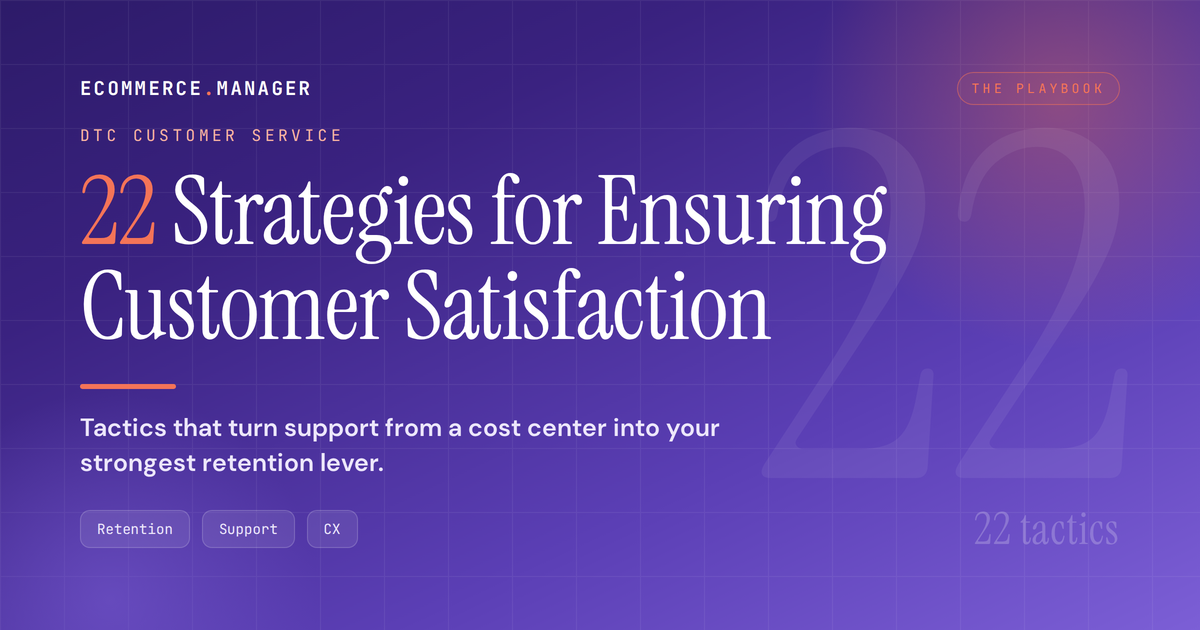
DTC Customer Service: 22 Strategies for Ensuring Customer Satisfaction
Direct-to-consumer brands face intense pressure to deliver exceptional service at every touchpoint, yet many struggle to balance speed with genuine care. This article draws on insights from industry experts to outline practical strategies that build loyalty and resolve issues before they escalate. From personalized follow-ups to AI-assisted support, these approaches help brands meet rising customer expectations without sacrificing efficiency.
- Automate Routine With Immediate Human Escapes
- Anticipate Needs With Direct Follow-Ups
- Coach Brewers Through Variables For Better Cups
- Provide Clinical Guidance With Clear Rationale
- Establish Personal Checkpoints Across All Orders
- Send Pre-Arrival Guides And Warm Notes
- Include Homeowners Throughout Work And Cleanup
- Give Written Estimates Plus Final Handoffs
- Set Specific Expectations With Honest Updates
- Require Pharmacist Review For Every Inquiry
- Ask Deep Queries Before You Pick Solutions
- Assign One Contact With Live Timeline
- Quote Transparently With Onsite Repairs
- Align Each Reply With Brand Values
- Fix Root Causes To Prevent Questions
- Empower Frontline For On-The-Spot Remedies
- Verify Outcomes With Post-Resolution Checks
- Unify Conversations Around People Not Tickets
- Publish Tours To Close Feedback Loops
- Remove Barriers With Extended Access Hours
- Route Requests To Targeted Hands-On Labs
- Deploy Business-Trained AI For Instant Answers
Automate Routine With Immediate Human Escapes
Strategy:
In DTC, customer service runs on two very different kinds of inquiry, and the mistake is treating them the same. Most of the volume is routine: where is my order, can I change my address, how do returns work. A smaller slice is where the relationship is actually won or lost: the damaged product, the upset first-time buyer, the edge case. My strategy is to separate the two ruthlessly. Resolve the routine instantly and automatically, so the team’s full attention is free for the moments that actually shape how someone feels about the brand. What makes this work is intent: understanding what the customer actually needs before you respond, instead of pattern-matching them to a generic FAQ answer.
One way I ensure satisfaction:
Resolve the customer’s real need, not just the ticket, and never let automation trap them. It is easy to close a conversation fast and call it a win, but satisfaction comes from the actual problem being solved. So every automated answer has an honest, fast exit to a human, and we decide up front what the AI should not handle on its own. The quickest way to lose a DTC customer is making them fight a bot to reach a person.

Anticipate Needs With Direct Follow-Ups
As the Founder and Chief Operating Officer of TAOAPEX LTD, I approach direct to consumer customer service inquiries by integrating digital public relations principles with search engine optimization data. My strategy focuses on anticipation and rapid resolution. We analyze search trends and common customer queries to build a comprehensive, public knowledge base. This reduces friction before a customer even reaches out. When inquiries do arrive, we route them to specialized team members who possess deep knowledge of our services. To ensure customer satisfaction, I implement a proactive feedback loop. Within twenty four hours of resolving an inquiry, we send a personalized follow up message. This message is not automated. It is written by the agent who handled the case. This personal touch demonstrates that we value their business and respect their time. We also use this feedback to immediately update our public resources and internal training programs. By turning every inquiry into an opportunity to improve our systems, we maintain high satisfaction rates and build long term loyalty with our clients.

Coach Brewers Through Variables For Better Cups
At Equipoise Coffee, we believe customer service in the direct-to-consumer space is about building trust through clear communication. When someone orders a bag of our Mexican La Laja Honey, Colombian Supremo, or our Cavaliers Blend from our Harlingen, Texas roastery, they are investing in a mindful morning ritual. They expect a smooth, balanced cup without the bitterness. If a customer reaches out because their brew isn’t tasting quite right, our strategy is to treat that inquiry as an educational partnership rather than a transaction.
We ensure customer satisfaction by guiding them through the science of brewing. Instead of just offering a quick refund, we troubleshoot the process. We explain the tradeoffs of different variables like grind size, water temperature, and extraction times. If a customer is struggling to get the bright, floral notes out of our Ethiopian Yirgacheffe, we’ll share our specific brewing guides to help them adjust. We’ve found that when you empower home brewers with actual knowledge, you transform a potentially frustrating moment into a major breakthrough for their daily routine.
We prioritize clear, human communication. When resources are tight, we focus our energy on these deep, educational touchpoints. We don’t use automated scripts that feel cold. Every response reflects our core philosophy of balance. By teaching customers how to unlock the perfect flavor profile at home, we build a loyal community of specialty coffee enthusiasts. It’s about turning a simple support ticket into a masterclass on coffee science, making sure every single bag we roast delivers the premium quality we promise.

Provide Clinical Guidance With Clear Rationale
In a direct-to-consumer setting, my strategy is to treat customer service as part of patient education, not just order help. A runner emailing the week before a marathon with heel blisters needs more than a tracking link or a product suggestion. We ask where the blister is, what shoes and socks they use, what event is coming up, and whether the skin is already broken. That lets us give clear, safe guidance and point them to the right option, whether that is ENGO patches, hydrocolloids with fixation tape, or a sock change. My view is that speed matters, but accuracy matters more when health advice sits close to the sale. One thing that keeps customers satisfied is giving the reason behind the recommendation. People feel more confident when they understand what to do, why it helps, and when to seek help from their own health professional.

Establish Personal Checkpoints Across All Orders
Running a B2B e-commerce platform taught me fast that “digital” doesn’t mean “hands-off.” From day one at Mercha, we built what we call a high-touch, high-tech approach — every first-time customer gets a real phone call after they order. Not a bot, not a template email — an actual human on the line.
The moment that crystallised this for me: early on, we dropped the ball with a head of marketing at a Melbourne construction company. Order ran late, no proactive communication, no follow-up call like we’d promised. She came back to give us the feedback instead of just disappearing — which most unhappy customers do. I sent her flowers, Sam and I both called her personally, and we won her back. She’s still a customer today.
The lesson wasn’t just “communicate better.” It was that the gap between what you promise and what you deliver is where trust lives or dies. Especially in DTC, where there’s no account manager buffer, that gap is completely visible to the customer.
Fix the process first, then scale the touch. We now have defined communication checkpoints baked into every order — not because it’s nice, but because without them, you’re just hoping nothing goes wrong.

Send Pre-Arrival Guides And Warm Notes
Customer Service at a DTC (Direct-to-Consumer) business begins LONG BEFORE a guest calls or emails you.
After owning Stingray Villa in Cozumel for a while now, I have come to realize that having Great Customer Service in a DTC business doesn’t mean getting back to your customers as fast as possible; it means creating a feeling of support for your customers from the very moment they make a reservation until they don’t need anything.
About 90% of all of my guests are in their 40s, 50s, etc. This demographic typically spends weeks/months/years saving up to take this trip. Because of this investment of time/money/vacation days, my goal is simply to answer ALL questions PRIOR to them becoming an issue.
One of the best ways to improve overall customer satisfaction is to send out comprehensive Pre-Arrival Information Guides. Guests will receive these guides immediately after making their reservations. These guides contain information such as how to get around, where to eat locally, dive information, info on grocery shopping in Cozumel, safety tips, etc. What may seem basic to some can be overwhelming for others.
I also had to plan vacations using paper maps & travel books in the 80’s & 90’s. Today, travelers have unlimited amounts of information available to them online, yet most still feel more confused than informed. Personalized communication helps cut through that confusion.
Fewer last-minute issues occur due to a lack of knowledge.
Fewer repetitive questions occur because guests are better informed prior to arrival.
Guests are happier because they feel trusted.
When guests arrive, they already “feel” like we “know” them. For me, customer satisfaction boils down to one thing: Making People Feel Cared About. When guests feel confident, informed & welcome, everything else usually falls into place. This has allowed us to gain repeat visits, referral business & positive reviews for years.

Include Homeowners Throughout Work And Cleanup
I run a basement waterproofing company in southeast Michigan where every job starts with me or one of my project managers walking the property — no call centers, no intake scripts. That direct involvement is actually the strategy.
The biggest thing I changed early on was making sure homeowners felt included during the work itself, not just at the quote stage. We give live updates as we go, answer questions on-site, and leave the space cleaner than we found it. That last part sounds small but it consistently comes up in the referrals we get.
The referral piece is where this pays off in a DTC model specifically. We’ve grown almost entirely through neighbors telling neighbors — not ads — because the experience felt personal rather than transactional. When someone calls because their friend’s basement stayed dry through a Michigan winter, they’re already halfway sold on trust before we show up.

Give Written Estimates Plus Final Handoffs
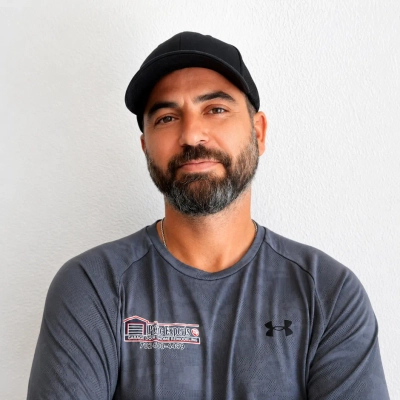
I run Pacific Experts Garage Door Repair in the Las Vegas area, so most of our DTC inquiries are homeowners calling because something broke at the worst possible time. My strategy is to make the first contact practical: answer quickly, ask what the door is doing, where they are, and whether the car is trapped or the door is unsafe.
One thing I push hard is no “mystery visit” energy. If we’re dealing with a broken spring, stuck door, opener issue, or damaged panel, the customer should know what we’re checking before we start and get a written estimate before approving work.
A simple example: with clicker/opener programming, we’ll often try to talk someone through the basic steps first. If that doesn’t solve it, we schedule service, but the customer already knows we tried to save them time before rolling a truck.
The satisfaction move is the final walkthrough. Before leaving, we show what was fixed, test the door with the customer, point out any safety concerns, and make sure they understand how to use the system without pressure or jargon.
Set Specific Expectations With Honest Updates
In a DTC environment, my strategy is to treat customer service as part of the product, not as a separate support function. The first step is fast triage: I sort inquiries by urgency, billing risk, technical issue, and simple how-to question so the customer gets the right answer quickly instead of being bounced around. In practice, that means having clear response templates for common issues, but still personalizing the actual reply so the customer feels heard.
One way I ensure customer satisfaction is by setting clear expectations early and then following through. If there is a bug, delay, or account issue, I do not give a vague “we’re looking into it” response. I tell the customer what happened, what the next step is, and when they should expect an update. Even when the issue is not resolved immediately, people are usually far more satisfied when communication is specific and proactive.
As a founder operating SaaS products, I have found that a short, honest update often prevents frustration from escalating. For example, if a user reports a generation failure, billing confusion, or a feature they cannot access, the support response should acknowledge the exact problem, explain whether it is a user-side or system-side issue, and give a realistic resolution path. That reduces repeat tickets and builds trust.
I also think customer service should feed directly back into product and operations. If the same question appears repeatedly, that is usually not just a support problem. It is a signal that onboarding, messaging, UX, or billing clarity needs improvement. The best customer satisfaction strategy is solving the root cause so fewer customers need help in the first place.

Require Pharmacist Review For Every Inquiry
In a regulated online pharmacy, the biggest risk is letting speed flatten clinical judgement out of a customer interaction. Our approach is that every inquiry, whether it’s a prescription query or a general over-the-counter question, gets read by a pharmacist before we respond. Convenience should never come at the cost of clinical accountability.
A practical example. When someone messages asking generally about using two everyday products together, it doesn’t get a templated reply. A pharmacist reads what they’ve written, screens for interaction and duplication risks, and either answers at a general education level or redirects them to their GP if it’s specific to them. That checkpoint is what keeps DTC human.

Ask Deep Queries Before You Pick Solutions
When someone contacts us about a product that isn’t working for them, my team starts by asking questions about how the product is being used, what the customer was hoping it would do, and what’s happening instead. That conversation often reveals something the customer didn’t think to mention, and it changes the outcome entirely.
Sometimes the right answer is a different product. Sometimes it’s a usage adjustment. Sometimes it is a refund, but by then the customer feels heard.
On the cost side, I would expect fewer returns when the first resolution fits the problem. Customers who went through that longer conversation have come back to purchase again more consistently than customers who got an instant resolution.

Assign One Contact With Live Timeline
30+ years in roofing taught me that the handoff between “inquiry” and “project start” is where most contractors lose customers. We fixed that by giving every single customer a dedicated point of contact from the first call, so nobody ever wonders who to reach or what’s happening next.
We also built personalized project tracking webpages for each roof replacement and repair customer. Instead of calling us to chase updates, they log in and see exactly where their project stands. That one thing alone kills the anxiety that usually drives bad reviews.
The other piece people overlook is transparency upfront. In roofing, surprises kill trust. Whether it’s insurance claims, financing through GreenSky, or warranty details, we put everything on the table before work starts so customers never feel blindsided mid-project.

Quote Transparently With Onsite Repairs
Running Homepatible gives me direct experience turning reactive home service calls into predictable outcomes through transparent pricing from the first contact. Homeowners in places like Buellton or Mission Hills reach out about aging HVAC and plumbing, and we quote exact costs tied to their specific systems and local conditions.
This approach prevents surprise bills that erode trust. We stock trucks fully so most repairs happen on the spot without follow-up visits.
One way we lock in satisfaction is by pairing every tune-up with clear recommendations on proactive fixes that extend equipment life. Customers get options explained plainly, matching our values of honesty and approachability.

Align Each Reply With Brand Values
In a DTC business, I treat customer service as a core brand touchpoint, not a back-office task. My strategy is to start with what the brand stands for and make sure every response reinforces it. At Self-Care Shirts, that means answering inquiries in a way that feels human, approachable, and consistent with our goal of reducing stigma around mental health. One way I ensure customer satisfaction is by checking that each message aligns with the mission, because if a reply contradicts what we stand for, it is a loss even if the issue gets resolved.

Fix Root Causes To Prevent Questions
In a DTC business, customer service starts long before someone contacts support. The biggest wins usually come from reducing confusion through better product pages, clearer expectations, and proactive communication. Every question a customer doesn’t have to ask is a better experience for both the customer and the business.
One practice I always recommend is reviewing support tickets alongside website analytics. If the same questions keep appearing, it’s usually a sign that something on the site needs to be clarified rather than a customer service issue. Making those improvements not only reduces support volume but also increases trust and conversion rates because customers feel more confident throughout the buying journey.

Empower Frontline For On-The-Spot Remedies
Customer dissatisfaction can be eliminated through empowering the front line employees of an organization to provide a quick refund or replace a product when it is damaged, defective, or incorrect. Eliminating multi-layered approval processes enables these frontline employees to resolve order issues in real-time; providing a rapid solution to customer frustrations that turns what could have been a negative experience into a positive one which ultimately drives long term brand loyalty.

Verify Outcomes With Post-Resolution Checks
We stopped treating resolution time as our primary metric and began measuring if the customers needed to contact us a second time about the same issue.
First contact resolution was something we tracked loosely. What we hadn’t measured was how often customers came back with the same complaint after we’d technically closed the ticket, a refund processed but not yet reflected, an exchange started but not confirmed, a tracking update promised but not followed through on.
That repeat contact rate was running around 28 per cent, meaning roughly one in four resolved tickets reopened within two weeks. The team felt that they were staying on top of inquiries. Customers felt like they were chasing us.
We ensured a follow-up step to every resolution: 48 hours after closing a ticket, someone confirmed the actual outcome had occurred, rather than assuming it had.
Repeat contact rate has gone down to around 9 per cent over about three months. Customer satisfaction scores improved from roughly 3.9 to 4.6 out of 5, and the improvement showed up before we’d changed anything about how we handled the initial inquiry.

Unify Conversations Around People Not Tickets
From Ticket Centric to People Centric Context
The quickest way to destroy loyalty in DTC is to make a customer have to explain themselves repeatedly, as they jump between email, sms, and live chat. What most brands experience as they move away from this IT support ticketing system “starter pack” of a fragmented helpdesk conversation loop to a more unified relationship-centric CX platform is that the average conversation handle times drop from 12 minutes down to 8+ minutes within the first 30 days.
The concept is to execute workflows around the customer at large, not the ticket ID that was generated. The situation I’ve seen is that a customer might email in about a delayed shipment on a Monday, then call in on a Tuesday. With a properly unified platform, the agent can see the email loop, their entire purchase history, and even the question about the product that was posed 6 months earlier.
Centralizing these data points can help DTC Ops push the First Contact Resolution metric from the industry standard of 20% up to 60%+ within weeks, simply because you have more context than starting from scratch.
Using the Data Collected Across All Channels to Proactively Intervene
A real way to differentiate in ensuring CX is to intervene proactively, not reactively. One interesting construct that the best operators employ is to get ahead of friction points on logistics, even before a customer knows something is wrong. Let’s say a big storm is impacting an integrated fulfillment route. Instead of waiting for customers to be upset, the integrated system can tag when these orders are outbound and then trigger an SMS notifying them of the delay before anyone asks, “Where’s my order?”
When you centralize an ongoing relationship rather than a single ticket, the downstream metrics shift. One example I’m aware of from a retailer that moved away from siloed ticketing loops is that their CSAT scores went from 3.2 to 4.6 out of 5, and agents were able to handle the upsell of additional products as well as failed payment recovery all within the context of a unified chat thread, meaning traditional support channels were able to be monetized as a revenue-generating channel.

Publish Tours To Close Feedback Loops
Running 15 furnished rentals across Detroit and Chicago — mostly direct bookings through our own site — means every guest interaction lands directly on us. No OTA buffer, no third-party support team. That sharpens you fast.
The move that actually changed our satisfaction scores was closing the feedback loop in a visible way. Guests kept mentioning in reviews that they wanted clearer property walkthroughs before booking. So we built out detailed walkthrough videos directly on each property page. Bookings went up and guests arrived with realistic expectations — which is half the battle.
That’s the real unlock in DTC hospitality: when a customer tells you something isn’t working, fix it publicly where future customers can see it. It turns a complaint into a trust signal.

Remove Barriers With Extended Access Hours
Building trust through clear communication is the absolute foundation of handling direct inquiries, whether you are selling a retail product or running a patient-first medical facility. At Davila’s Clinic in Weslaco, Texas, we treat every single patient inquiry with the same urgency and care that a top-tier brand brings to its most valued clients. Our strategy to ensure satisfaction is simple: we eliminate communication barriers and make our services incredibly accessible.
In the healthcare space, patients are looking for direct, honest answers. We serve individuals and families across the Rio Grande Valley, and we’ve learned that satisfaction starts with being available when people actually need you. That is why we offer extended evening hours from 5:00 PM to 9:00 PM on most weekdays and Saturday mornings. It is a game-changer for working professionals who can’t step away during the day. Whether someone is reaching out about comprehensive primary care, physical check-ups, or telemedicine, we respond with clear, direct communication rather than confusing medical jargon.
Our clinic, led by Justin Davila, MSN, APRN, FNP-BC, focuses on long-term wellness and preventive health. We ensure satisfaction by treating every touchpoint as an education opportunity. When you explain chronic disease management or long-term care planning clearly, you relieve the anxiety that often comes with healthcare decisions. We don’t hide behind complex phone trees or automated messages. By prioritizing human connection and clear, timely responses at our location on 412 E 18th ST STE E, we turn standard inquiries into trust-building moments. If you want to satisfy people, respect their time and speak to them like human beings.

Route Requests To Targeted Hands-On Labs
At INE we’ve scaled self-paced networking and cybersecurity training to thousands of professionals through direct channels like our help center and enterprise dashboards. This gives me direct insight into turning inquiries into immediate skill-building steps.
My strategy centers on matching each question to targeted hands-on modules instead of generic replies. When a user raises concerns around threat detection or OT environments, I point them straight to courses covering SCADA fundamentals and SIEM log analysis.
This approach delivers satisfaction by letting customers test fixes in risk-free labs right away. It draws from how we’ve helped lean IT teams across industries build response capabilities without added downtime.

Deploy Business-Trained AI For Instant Answers
The biggest mistake I see DTC brands make is treating customer service as a cost center instead of a revenue channel. Once you flip that mindset, everything changes.
We implemented AI assistants trained specifically on a client’s products, pricing, and policies – so every inquiry gets answered 24/7 without a human touching it. The AI’s only job was to answer questions and close or schedule. That single shift replaced a multi-person support team and actually converted more leads because response time dropped to seconds.
The key is that the AI isn’t generic – it’s trained on *your* business. One client, Bubble Sparkle, saw it become a genuine game-changer because leads were getting real, accurate answers at 2am the same as noon.
You still need one person monitoring and retraining the AI regularly – that’s non-negotiable. But you’re paying for a trainer, not a whole department.

Related Articles
- Overcoming DTC Marketing Challenges: Insights from the Experts
- Nurturing DTC Customer Relationships: 16 Email Marketing Strategies
- Building Customer Loyalty through DTC Marketing: Approaches & Examples