

Last Updated on June 17, 2026
Creating a Positive Unboxing Experience: 8 Tips from Ecommerce Businesses
The unboxing experience has become a critical moment in the customer journey, capable of turning a one-time buyer into a loyal brand advocate. This article compiles practical strategies from successful ecommerce businesses that have mastered the art of the reveal, with insights from industry experts who understand what truly resonates with customers. From personalized touches to streamlined packaging design, these proven approaches help online retailers create memorable first impressions that drive repeat purchases.
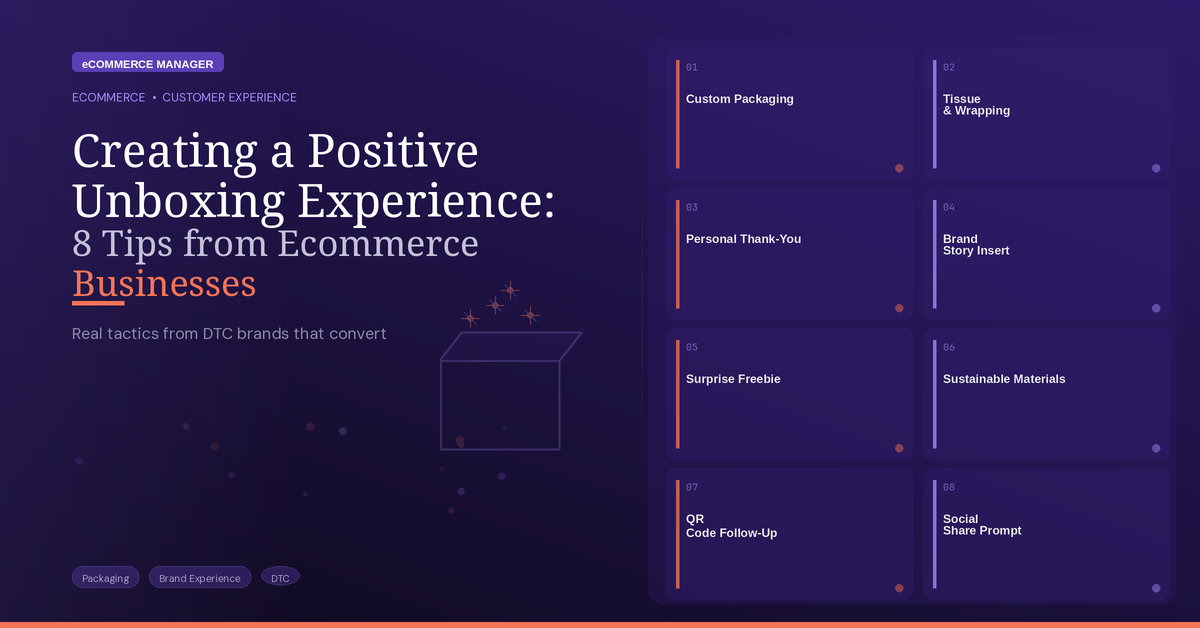
- Elevate Materials, Minimize Decorative Noise
- Embed Sensory, Personalized Touchpoints
- Design for Reorders and Reassurance
- Teach Clear Next Steps Immediately
- Lead with Plain-Language Credibility
- Deliver a Considered, Polished Presentation
- Let Customer Feedback Shape the Reveal
- Standardize and Track Every Package
Elevate Materials, Minimize Decorative Noise
Working with first-time ecommerce founders taught me that many people overestimate the value of adding more packaging elements and underestimate the value of material choice and finishing techniques. We regularly see founders wanting multiple inserts, stickers, QR codes, foil stamping, and several promotional messages because they assume more automatically creates a better unboxing experience.
One example that stands out is a rigid paper bag project where the branding relied primarily on blind embossing rather than large printed graphics. Instead of covering the surface with colors, messages, or multiple finishes, the brand name and product information were pressed directly into the paper using a heat embossing process. As customers handled the package, they could see and feel the raised texture immediately. The effect felt premium and intentional because the material itself became part of the experience.
That observation reinforced why we invest heavily in free design support and proofing. Before production, we help founders evaluate how sizing, materials, textures, and finishing techniques will work together rather than simply adding more elements. In my experience, the best unboxing experiences often come from one well-executed detail that customers can immediately see and feel, rather than multiple features competing for attention.
The State of eCommerce in 2026

Embed Sensory, Personalized Touchpoints
As a Senior Packaging Experience Strategist with 7 years of data-driven ecommerce optimization in Sweden’s Nordic region, my best tip is to embed personalized, sensory-rich inserts that transform unboxing into an emotional ritual. According to a 2025 Journal of Retailing study, personalized unboxing boosts revenue by 40% through enhanced emotional connection. At my Stockholm-based firm, we replaced generic tissue with scented, FSC-certified crinkle paper infused with subtle pine notes. A nod to local forests, and included QR codes linking to behind-the-scenes sustainability videos. This tactile + digital hybrid approach increased Instagram unboxing posts by 62% within three months, aligning with findings that 40% of customers share packaging experiences socially. We also added fold-out panels revealing hidden brand messages, creating layered discovery that elevated perceived value by 35% in post-purchase surveys. Our packaging reduced returns by 22% by improving initial satisfaction, echoing research showing reusable packaging strategies cut return rates significantly. Clear tracking communication before delivery built anticipation, while handwritten thank-you notes reinforced human connection. This holistic, data-backed strategy turns transactional moments into shareable brand loyalty events, proving that intentionality in every texture, scent, and message drives lasting customer relationships.
The Complete 2025 E-commerce Manager Career Guide: From Entry-Level to Executive

Design for Reorders and Reassurance
My best tip: design the unboxing for the second purchase, not for a photo. Pretty packaging that photographs well but adds cost and waste does not pay back. The unboxing should remove a worry and make reordering easy, because that is what actually drives repeat revenue for a basics brand.
For us the highest-impact change was the smallest. A single printed card with a plain-language returns and exchange path, plus a QR code that pre-fills a size swap. Our biggest post-purchase anxiety is “what if the fit is wrong,” and putting the easy fix right in the box, before they even try the product on, removed the fear that stops a second order.
The result: exchange friction dropped, a return turned into an exchange more often, which keeps the revenue, and repeat purchase rate ticked up because the first experience felt safe. We spent almost nothing. It was a card and a clear process, not foil and ribbon.
What I would tell other brands: the best unboxing moment is not the reveal, it is the quiet feeling that if anything is wrong, this brand already made it easy to fix. Reassurance beats decoration, especially for anything people buy on fit.

Teach Clear Next Steps Immediately
My best tip is to make the unboxing teach the customer what to do next.
At Domepeace, we sell scalp care for bald men, so the first moment after delivery matters. If someone opens the box and sees random products, they may not know the best order to use them in. That creates friction.
We improved the experience by making the package feel simple and intentional. Clean box, black tissue paper, and products that feel like part of a routine instead of separate items. When we include items like our Lather Bar, scalp scrub, moisturizer, or DAILY SCALP SPF 50, the goal is for the customer to understand: cleanse, exfoliate, moisturize, protect.
A positive unboxing does not need to be expensive. It needs to reduce confusion.
The package should answer three questions fast:
What did I buy?
How do I use it?
Why does this feel worth what I paid?
That last part matters. A customer starts judging the brand before they even use the product. If the box feels careless, the product has to work harder to rebuild trust. If the box feels intentional, the product starts with more belief behind it.

Lead with Plain-Language Credibility
In a regulated women’s health category, we can’t lean on luxury-unboxing tricks or bold cure claims, so the compliance insert has to do real work. We treated ours as the brand moment, not the legal afterthought. The first thing she sees inside a Happy V probiotic order is a card written in plain customer language: why these strains, what the science says, and which OB/GYNs and microbiome researchers on our advisory board helped design the formula. It costs more than a generic thank-you card, and it took longer to clear because every line is structure-function compliant. But it replaces the luxury cues we’re not allowed to use with credibility cues we are. We learned this the hard way — an early vaginal probiotic launched with a clinical-style label (strain names, CFU counts, mechanism callouts) barely moved until we translated it into plain language. The insert is that same lesson, applied to the box. Subscription repeat behavior has moved with it.

Deliver a Considered, Polished Presentation
My best tip is to treat the unboxing experience as the first physical handshake with your customer. The product may be what they paid for, but the packaging is what tells them whether the brand cared after checkout. Clean presentation, protective packing, a simple insert, and a small personal touch can make the order feel intentional instead of transactional.
One enhancement that works well is adding a short thank-you card with helpful next steps, not just a promo code. For example, instead of stuffing the box with generic marketing material, include a quick note that explains how to get the best use from the product, who to contact for help, and why the order was packed the way it was. That turns the box into part of the customer experience instead of just a delivery container.
A great unboxing moment doesn’t have to be expensive. It has to feel considered. Customers remember when something arrives safely, looks polished, and makes them feel like a real person was behind the order. That’s the kind of detail that drives repeat purchases, better reviews, and more word-of-mouth than another discount ever could.

Let Customer Feedback Shape the Reveal
My best tip is to let customer feedback guide packaging and presentation so the unboxing feels modern, premium, and personal. Treat presentation as part of the artwork rather than just protection, because how a piece arrives communicates value and supports the artist. At MusaArtGallery, I used customer feedback to refine how we position and present pieces, emphasizing a gallery-style reveal that highlights craftsmanship and narrative. That focus helps buyers connect with the work immediately and supports long-term engagement with the artist.

Standardize and Track Every Package
My best tip is to make unboxing repeatable and measurable by standardizing packaging and tracking every step. Standard templates and batch creation ensure teams can deliver the same thoughtful presentation each time. At Otto Media we treated packaging like a production line: we built templates for inserts and packaging, created materials in batches, and tracked each task in ClickUp to identify bottlenecks. We also kept a human in the loop for final quality and personalization to protect the small touches customers notice.

Related Articles
- Building a Strong Brand Identity in Ecommerce: Expert Advice eCommerce Manager
- 5 Tips for Crafting Product Descriptions that Convert eCommerce Manager
- Leveraging UGC for E-commerce: Examples & Strategies