

Last Updated on April 25, 2026
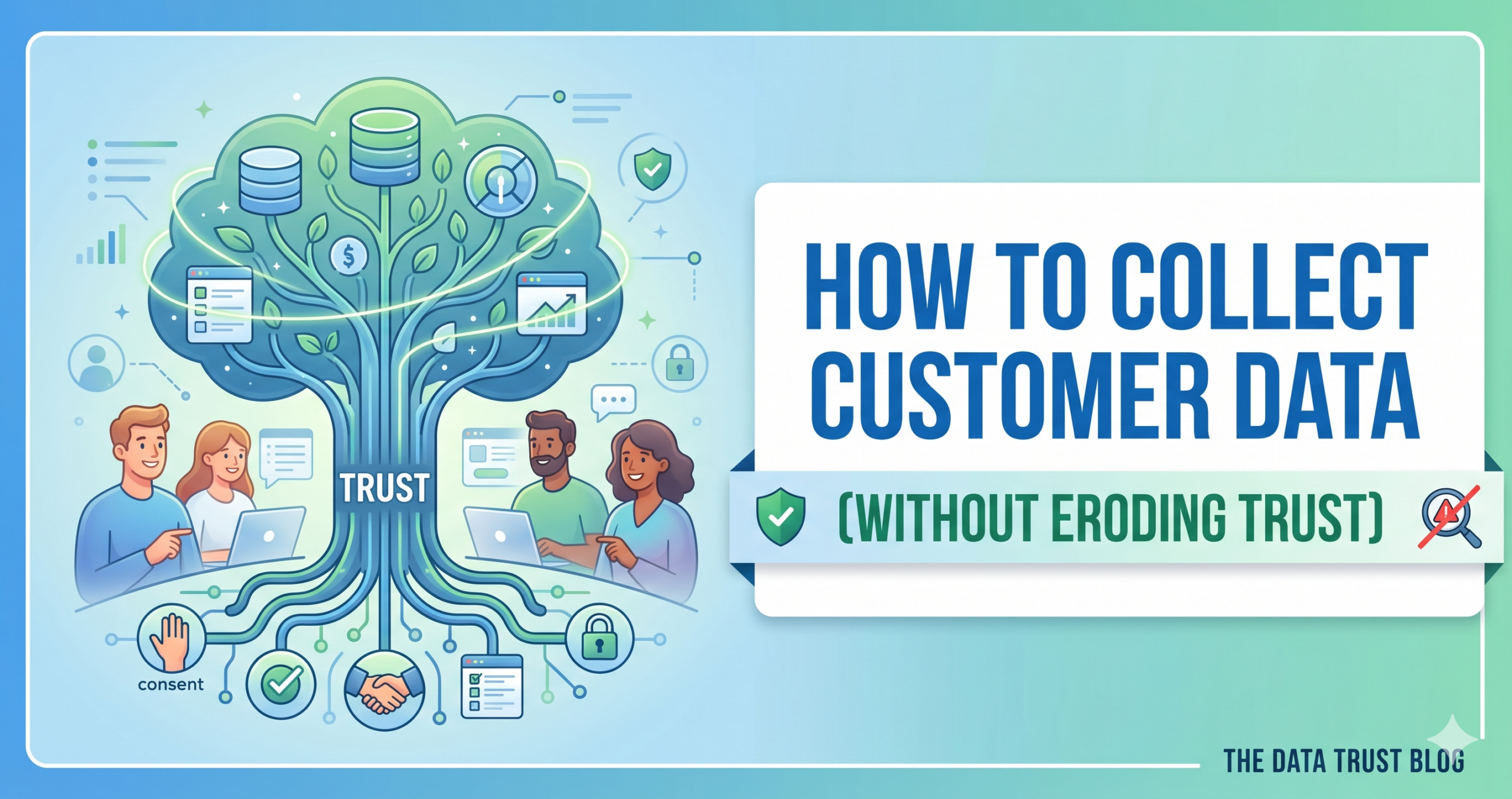
Most ecommerce teams we work with at Suff Digital know they should be collecting better customer data. Fewer have a clear picture of what to collect, when to collect it, and how to avoid the slow erosion of trust that happens when data practices outrun the customer relationship. The strongest data strategies are not the most aggressive. They are the ones that produce clean, useful information while still leaving the customer feeling that the exchange was fair.
Here is the practical framework we tend to recommend for collecting customer data well.
Start by defining the decision the data will inform
The first question is not what data to collect, but what decisions the data will help you make. If the team cannot name the specific decision, the data is almost always going to end up in a warehouse nobody looks at, producing trust debt without producing insight. A useful filter: if you cannot describe, in one sentence, the decision a data point will support, do not ship the collection.
The State of eCommerce in 2026
Collect the minimum useful level of detail
A common mistake is instrumenting for every possible future use case. That creates both legal and user-experience friction, and the extra detail rarely proves useful in practice. Collect the smallest version of each data point that will still answer the question, and leave yourself a path to expand later if a real need shows up.
Marketing Calendar: A Complete Guide
Make the value exchange obvious
Shoppers are increasingly willing to share data when they understand what they get back. Personalization, better recommendations, faster support, or a relevant discount are all reasonable trades, but only when the trade is clearly communicated. Forms, popups, and account creation flows that ask for information without surfacing the benefit feel extractive, which is the fastest way to lose the customer before they have bought anything.
Separate identity, behavior, and preference
Organizing data into three distinct categories tends to keep data practices honest. Identity data is who the customer is, behavior data is what they have done, and preference data is what they have told you they want. Each category has different rules of thumb for collection, storage, and usage. Identity data should be minimized and protected. Behavior data should be observed carefully without over-reading intent. Preference data should actually change the customer’s experience, or you should not be asking for it.
Use first-party channels wherever possible
The ecosystem has moved decisively toward first-party data. Email newsletters, logged-in accounts, loyalty programs, and on-site behavior on your own properties produce cleaner, more durable signals than third-party cookies ever did. Investing in these channels tends to pay compounding returns because the data you collect is yours, and it keeps working even as the advertising platforms change the rules.
Be explicit about consent, and give customers control
Regardless of which specific regulations apply to your business, the direction of travel is toward more transparency and more customer control. A clear, readable privacy policy, granular opt-ins where it matters, and a simple way for a customer to see or delete their data build long-term trust. The teams that build these controls early tend to find it easier to adapt when regulations change, because the work is already done.
Pair collection with a clear retention and deletion policy
Data you no longer need becomes a liability, not an asset. Set retention windows for each category of data, and automate the deletion or anonymization at the end of that window. This reduces legal and security exposure and usually improves your analytics, because old or stale data is not distorting current behavior.
The State of eCommerce in 2025!
Audit what you have collected at least quarterly
At least once a quarter, have someone who did not build the tracking plan walk through what is being collected, why, and whether any of it should be retired. Over time the collection surface area tends to expand quietly, and the only way to keep it honest is to review it on a cadence.
Marketing Calendar: A Complete Guide
A closing thought
Collecting customer data well is not about collecting more. It is about collecting with intent, collecting with consent, and using what you collect to make the customer’s experience noticeably better. The businesses that treat data as a relationship tend to outperform the ones that treat it as a resource, because the relationship compounds and the resource does not.