

Last Updated on September 29, 2026
Shopify Personalization: X Strategies for a Better CX
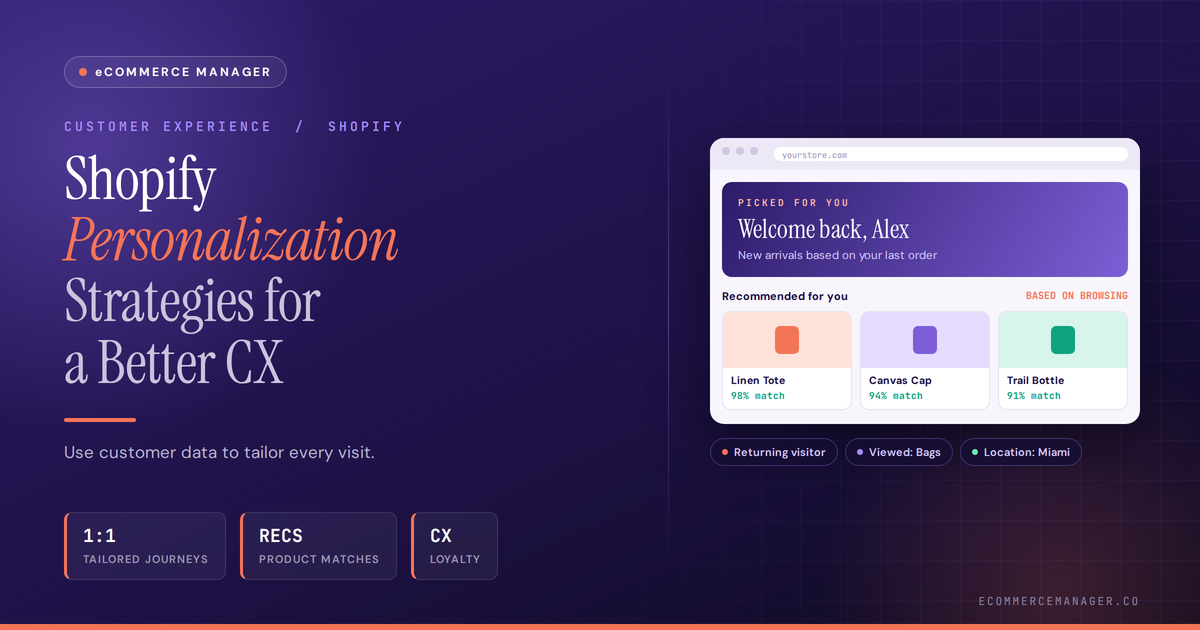
Personalization has become essential for Shopify stores looking to improve customer experience and drive conversions. This article presents fourteen proven strategies, backed by insights from ecommerce experts and successful merchants who have implemented these approaches. From AI-powered segmentation to handwritten notes, these tactics show how brands can create more relevant shopping experiences that keep customers coming back.
- Curate Collections for Lifecycle Needs
- Adapt Storefronts With AI Behavioral Segments
- Tailor Displays to Local Repeat Visitors
- Match Navigation to Buyer Personas
- Link Wishlists to Bespoke Jewelry Design
- Answer Goalkeeper Questions With Expert Guidance
- Simplify Reorders With Timely Replenishment Reminders
- Target Education by SKU and Health Need
- Align Regional Details Before Checkout
- Customize Pages by Customer Status
- Send Handwritten Notes After Key Purchases
- Let Shoppers Browse by Scent Preference
- Route Prospects by Venue Requirements
- Recommend Complements From Session and Size Data
The State of eCommerce in 2026
Curate Collections for Lifecycle Needs
Effective Shopify personalization requires moving past generic widgets to segment the storefront based on a customer’s specific lifecycle stage. We use tag-based behavioral segmentation to dynamically alter homepage content and product collections in real time, recognizing returning customers and shifting primary real estate to show products related to their specific interests. Instead of a static hero banner, the storefront becomes a curated shopping assistant that adjusts to the user’s browsing patterns and order history.
For example, if a visitor recently purchased a high-ticket item, the storefront should avoid showing entry-level products and instead highlight high-margin accessories or complementary care kits. When a customer sees a storefront that reflects their immediate needs, the discovery phase is shortened and the time to conversion drops significantly. The goal is to use data to remove friction, making the shopping experience feel intuitive rather than invasive.
Technically, the key is to avoid over-complicating the personalization engine to the point where it degrades site performance. We prioritize native Liquid logic and Metaobjects to maintain site speed while delivering a tailored experience. Personalization is most effective when it builds long-term loyalty by showing the customer they are understood, which carries much more weight than a generic discount code. Success in modern e-commerce requires balancing robust technology with a deep understanding of user behavior.
The Complete 2025 E-commerce Manager Career Guide: From Entry-Level to Executive

Adapt Storefronts With AI Behavioral Segments
I built a Shopify store where every returning visitor saw the same homepage, same product grid, same recommendations, and bounce rates kept climbing. So I pulled my zero-party data from post-purchase surveys and quiz flows, combined it with the first-party browsing and purchase history already sitting in Shopify, and used that to build dynamic segments that updated in real time based on behavior, replacing the static lists I had tagged months earlier.
The first pass was simple rule-based personalization. Repeat buyers who had purchased sourcing-related products saw upsell bundles on the homepage. First-time visitors from specific geo regions saw localized social proof and currency. That tightened the experience, but my segments kept drifting because customer behavior changed faster than I could write rules.
So I layered in an AI-driven decisioning tool that picked which product recommendations and content blocks to serve each segment automatically. The AI tested combinations I would never think to try and moved weight toward what converted without me manually adjusting every rule. I ran a holdout group that got the old static experience, and the personalized cohort consistently beat it on add-to-cart rate. Rule-based personalization got me most of the way, but the dynamic segments fed into an AI layer closed the gap on the behavior I could not keep up with by hand.

Tailor Displays to Local Repeat Visitors
I’ve helped clients scale ecom stores on Shopify through RankingCo’s custom website builds and ongoing digital strategies. Our work with boutiques like Princess Bazaar showed how small CX tweaks drive real sales growth when tied to actual visitor data.
One tactic we used was personalizing product displays by combining visitor location with number of previous visits. Returning local shoppers saw in-store try-on highlights and tailored category suggestions, while first-time visitors from other areas got shipping-focused bundles instead.
This came from restructuring campaigns and site flows around known buyer patterns rather than generic layouts. The result was less wasted clicks and higher relevance without changing the core catalog.

Match Navigation to Buyer Personas
With over 20 years leading rebrands for more than 500 companies through Black Tie Digital, I’ve helped growth-focused brands refine their Shopify stores by moving away from broad audiences toward precise buyer personas.
One strategy that worked well was building site navigation and product displays around those defined buyer types rather than generic categories. We created content and filters that matched specific customer journeys, like showcasing pre-owned luxury watches for collectors versus entry-level buyers.
In the David SW project, this meant an editable search function that delivered relevant results based on user intent instead of dumping every item at once. The approach turned casual browsing into a focused experience that felt built for them.

Link Wishlists to Bespoke Jewelry Design
With over 33 years in jewelry marketing and sales, including my role leading initiatives at John Atencio, I’ve seen how Shopify tools turn browsing into a tailored experience for fine jewelry buyers.
We built our wishlist around the heart icon on product pages so customers can quickly save pieces from collections like Layering in Blues or Paris X/O. They review selections in one place and then book a personal or virtual appointment to view them.
That wishlist directly feeds our Ring Builder and CAD 3D rendering process for engagement rings. A customer starting with a custom signet or band gets a rendered preview based on their saved choices before any production begins.
The result is a seamless path from discovery to a made-to-order piece that reflects exactly what they wanted.

Answer Goalkeeper Questions With Expert Guidance
The most impactful personalization strategy on our Keeperstop Shopify store isn’t powered by an algorithm. It’s powered by 30 years of goalkeeper knowledge built directly into the shopping experience.
Our strategy was turning every product page into a personalized consultation. Most e-commerce stores show you a product photo, a manufacturer description, and a price. Our Shopify product pages deliver a full educational experience tailored to the specific questions different goalkeepers have about that exact product. A parent looking at a youth glove finds clear sizing guidance, an explanation of whether finger protection is right for their child’s age and level, and honest expectations about durability at that price point. A competitive keeper looking at the same brand’s match glove finds technical breakdowns of latex compound performance, cut construction, and how it compares across conditions like turf, grass, and wet weather.
That depth of information on every page means each customer gets answers relevant to their specific situation without needing to call us first. The educational reviews build trust and prove the product’s value before anyone clicks add to cart. Shopify provides the frictionless checkout experience that converts that trust into a confident purchase.
We follow every product page review with video content across our @keeperstop social media channels. Our short-form Instagram and TikTok goalkeeper glove reviews help soccer goalies select the best youth goalie glove that meets a budget and playing need. That social content drives traffic back to the Shopify store where the detailed education is waiting.
When a customer does need personal guidance, the experience stays personal. They call or email us in Connecticut and talk to a real goalkeeper who asks the right questions: What’s your budget? What surface do you play on? How often are you training? What’s your hand shape? That conversation picks up exactly where the product page left off.
The result is a Shopify experience that feels like working with a personal goalkeeper consultant, not browsing a catalog. We moved from transactional to relational because we recognized that every goalkeeper glove sale is personal. That approach has helped build a community of 600,000+ with 13 million+ impressions monthly.
The best personalization isn’t showing someone products based on browsing history. It’s making sure every touchpoint answers their specific question with genuine expertise.

Simplify Reorders With Timely Replenishment Reminders
We ran a DTC supplement brand before I built Fulfill.com, and here’s what actually moved the needle on Shopify personalization: we stopped treating returning customers like strangers.
The specific play was dead simple but powerful. We used Shopify’s customer data to identify anyone who’d purchased in the last 90 days and automatically showed them a different homepage hero. Instead of “Try our sleep formula,” it said “Your usual order” with a one-click reorder button. No browsing, no cart, just click and done. Conversion rate on returning visitors jumped 41% in the first month.
But the real unlock came from inventory data integration. When someone bought our sleep supplement, we knew they’d run out in roughly 28 days based on serving size. On day 25, we triggered a personalized email with their exact product and a discount that expired in 72 hours. The subject line was just “You’re running low.” Open rates hit 67% because it wasn’t marketing, it was useful. We weren’t selling, we were reminding.
The mistake most Shopify stores make is over-personalizing the wrong things. They’ll customize product recommendations using some AI widget but ignore the basics. Your repeat customer shouldn’t see the same “Welcome! Here’s 10% off your first order” popup that a new visitor sees. That’s not personalization, that’s lazy.
At Fulfill.com, we see this same pattern with 3PLs and brands. The best operators don’t try to personalize everything; they obsess over the moments that actually matter. For e-commerce, that’s usually three touchpoints: the homepage for returning customers, the reorder flow, and the replenishment reminder. Nail those and you’ll see more lift than any recommendation engine will ever give you. Personalization isn’t about being clever, it’s about removing friction for people who already trust you.

Target Education by SKU and Health Need
The post-purchase email flow has been significantly improved in terms of personalized experience on Shopify through segmentation based on Product SKU and Health Concerns, not merely based on date purchased. Prior to this new approach, we would send the exact same follow-up sequence of emails to a customer who had purchased our BV Probiotic and a customer purchasing for Menopause Support. The follow-up sequence appeared generic to both parties. Therefore, we redesigned the follow-up sequence to include an educational path per SKU, where Learning Center Articles are targeted to their specific concerns and timed to be received once the product begins to have an effect (typically 8–12 weeks for Probiotics). Additionally, we separated First-Time Buyers from Repeat Buyers so that repeat customers were not forced to learn the basics again. Once we implemented segmentation, we saw meaningful improvement in converting one-time buyers to subscribers as well as a drop in unsubscription rates. In a regulated category, you cannot rely solely on hype-type claims; therefore, leveraging relevance is your lever. Segment by reason of purchase, not by date purchased.

Align Regional Details Before Checkout
One example is segmenting the customer experience by market. Gigo Underwear serves customers in the United States and international markets, so we focus on making the Shopify shopping experience clear and relevant for each audience.
For us, personalization is not only about using a customer’s name. It is about reducing friction before checkout. We work on keeping the right product collections, size guidance, shipping expectations, campaign messaging, and promotional offers aligned with how customers actually shop for men’s underwear, swimwear, and lifestyle apparel.
In apparel ecommerce, customers need confidence before they buy. They want to understand fit, style, delivery expectations, and which product is right for the occasion. When that information feels relevant and easy to find, the customer experience improves and the path to purchase becomes much smoother.

Customize Pages by Customer Status
The personalization that works best isn’t based on demographics; it’s based on purchase state.
On a Shopify Plus store for a subscription brand, we split every visitor into three distinct states using native customer tags (customer.tags) and metafields: first-time visitor, one-time buyer, and active subscriber.
Instead of showing everyone the same generic product page (PDP), the layout adapts dynamically based on where the customer is in their journey:
– First-time visitors see the full brand story: deep-dive ingredient breakdowns, prominent reviews, social proof, and a standard option to buy once or subscribe.
– One-time buyers bypass the introductory story. Instead, they get a “1-click reorder” banner and a personalized bundle recommendation based on what they previously bought.
– Active subscribers don’t see a standard “Add to Cart” button at all. Instead, they see their next scheduled delivery date, an option to reschedule, and a quick add-on offer to slip extra items into their upcoming box at a discount.
The best part? Zero third-party personalization apps. Everything runs entirely on native Shopify architecture: Liquid conditions, customer metafields, and Shopify Functions for dynamic discount logic. That means zero impact on page speed (Core Web Vitals) and no extra $1,000+/month SaaS bills.
The result: a 34% increase in repeat purchases within the one-time-buyer segment in the very first quarter.
The takeaway: The most valuable personalization signal you already own is what the customer has actually bought before. Maximize that data with native platform tools before you jump to buy an expensive AI recommendation engine.

Send Handwritten Notes After Key Purchases
Real personalization example from our own Shopify integration work: Most “personalized CX” ends up meaning a first-name merge tag in an email template, which customers can spot from a mile away at this point. We built something different. When a Shopify customer crosses a specific threshold—say, their third purchase or a big cart—our system automatically triggers a genuinely handwritten note, written by our own patent-pending robotics, referencing their actual order.
The strategy behind it: We treat personalization as “does this feel like someone actually noticed you,” not “does this technically insert your name correctly.” A note that says something specific about what they bought, in real handwriting, reads as personal in a way no email template can fake, because customers instinctively know software wrote the email.
Results-wise, engagement on these notes runs close to 99%, and we’ve watched it lift repeat purchase behavior meaningfully for the brands using it. It’s a small addition to an existing Shopify flow—one webhook—but it changes the emotional read of the whole customer relationship.
We’ve been running this since 2018, self-funded, 11 employees, 6 patents pending.
Rick Elmore, Founder/CEO, Simply Noted (simplynoted.com)

Let Shoppers Browse by Scent Preference
We reorganized our storefront so customers could shop by scent before they ever picked a product type. Someone who loves a citrus profile wants it in the hand soap, the surface spray, and the laundry product, and sorting by category first made them hunt across four pages to find that.
The decision came from watching how the same shopper behaved across a catalog that spans cleaning, home organization, automotive care, and safety. We manufacture by product type, but our navigation now leads with scent preference, and product type comes second. A visitor who lands on one item can see everything else that matches what they already like, without typing anything into a search bar or filling out a quiz.
We built it out of merchandising logic, reorganizing existing collections rather than adding any new tool. On our retail shelves, a customer scans for the look and smell they recognize, then reaches for the format they need. I set up our Shopify store to mirror that same sequence.

Route Prospects by Venue Requirements
I run a 7-figure vending, smart cooler, and micro-market operation, so our “customer” is usually a facilities manager, HR lead, or school admin trying to solve a breakroom problem fast.
One Shopify personalization strategy that worked well for us was segmenting the shopping/request flow by location type: office, school, warehouse, gym, or hospitality venue. Based on that answer, the store shows different service options, product mixes, and language.
For example, a school prospect sees messaging around student/staff access, cashless payments, and controlled product selection. An office prospect sees micro-market, AI cooler, healthy snack, and 2-hour local support positioning.
My advice: don’t personalize with gimmicks like “Sarah.” Personalize around the operational problem the buyer actually has, then use Shopify customer tags/forms to route them into the right offer and follow-up.

Recommend Complements From Session and Size Data
We used on-site personalized product recommendations tied to browsing and past purchases to improve discovery and conversion on Cyber Techwear’s online store. Showing relevant items (style, size, and category affinities) on product pages and in the cart reduced friction and helped customers find complementary pieces without searching.
Practically, we surface three personalized blocks: people also viewed (based on recent session behavior), complete the look (based on past purchases and collection affinity), and size-aware suggestions (showing items available in the visitor’s previously chosen sizes). These blocks are fed by the store’s behavior data and mirrored in follow-up transactional emails to keep the experience consistent across touchpoints.

Related Articles
- BigCommerce Personalization: 7 Tips for a Customer-First Experience
- Building a Strong Brand Identity on Shopify: Proven Tactics
- Shopify Product Launch Strategies: Tips & Examples