

Last Updated on September 29, 2026
Creating a Winning Abandoned Cart Email Sequence on Shopify: Tips & Examples
Recovering abandoned carts can directly impact a Shopify store’s revenue, but knowing exactly what to say and when to send those emails makes all the difference. This article breaks down proven strategies for building an effective cart recovery sequence, complete with expert insights on timing, messaging, and incentive structure. Learn how to turn hesitant browsers into paying customers with a well-crafted email approach that addresses real objections and builds genuine trust.
- Mirror Purchase Motives to Remove Doubt
- Offer Financing and Consultations
- Ask What Stopped Them
- Nudge Buyers Before Coupons
- Prioritize Service Before Sales Pressure
- Send Prompt, Helpful Recovery Emails
Mirror Purchase Motives to Remove Doubt
I’ve run a lot of eCommerce Google Ads and Shopify-style funnels, and the biggest abandoned-cart mistake I see is going straight to a discount. My tip: use the first email to remove doubt, not margin.
A specific email I like is: subject line, “Still deciding on ?” Body: “You left in your cart. If you’re comparing options, here’s the short version: [key benefit], [shipping/return reassurance], [social proof or review snippet].” Then one clear button: “Return to your cart.”
What makes it work is that it mirrors the promise from the ad or product page. If someone clicked because of “fast delivery” or “best for sensitive skin,” the cart email should repeat that exact reason, not introduce a totally new angle.
I also tag each email separately in Shopify/GA4 so I can see which message actually drives revenue, not just clicks. Cart abandonment is often a product-page or checkout-friction problem wearing an email-marketing disguise.

Offer Financing and Consultations
With over three decades in marketing and leading marketing and sales at John Atencio, I have found that high-ticket cart abandonment requires removing friction around purchasing options rather than just spamming standard discounts.
In our sequence for handcrafted pieces like the Apollo Pave Diamond Curve Ring, our most effective follow-up email pairs clear Affirm financing options with an invitation to book an in-person or virtual consultation.
This works because luxury and wearable-art jewelry involves careful consideration. Offering transparent monthly payment options alongside direct access to our design consultants resolves both budget hesitation and product questions immediately.

Ask What Stopped Them
Seven years running lifecycle email for DTC brands, most of it on Shopify.
The tip: stop assuming they forgot. Almost nobody abandons a cart by accident — they hesitated about something specific, usually shipping cost, sizing, or a question the product page did not answer. A reminder addresses none of that.
An abandoned cart is not a memory problem. It is an unanswered question.
So our first email is plain text, from a named person, and it asks what stopped them. No discount, no product grid, no countdown.
It recovers carts, but the more valuable output is the replies. Those tell you what to fix on the product page, which prevents the next abandonment rather than chasing it.
The cost is that it does not scale. Someone has to read and answer, and at volume that becomes a support function you have to staff.
THE EMAIL
Subject: Did something stop you?
Hi Daniel,
You left something in your cart. No discount attached to this — I’d just like to know if something got in the way.
Shipping cost? Sizing? A question the page didn’t answer?
Reply and tell me. I read these.

Nudge Buyers Before Coupons
The biggest thing that helped was not opening with a discount code. If your first email is a coupon, people learn real quick that abandoning the cart just gets them a discount, so they start doing it on purpose. That adds up fast and just eats your margin for people who would’ve paid full price anyway.
What actually worked for us was a simple email about an hour after someone bailed, just showing them what they left in the cart, no code attached, maybe a line like “only a few left” or a review from someone who bought it. Most people didn’t leave because of price; they just got distracted or weren’t sure yet, so a quick nudge usually did the job on its own. If we did throw in a discount, it was in a follow-up a day or two later, and only for people who still hadn’t come back, so we weren’t handing it out to everyone by default.

Prioritize Service Before Sales Pressure
The most effective abandoned cart sequences prioritize customer service over immediate sales pressure, focusing on friction removal rather than instant discounting. Leading with a coupon code is a common mistake that unnecessarily erodes margins on shoppers who were merely distracted by a phone call or a commute and intended to return anyway. A successful Shopify sequence should be tiered by intent, starting with a low-pressure check-in sent two to four hours after the cart is left behind.
The specific email we rely on uses the subject line: “Did something go wrong with your order?” The body copy avoids sales language entirely, instead asking if the user encountered a technical glitch or has specific questions about shipping times or product specifications. It includes a direct link back to the cart and a clear path to customer support.
This approach works because it reframes the brand as a helpful partner rather than an automated marketing engine. It also provides actionable data on why customers drop off—such as high shipping costs or a lack of preferred payment methods—which is far more valuable for long-term optimization than a simple discount. We reserve financial incentives for the third email in the sequence, typically sent 48 hours later. This ensures we only trade margin for a conversion when a customer truly needs a nudge to overcome price sensitivity, while the earlier emails recover high-intent shoppers through simple service and brand presence.

Send Prompt, Helpful Recovery Emails
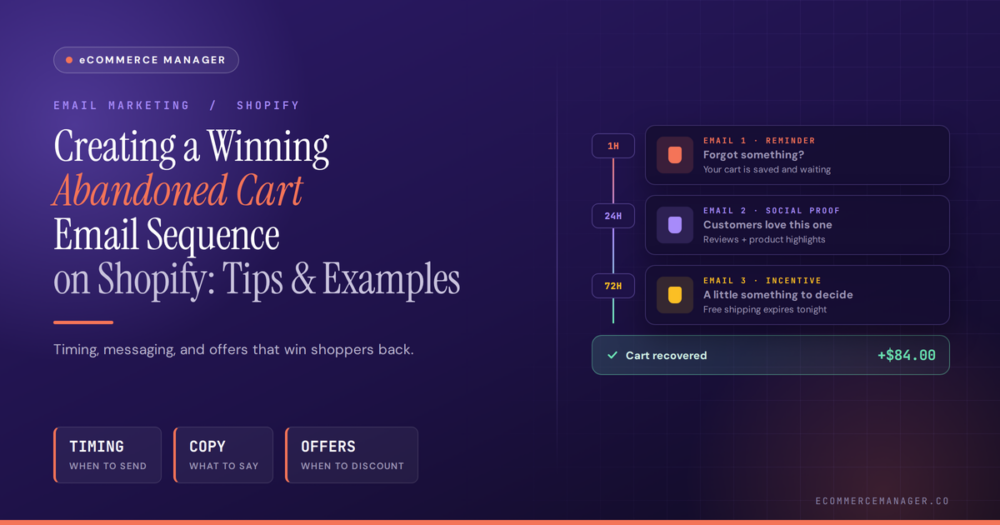
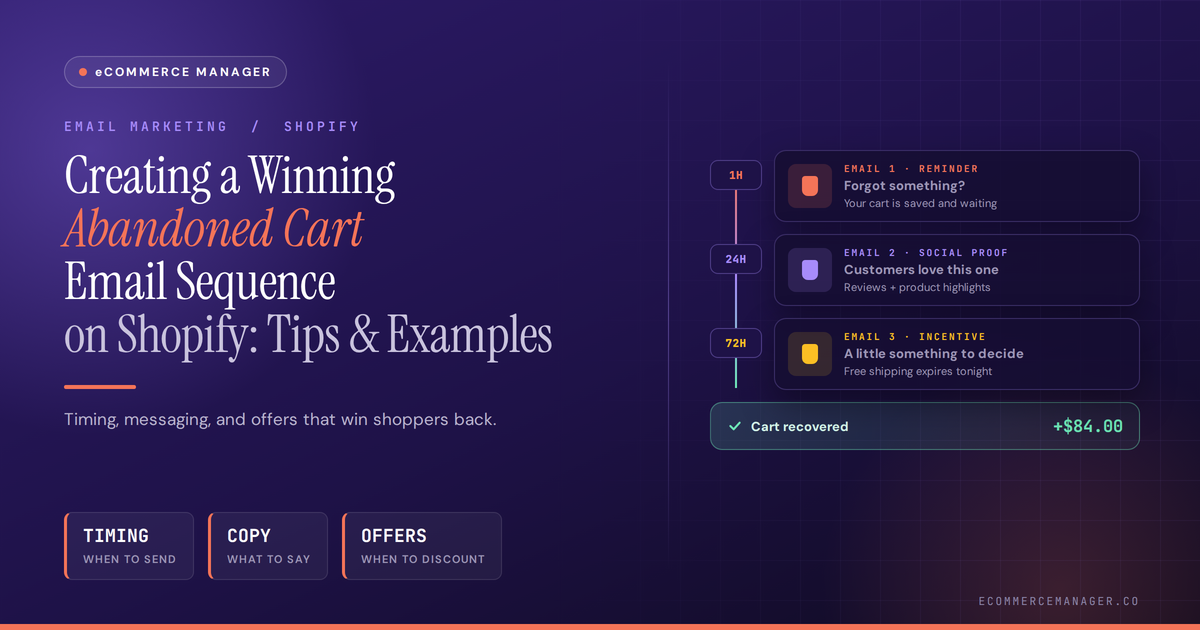
Send your first abandoned cart email within one hour of cart abandonment. Quick timing captures shoppers while their purchase intent remains high.
I send a helpful reminder email featuring the exact item left behind, a dynamic photo, clear product reviews, and a direct checkout link. Instead of offering discounts immediately, the message asks if the customer faced technical issues during checkout.
This friendly approach builds trust, resolves customer support friction, and recovers lost sales without hurting profit margins.

Related Articles
- Recovering Abandoned Carts: 5 Effective Strategies from E-Commerce Businesses
- WooCommerce Abandoned Cart Emails: Strategies for Recovering Lost Sales
- Effective Shopify Pop-Up Forms: Tips & Best Practices