

Last Updated on June 25, 2026
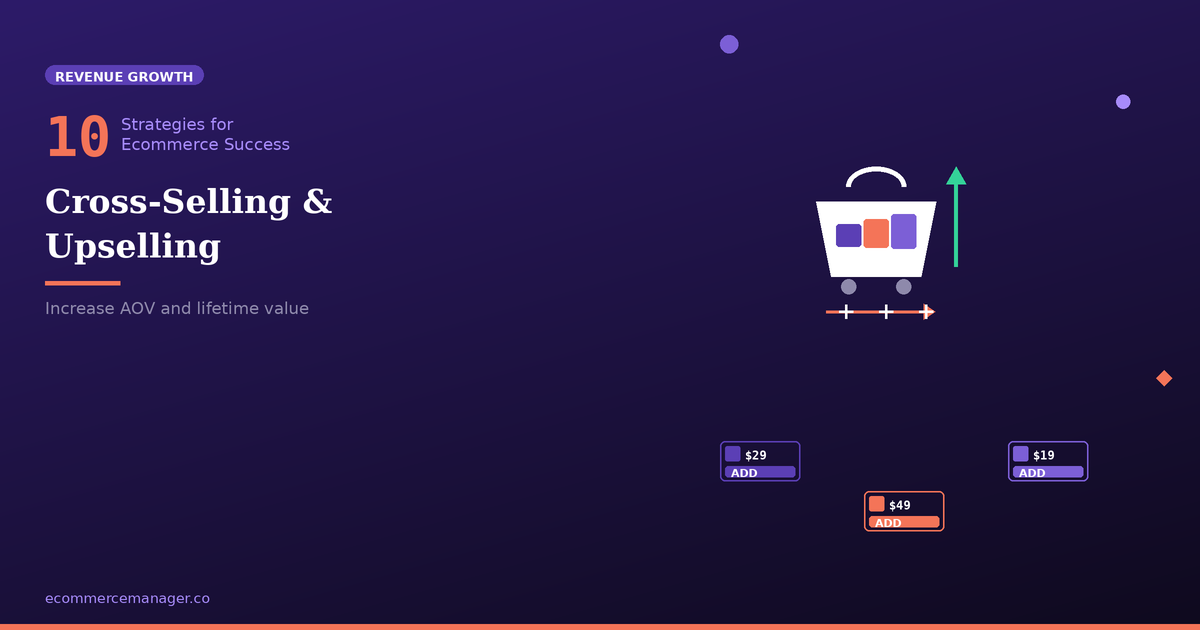
10 Cross-Selling and Upselling Strategies for Ecommerce Success
Growing revenue from existing customers requires more than simply suggesting random products at checkout. This article breaks down proven cross-selling and upselling strategies that convert browsers into buyers, backed by insights from ecommerce experts who have tested these methods at scale. Learn how to present the right offers at the right moment without overwhelming shoppers or sacrificing trust.
- Explain Real Combos On Item Pages
- Solve Foreseen Regrets With Honest Pairs
- Time Companion Add-Ons After First Order
- Lead With Care and Transparent Bundles
- Nurture With Post-Sale Tips and Complements
- Guide Decisions With Fewer Timed Picks
- Start With Packs Then Stage Follow-Ups
- Predict Next Best Path From Intent
- Uncover Goals and Orchestrate Cohesive Kits
- Trigger Matched Extras From Live Signals
Explain Real Combos On Item Pages
The cross-selling approach that worked best for us was almost the opposite of what the standard playbook recommends.
Most e-commerce cross-sell advice focuses on the cart or checkout — add a widget showing related products, trigger a pop-up before someone exits. We tried those, and the conversion rates were mediocre, and the impact on cart abandonment was hard to separate from other variables.
What actually moved the average order value was moving the cross-sell conversation earlier, to the product page itself, and framing it around a genuine use case rather than a related product suggestion.
Instead of “customers also bought” we wrote a short section on specific product pages explaining what a meaningful portion of customers purchased together and why the combination worked better than either item alone. Not algorithmically generated. Written by someone who actually used both products and could explain the practical reasons.
One outdoor gear product page had a section explaining why customers who bought for a specific use case almost always needed a second item to avoid a particular frustration. It read like advice rather than promotion.
That single page change increased the rate at which customers added the second item from somewhere around 4 per cent to just over 17 per cent over about two months. We tracked it specifically because the change was sufficiently isolated to measure cleanly.
The thing that seems to matter is that customers can tell the difference between a system suggesting something adjacent and a person explaining why two things genuinely go together. The latter converts better and generates fewer returns.

Solve Foreseen Regrets With Honest Pairs
My approach to cross-selling is to only suggest the thing the customer will thank me for later, never the thing that pads the order. At EV Cable Hub the temptation is to bolt every accessory onto a cable sale, but a buyer who feels upsold once does not come back. So we cross-sell from the angle of “here is what you will wish you had bought,” based on the support questions people send us a few weeks after delivery.
The example that worked best was pairing a charging cable with a cable lock and a small storage bag. We knew from our inbox that two recurring regrets after buying a cable were having nowhere tidy to keep it in the boot and worrying about it being pinched while charging in public. So rather than a generic “customers also bought” strip, we framed the pairing honestly on the cable page as the two things people commonly come back for. It lifted average order value on those products by about 22%, and the returns on the add-ons were near zero because they solved a problem the buyer already had.
The thing I would tell anyone is that the best cross-sell is the answer to a complaint you have not had yet. Mine your post-purchase messages for what people wish they had known, then offer that at the point of sale. Suggest what honestly completes the job, and the uplift comes without the resentment that kills repeat custom.

Time Companion Add-Ons After First Order
The first purchase is the highest-trust moment you’ll have with a new customer. Waste it on a generic cart-page upsell or a blanket discount and you’ve already broken something. So at Happy V we don’t cross-sell at checkout — we wait until the first order has shipped and the customer has had time to actually start the protocol. For someone who bought our vaginal health probiotic, the second touch introduces the prebiotic or the digestive enzyme as a companion, not a substitute. The trigger is order completion plus a behavioral window, not cart value.
Two things shape the messaging. One, claims discipline — under FDA/FTC structure-function rules we can’t say “this fixes X” or imply the first product needs a second to work. We explain how the microbiome connects gut and vaginal health and let the customer decide. Two, subscription is the spine: most of our cross-sell conversions happen when an existing subscriber adds a second SKU to their monthly order. Lower friction than a fresh checkout, and customers tell us it just feels like the next step rather than a sell.

Lead With Care and Transparent Bundles
At MacPherson’s Medical Supply, we don’t think of it as “upselling”, we think of it as making sure someone actually goes home with everything they need to stay safe and independent. That mindset changes the whole game.
Here’s how it works in practice. When someone comes to us for a power wheelchair or a custom mobility device, the conversation doesn’t stop at the chair. We’re asking: how’s your home set up? Do you have the right cushion to prevent pressure sores during long sitting? What about a ramp, or transfer support? Because we’ve been serving the Rio Grande Valley for over 80 years, we’ve learned that the “add-on” is usually the thing that determines whether the primary product actually works for that person’s life.
Our most successful “cross-sell” is really just good care. A patient picking up respiratory supplies often benefits from talking to our respiratory therapist on staff, and that conversation naturally surfaces related needs they didn’t know they had. Someone fitted for custom orthotics frequently needs bracing elsewhere, because the body compensates. We bundle those because they genuinely belong together, not because it pads a ticket.
The trust piece is everything. We accept Medicare, Medicaid, VA, TriCare, and most insurance, so we can tell a customer honestly what’s covered and what isn’t before they commit. When you lead with that kind of transparency, people stop bracing for a sales pitch and start treating you like an advisor. That’s when they say yes to the complementary product, because they believe you.
My advice for any ecommerce seller: anchor every recommendation in the customer’s actual outcome, not your margin. Ask better questions than your competitors. The right add-on solves a problem the customer already has. Do that consistently, and the cross-sell stops feeling like selling and starts feeling like service, which is exactly why people come back.

Nurture With Post-Sale Tips and Complements
As a digital marketer, I avoid the typical “Customers also bought…” approach and instead treat cross-selling as part of the customer journey.
One strategy that worked exceptionally well was creating post-purchase educational emails rather than promotional emails. For example, after customers purchased a home coffee machine, we sent a series of brewing tips and maintenance guides, and naturally introduced premium coffee beans, filters, and descaling kits at the exact moments customers would need them.
By focusing on helping rather than selling, the recommendations felt relevant instead of intrusive, which increased average order value by more than 20% and generated a high percentage of repeat purchases from customers who viewed the brand as a trusted advisor rather than just another online store.

Guide Decisions With Fewer Timed Picks
One note: I run Eprezto, a fully digital car insurance brokerage in Panama, not a product store, so I think of this as recommending the right option, not pushing more.
The approach that works is recommending fewer, better-fitting options at the right moment, not surfacing everything. Most companies cross-sell by showing more products everywhere and hoping something sticks. That overwhelms the customer and slows the decision, which costs you the sale you already had.
At Eprezto we reduced the carriers we display from eight to between four and five. Fewer options meant less engineering overhead, because each carrier connects differently and needs its own maintenance, and faster customer decisions. The key shift was becoming a recommender, not just an aggregator. We point the customer to the option that actually fits them rather than making them sift.
The mechanism is that a relevant, well-timed recommendation feels like help, while a generic upsell feels like a tax. We give substantial value first, then make a minimal ask timed to decision behavior, framed as a single contextual question instead of a generic form. The same logic applies to suggesting a related product: do it when the customer’s behavior shows they are ready, not on every page.
The honest part is that more choice looked like more chances to sell, but it actually reduced conversion until we cut it down.
My advice is to cross-sell by recommending the smallest set of genuinely relevant options at the moment the customer is deciding, framed as one helpful question rather than a wall of add-ons.

Start With Packs Then Stage Follow-Ups
We believe cross-selling only works when it truly benefits the customer, not just when it increases the order size. Many of our products are grouped into packs, which are sets of items that naturally go together. This way, instead of buying one thing and having to figure out what else they might need, customers get a complete setup in one purchase. It helps us raise our average order value and makes things easier for them too.
After that, we add more offers as customers move through the buying process. In the cart, we suggest upsells that go well with what they’re already getting. Right after they check out, we offer a one-time discount on an add-on. Later, we send an email with a 25% discount and free shipping to help them complete their order.
The key to making this work is our front-end experience. We redesigned our welcome process so new customers stay interested after their first purchase instead of losing touch. Cross-selling isn’t just a single popup at checkout. It’s about making sure that after someone buys, the next product that suits them is always easy to find and easy to choose.

Predict Next Best Path From Intent
We saw better results when we stopped treating every customer the same. Seasonal shopping moves quickly, so we built our recommendations around urgency and intent. A shopper planning for a group behaves differently from someone buying a single item. A shopper close to an event values speed and confidence more than browsing.
We focused on path based recommendations to guide choices. When a shopper entered through a themed page and moved across related categories, we used that journey to predict the next best option. This worked better than general best seller suggestions because it reflected real time intent. As a result we improved add on rates and conversions while reducing the need for discounts.

Uncover Goals and Orchestrate Cohesive Kits
Our most successful cross-selling opportunities usually come from understanding what the customer is trying to achieve rather than simply recommending additional products.
Many of our customers are first-time founders launching a brand for the first time. They may initially inquire about one product, such as a custom coffee bag, bakery bag, or paper cup. During the design and consultation process, we often learn they’re also thinking about samples, stickers, wrapping paper, labels, takeaway bags, or other packaging components needed to create a more consistent brand experience.
One example involved customers ordering custom cups for cafes and beverage businesses. Through conversations with our team, we found many also needed matching cup sleeves, stickers, takeaway bags, or packaging materials that reflected the same branding. Instead of treating those as separate purchases, we guided customers through how the different packaging elements would work together. This helped simplify sourcing for the customer while creating a more cohesive brand presentation.
I’ve found that the most effective upselling happens when the recommendation solves a problem or supports the customer’s goals. Customers respond much better when additional products feel relevant to their project rather than appearing as an attempt to increase order value.

Trigger Matched Extras From Live Signals
My sales background and time building early-stage companies showed me that cross-selling works best when it extends an existing purchase path rather than creating new ones. At The Idea Farm we build connected data systems that surface offers only when they match a customer’s actual buying signals.
One tech client had repeat buyers of core software tools. We layered a single messaging track across their order flow that highlighted complementary add-ons tied to usage data. The system pulled from their sales numbers so offers stayed relevant and stopped once the match ended.
This kept marketing accountable to outcomes instead of volume, which aligned with how I lead the agency around measurable growth.

Related Articles
- Leveraging UGC for E-commerce: Examples & Strategies
- Ecommerce Optimization: Conversion Strategies From The Experts – eCommerce Manager
- Building Customer Loyalty: Social Media Strategies That Work