

Last Updated on May 5, 2026
Global order fulfillment is one of those topics that looks like a logistics problem from the outside but behaves like a systems problem from the inside. The physical movement of goods is usually the smallest of the three challenges. The larger ones are the orchestration layer that tells every system what is happening, and the customer experience layer that keeps the buyer informed and confident the whole way through. At Suff Digital, the ecommerce brands we support have generally succeeded or struggled with international fulfillment based on how cleanly those three layers are connected.
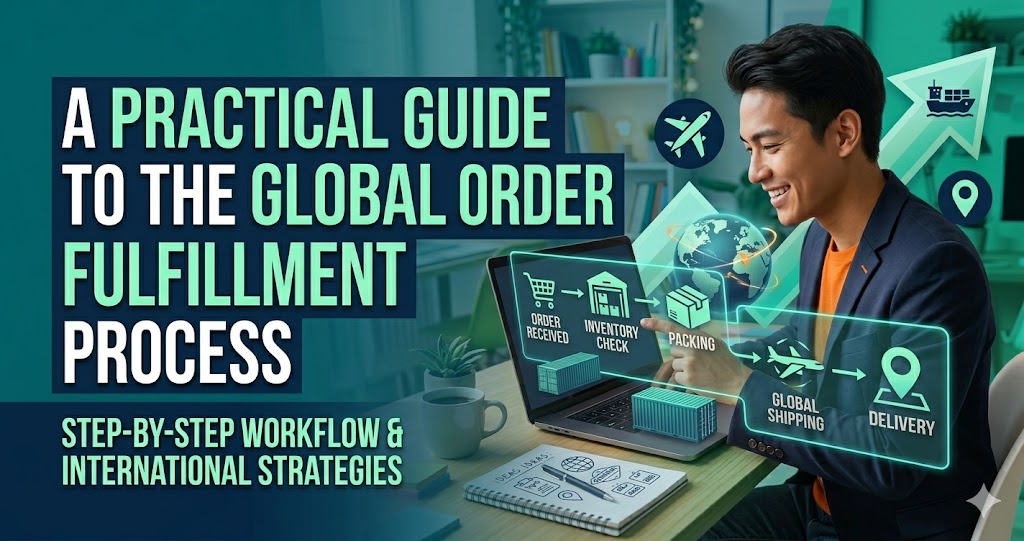
Here is a practical guide to the global order fulfillment process, with a focus on the decisions that separate smooth operations from chaotic ones.
The State of eCommerce in 2026
Step 1: Understand what actually happens when an order is placed
The moment a customer places an international order, a small cascade of events needs to fire. The order has to be captured in the store, passed to the order management system, assessed for fraud, routed to the right warehouse or 3PL, picked, packed, labeled with the correct carrier and customs documentation, scanned into a shipping network, cleared through customs, handed to a final-mile carrier, and delivered. Each hop is a potential failure point. A clear picture of the full path, usually mapped on a single page, is the starting point for everything else.
The Complete 2025 E-commerce Manager Career Guide: From Entry-Level to Executive
Step 2: Pick the warehouse strategy that matches your volume
There are essentially three patterns. A single warehouse in your home country is simple but exposes international customers to long lead times and higher duties. A set of regional warehouses is faster and more cost-effective but adds operational complexity. A 3PL with a global footprint outsources that complexity at the cost of less direct control. The right answer depends on order volume, product characteristics such as weight and value, and how much control your team wants over the experience. Most brands evolve through these patterns rather than committing to one for life.
Marketing Calendar: A Complete Guide
Step 3: Decide how duties and taxes will be handled
The single most important customer-experience decision in global fulfillment is whether to ship Delivered Duty Paid (DDP) or Delivered Duty Unpaid (DDU). DDP is more expensive for the brand but meaningfully reduces cart abandonment and customer-service volume, because the customer does not receive a surprise bill from the carrier at the door. DDU is cheaper but produces a stream of unhappy customers who did not expect to pay customs fees. For most direct-to-consumer brands selling into developed markets, the math favors DDP despite the higher cost.
The State of eCommerce in 2025!
Step 4: Invest in the systems layer, not just the logistics layer
The gap between brands that handle global fulfillment well and brands that do not is almost always a systems gap rather than a physical one. An order management system that knows where inventory sits, a tax and duty engine that calculates landed cost at checkout, a shipping rate engine that chooses the right carrier automatically, and a returns system that handles cross-border returns without friction are all more important than any single warehouse choice. When clients ask where to invest first, we tend to recommend the systems layer because it unlocks the ability to change the logistics layer without rebuilding customer experience.
Step 5: Automate customer communications end to end
Nothing damages a brand faster than a customer waiting a week without a shipping update. International shipments pass through more hands and experience more delays than domestic ones, so the communication stack matters even more. Automated notifications tied to real carrier events, branded tracking pages, and proactive messaging when a shipment is delayed or held at customs do more for repeat purchase rates than any additional warehouse optimization. The working rule is that the customer should never have to ask where their order is.
Step 6: Plan for returns from day one
International returns are expensive and time-consuming, which is why many brands try to ignore them. The brands that grow internationally fastest do the opposite. They set a clear returns policy, partner with a returns solution that handles local receipt and consolidation, and build the cost of returns into their pricing model. Customers in new markets need to feel the same confidence as domestic ones, and that confidence mostly comes from the returns policy rather than the product page.
A short closing
Global fulfillment rewards operational discipline far more than scale. Brands that build a clear systems layer, make the customer-facing decisions thoughtfully, and automate communication and returns tend to scale cross-border without the usual pain. The logistics will always be imperfect. The way a brand handles the imperfection is what keeps customers coming back.