

Last Updated on June 7, 2026
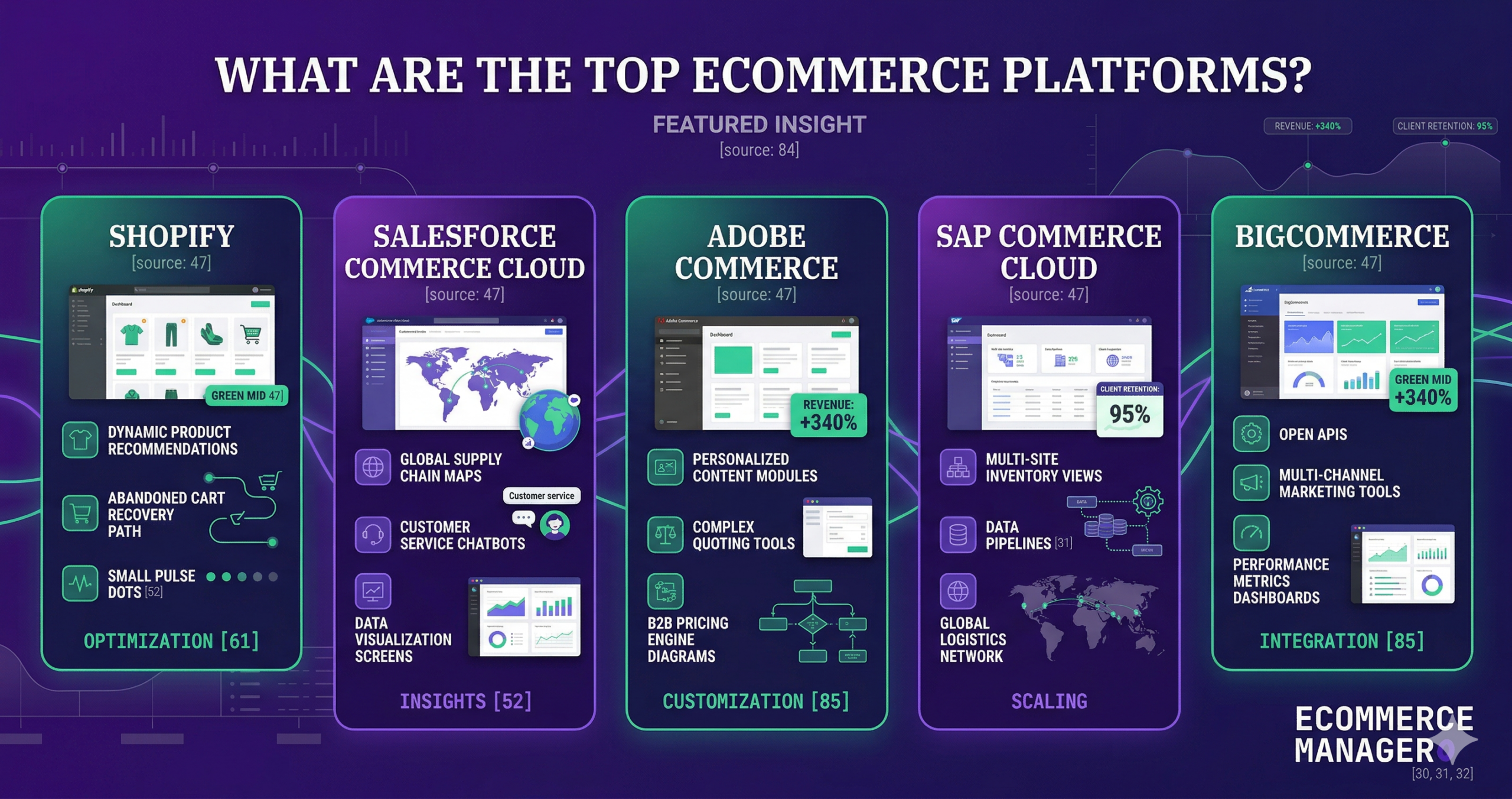
What are the top ecommerce platforms?
Stop Chasing the "Best" Ecommerce Platform: 5 Surprising Truths from the Front Lines of Online Retail
Editorial Staff
Ecommerce Strategist
6 min read
Updated for 2026
The Paradox of 500 Choices
The modern ecommerce landscape is defined by an overwhelming abundance of options. Review aggregators like G2 & Ecommercemanager.co currently list over 500 ecommerce products, each claiming to be the definitive solution for digital growth. For many entrepreneurs, this creates a "paradox of choice" that leads to a futile search for the universal "best" platform.
"As a strategist, I see the same mistake repeated: merchants look for the highest rating without looking at the sample size or the specific business logic behind the software. The reality from the front lines is that there is no single best platform—only the 'best fit' for your specific business size, technical skill set, and 2026 growth trajectory."
The "All-Rounder" King has a Hidden "App Tax"
Shopify remains the dominant choice for small and midsize businesses (SMBs), boasting a 4.4/5 rating on G2 across 4,768 reviews. Its reputation is built on reliability and a hosted setup process that allows merchants to go live quickly. Plans start at approximately $39 USD per month plus roughly 2.9% + $0.30 per transaction.
However, the initial ease of use eventually encounters a financial reality check. While Shopify is excellent for speed, its long-term cost structure is highly sensitive to growth. To achieve deep customization or advanced functionality, merchants often find themselves paying for a suite of third-party "paid apps." When combined with transaction fees, the total cost of ownership can escalate quickly as a store scales.
A synthesis of user feedback indicates that while Shopify is the gold standard for speed and stability, merchants frequently cite the 'App Tax' as a major pain point. Reviewers often complain that advanced features require recurring monthly app fees, and transaction costs feel particularly high for early-stage stores or those with thin margins.
Flexibility is a Double-Edged Sword for WordPress Users
WooCommerce is the preferred choice for content-driven brands, holding a 4.4/5 rating from 1,182 reviews. Its primary appeal is its extreme extensibility and tight integration with the WordPress ecosystem, allowing merchants to tailor everything from product types to checkout flows.
The Hidden Costs of "Free" Software
While the core WooCommerce plugin is free, running a professional-grade store is rarely zero-cost. Performance often degrades as more plugins are installed, leading to slow site speeds and potential stability issues. Furthermore, the reliance on multiple extensions creates a maintenance burden where updates can break compatibility between components. Merchants typically face significant secondary costs for premium plugins, specialized hosting, and the development expertise required to maintain a secure, stable environment.
The Surprising Rise of the "Design-First" Storefront
Wix Studio has emerged as a high-satisfaction contender with a 4.7/5 rating. This suggests that for many modern sellers, brand storytelling and design quality have become just as vital as the backend engine. Wix Business plans start around $43 USD per month and offer robust drag-and-drop tools and AI helpers for copy and meta tags.
Reality Check: Sample Size
While a 4.7 rating is impressive, a senior strategist looks at the statistical weight: Wix Studio’s score is based on only 56 reviews, compared to Shopify’s 4,768 reviews. This indicates a high level of satisfaction among its specific user base—likely small businesses focused on design—but it hasn't been "battle-tested" at the same volume as its competitors.
While Wix shines for businesses that need a full, branded site alongside a store, it faces clear limitations in advanced customization and features for complex, highly specialized ecommerce operations.
BigCommerce is the "Quiet Workhorse" for Scaling
BigCommerce (rated 4.2/5 based on 562 reviews) positions itself as a growth-oriented platform for mid-market brands. Its unique value proposition is that it functions as a "small-business–friendly version of an enterprise platform."
Unlike competitors that rely on a "bolt-on" approach via third-party apps, BigCommerce includes many powerful features directly in its core engine. For operations scaling beyond a single storefront, it provides a "central channel manager" to list products on Amazon, eBay, and Walmart from one dashboard. This built-in approach is preferred by "serious" operations that want to avoid the complexity and potential instability of managing dozens of independent app integrations.
In the Enterprise World, Complexity is a Mandatory Feature
At the top of the market, Salesforce Commerce (B2C) and SAP Commerce Cloud (both rated 4.3/5) operate on a different scale. These platforms present a "complexity paradox": they are notoriously demanding to implement, yet they are essential for global, omnichannel operations that require deep integration into ERP and supply-chain stacks.
These solutions are designed for companies that need a single, unified view of the customer across every channel and market. However, this power requires a massive investment in both capital and technical talent to navigate the steep learning curve.
Leading Ecommerce Platforms Comparison
| Platform | G2 Rating | Target Audience | Est. Monthly Cost | Action |
|---|---|---|---|---|
| Shopify |
4.4
(4,768)
|
All-purpose SMBs | $39/mo | Learn More |
| WooCommerce |
4.4
(1,182)
|
WordPress users & content brands | Free plugin | Learn More |
| Shopify Plus |
4.4
(804)
|
High-growth & Enterprise DTC | High enterprise licensing | Learn More |
| Salesforce (B2B) |
4.4
(269)
|
B2B manufacturers & wholesalers | High enterprise licensing | Learn More |
| SAP Commerce Cloud |
4.3
(254)
|
Global enterprises / Omnichannel | High enterprise licensing | Learn More |
| Salesforce (B2C) |
4.3
(536)
|
Large B2C brands | High enterprise licensing | Learn More |
| BigCommerce |
4.2
(562)
|
Mid-market & Fast-growing stores | $39/mo | Learn More |
| Wix Studio |
4.7
(56)
|
Small businesses (Design focused) | $43/mo | Learn More |
| Ecwid by Lightspeed |
No Data
|
Micro-merchants & testing | $5/mo | Learn More |
Beyond the Software: The Strategy of Choice
The most successful merchants do not choose a platform based on popularity; they match it to their business reality.
Shopify
$39/mo + fees
The safe bet for hosted reliability, speed, and a vast app ecosystem.
Learn MoreWooCommerce
WordPress Plugin
Offers maximum control and content integration for those with WordPress expertise.
Learn MoreBigCommerce
Mid-Market
Ideal for mid-market brands needing built-in multi-channel tools without enterprise prices.
Learn MoreWix Studio
$43/mo
Best when brand storytelling, design, and ease of use lead the strategy.
Learn MoreSalesforce & SAP
Enterprise
The standard for global corporations requiring deep CRM or ERP integration.
Learn MoreLooking toward 2026?
As the ecommerce market matures, the platform is merely the foundation. The real winner is the merchant who understands their technical limits and chooses a tool that empowers, rather than exhausts, their team.
"Is your current platform providing the power you need to grow, or are you over-platformed and paying for complexity you don't use?"