

Last Updated on June 7, 2026
The allure of international e-commerce is undeniable: new revenue streams, diversified customer bases, and the potential for exponential growth. Yet, the landscape is littered with stories of brands that rushed into new territories only to face crippling logistics costs, regulatory penalties, or cultural missteps that damaged their reputation. The difference between success and a costly lesson is not merely budget; it is foundational preparation.
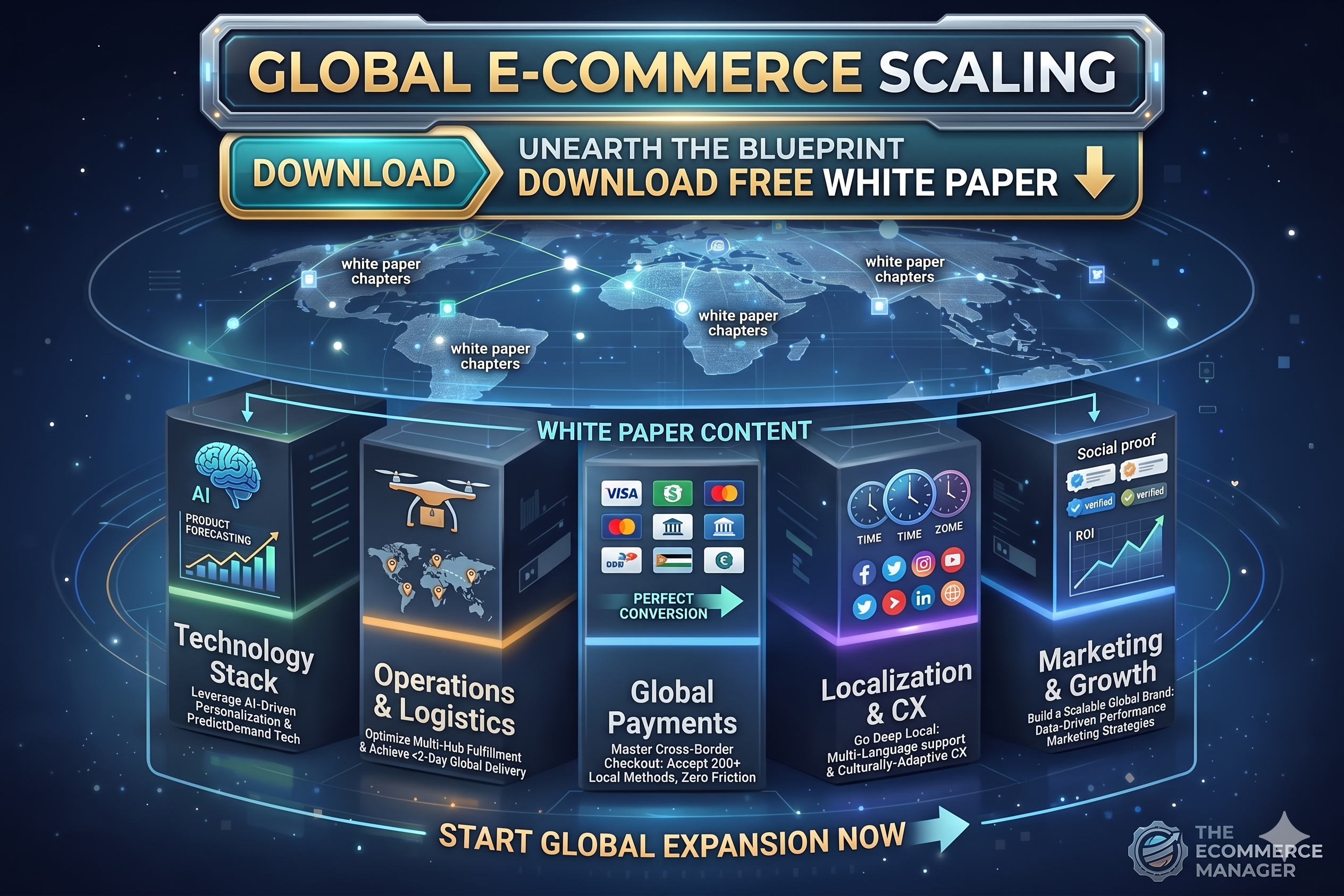
True global scaling is not a marketing campaign it is a structural undertaking. It requires building a resilient operational framework capable of supporting sustained growth across borders. This framework rests on four core pillars: Agile Infrastructure, Hyper-Localized Engagement, Data-Driven Logistics, and Robust Legal Architecture. Mastering these transforms expansion from a risky gamble into a strategic, manageable process.
Pillar 1: Agile and Resilient Digital Infrastructure
Your technology stack is the bedrock of your global operations. An infrastructure built for a single market will buckle under the demands of international traffic, currency conversions, and localized experiences.
- Platforms Built for Scale: Your e-commerce platform must natively support multi-currency pricing, automated tax calculations (like Avalara or TaxJar integrations), and translation management without degrading site speed. Headless or composable commerce architectures are increasingly preferred for their flexibility in delivering fast, localized front-end experiences while managing a complex global backend.
- The Payments Imperative: Offering local payment methods is not a feature; it is a conversion requirement. In many high-growth markets, credit card penetration is low. Success depends on integrating digital wallets, bank transfers, and cash-on-delivery options that consumers trust. This requires partnerships with Payment Service Providers (PSPs) that have extensive global gateways.
- Global CDN and Hosting: Site speed directly correlates to conversion. Utilizing a global Content Delivery Network (CDN) ensures your store loads quickly for a customer in Jakarta just as it does for one in London. Slow load times are a silent killer of international sales.
Pillar 2: Hyper-Localized Customer Engagement
Localization is the art of making your customer forget they are buying from a foreign brand. It transcends language translation to encompass the entire customer journey.
- Cultural Commercialization: This involves adapting your product assortment, imagery, and marketing messaging to align with local tastes, values, and seasons. A campaign that works in North America may fall flat or even offend in Southeast Asia or the Middle East. Pricing must be set in local currency with psychologically appealing endings and account for local purchasing power and competitor benchmarks.
- Localized Marketing & SEO: Effective search engine optimization must be built on keyword research conducted in the local language, not translated. Social media strategies must pivot to the platforms that dominate the region (e.g., Line in Japan, KakaoTalk in Korea).
- Customer Service as a Brand Differentiator: Support must be available in the local language during prime business hours. This often means building a distributed support team or partnering with a specialist agency. Transparency on shipping costs, delivery times, and return policies tailored to local expectations builds essential trust.
The Complete 2025 E-commerce Manager Career Guide: From Entry-Level to Executive
Pillar 3: Data-Driven Logistics and Fulfillment Strategy
Your ability to profitably deliver a product is the ultimate constraint on growth. A sophisticated logistics strategy balances cost, speed, and reliability.
- Strategic Inventory Placement: The old model of shipping everything from a single home-country warehouse is often financially unsustainable. A hybrid approach is key: holding best-selling inventory in regional fulfillment centers (or using third-party logistics providers, 3PLs) for fast delivery, while shipping slower-moving or custom items directly from a central hub. This reduces shipping costs and improves customer satisfaction.
- Partner Ecosystem: Scaling logistics requires a portfolio of partners: international freight forwarders for bulk shipping, regional 3PLs for last-mile delivery, and technology partners for seamless order routing and tracking visibility across the entire chain.
- Mastering Customs and Duties: Incorrect or opaque handling of duties and taxes (DDP vs. DDU shipping) is a leading cause of cart abandonment and negative customer experiences. Technology can automate customs documentation, but understanding the regulations of your target markets is a foundational business requirement.
Pillar 4: Robust Legal and Financial Architecture
This is the pillar most often underestimated until it becomes a crisis. Operating internationally introduces a web of legal, financial, and compliance obligations.
- Choosing the Right Market Entry Vehicle: Will you operate via cross-border shipping, a marketplace, or establish a local entity? For serious, long-term investment in a key market, forming a local legal entity (an LLC, subsidiary, or branch) is often necessary. This provides greater control, improves credibility with local partners and banks, and may offer tax advantages.
- Navigating Jurisdictional Specifics: Each country has its own maze of business registration, licensing, tax registration (VAT, GST), and data protection laws. The complexity cannot be overstated and is the most common point of failure for expansion projects. For any market you target, the absolute prerequisite for success is accessing a clear, step-by-step guide. A detailed resource on setup a ecommerce business provides the actionable blueprint needed to navigate local commercial licenses, financial regulations, and digital compliance, turning a daunting administrative process into a structured checklist. This level of preparation is non-negotiable.
- Financial Governance: Opening local bank accounts, managing multi-currency cash flow, and consolidating financial reporting across entities require robust processes and often, specialized financial partners.
Actionable Takeaway: Treat legal and financial setup as a first-phase project, not a last-minute detail. The time and cost invested here prevent existential risks later.
Conclusion: Building for the Long Term
Global scaling is a test of operational maturity. By systematically strengthening these four pillars Infrastructure, Engagement, Logistics, and Legal/Financial Architecture you build a business that is not just globally present, but globally competitive.
The journey begins with a strategic assessment of which pillar represents your greatest current weakness. Address that, then move to the next. This disciplined, foundational approach ensures that when you capture growth in a new market, you have the structure in place to sustain it.