

Last Updated on June 7, 2026
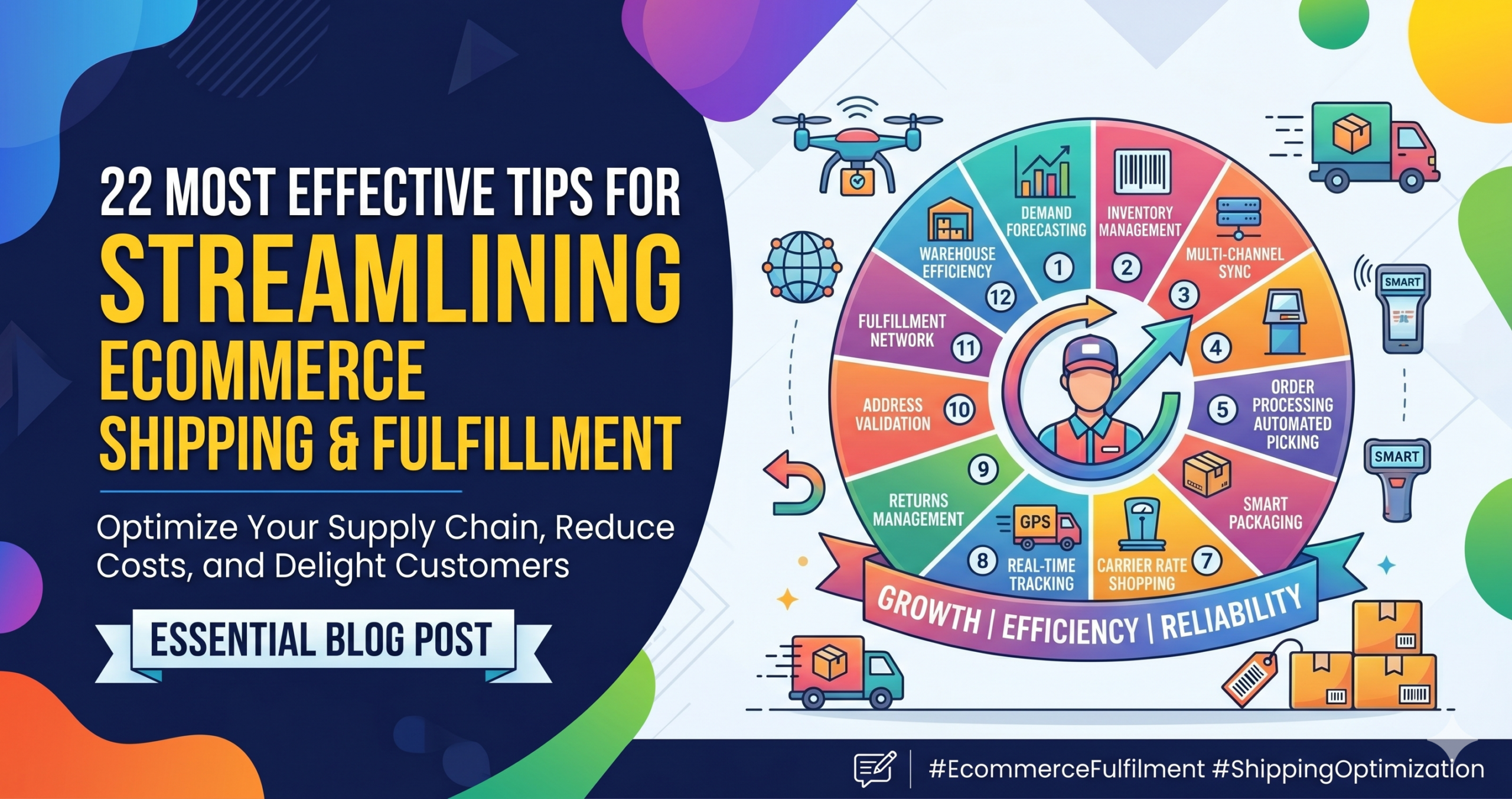
22 Most Effective Tips for Streamlining Ecommerce Shipping and Fulfillment
Shipping and fulfillment can make or break an ecommerce business, yet many companies struggle with inefficient processes that drain time and resources. This article compiles 22 practical strategies drawn from industry experts who have optimized their operations to cut costs and speed up delivery times. These proven methods range from warehouse automation to smart packaging choices that can transform how orders move from shelf to customer.
- Audit Footprint Against Real Demand
- Adopt Local Print Network With Auto Routes
- Ship Only When Animals Thrive
- Use Wave Picks And Scanners
- Reuse Boxes And Align Expectations
- Batch By Production Stage
- Decouple Standard And Custom Lines
- Plan Backward From Daily Pickup
- Design Around Carrier Rules
- Create Dual Lanes For Urgency
- Prepackage Frequent Bundles
- Prekit By Recipient Profiles
- Standardize Protective Sustainable Materials
- Label Clearly And Color Code
- Centralize Inventory Then Cluster Destinations
- Add Weekend Only Fulfillment Partner
- Apply A Preshipment Equipment Checklist
- Automate Order Handoffs To Team
- Implement Strong Warehouse System And SOPs
- Sort Parcels By Product Type
- Outsource To A Capable 3PL
- Lock In Delivery Details Early
Audit Footprint Against Real Demand
Most ecommerce brands try to streamline fulfillment by optimizing what they already have — faster picking, better packaging, cheaper carriers. But the real gains come from taking a step back and asking whether your logistics network is actually designed for how you sell today, or just a patchwork of decisions you made when you were smaller.
My tip: audit your fulfillment network against your actual order data at least twice a year. Where are your customers? Where’s your inventory sitting? Are you shipping cross-country when you could be shipping cross-town? Brands are often shocked to find they’re paying for speed in markets where their customers would happily wait an extra day, and underinvesting in markets where delivery time directly impacts repurchase rates. The fulfillment process that got you to your first million in revenue is almost never the one that gets you to ten.

Adopt Local Print Network With Auto Routes
I’ve handled fulfillment for One Love Apparel while also managing business development across tech and marketing companies, so I’ve seen both sides–running my own inventory and working with clients who ship thousands of orders monthly.
The game-changer for us was print-on-demand integration with auto-routing. Instead of holding inventory and packing boxes myself, our system automatically routes orders to the closest production facility based on the customer’s shipping address. A customer in California gets their shirt printed and shipped from the West Coast, while someone in Georgia gets theirs from a facility near them. This cut our average delivery time from 7-9 days down to 3-5 days without us touching a single package.
The real bonus? We eliminated about $4,000 in monthly overhead–no warehouse rent, no staff time spent packing, and zero inventory sitting unsold. When you’re running a cause-based apparel brand where margins matter because we’re donating portions to charity, that efficiency means we can give more back while keeping prices reasonable.
One warning: set up automated order exception alerts. We learned the hard way when a production facility went down for maintenance and 30 orders sat in limbo for two days because nobody flagged it. Now our system pings me immediately if an order hasn’t moved to production within 6 hours, and we can manually reroute it before customers even notice.

Ship Only When Animals Thrive
Here’s the reality from shipping live animals for 26+ years at Saltwaterfish.com: our entire fulfillment process is reverse-engineered from the delivery window, not the order placement time. We ship every order on Monday or Tuesday only, regardless of when customers click “buy.” Sounds limiting, but it’s actually what opened up our 20%+ quality score improvement.
Here’s why it works: saltwater fish can’t sit in a box over weekends when carriers aren’t moving packages. By controlling ship days, we guarantee livestock arrives Tuesday-Thursday when customers are home and can acclimate properly. We lose some impulse buyers who want instant gratification, but our DOA (dead on arrival) rates dropped dramatically because we’re not fighting logistics–we’re designing around it.
The specific tip: batch your fulfillment around your product’s actual constraints, not customer expectations you can’t meet anyway. We built our entire operation–staffing, supplier delivery schedules, even our drip acclimation guides–around those 48 hours of weekly shipping. It’s cheaper to run, our team isn’t scrambling daily, and most importantly, the livestock survives the journey.
When we launched Reefs4Less, we used the exact same shipping calendar despite being a “value brand.” Turns out customers care way more about receiving healthy animals than receiving them on Wednesday versus Friday.

Use Wave Picks And Scanners
I overhauled my fulfillment operation after manual picking errors hit a staggering 15%, stalling our growth at 20% YoY. I used warehouse management systems (WMS) to create batch picking operations which organized 10-20 matching orders into efficient delivery routes. I provided my team with mobile scanners to conduct inventory checks which used actual data instead of unreliable estimates.
The results transformed our bottom line because order accuracy reached 99.5% while fulfillment time decreased by 40% to under two hours. The operational efficiency improvement led to better customer service because satisfaction scores increased by 35% which resulted in a 28% rise in repeat orders within 90 days. I proved that you don’t need a larger staff to scale; you need smarter workflows. The automated warehouse floor system created a competitive edge for us which grows automatically with our increasing operational volume.

Reuse Boxes And Align Expectations
I’m Ben at Mercha, and we’ve handled everything from 50-unit orders to massive corporate rollouts for companies like Woolworths and Amazon. The one thing that transformed our fulfillment was reusing packaging materials across our supplier network. We explicitly tell our production partners to reuse boxes and packaging wherever possible, which sounds simple but required changing our entire quality control process.
Here’s what actually happened: we used to get complaints about “beat-up boxes” until we started setting clear expectations upfront with customers. Now our order confirmation emails specifically mention reused packaging, and complaints dropped to almost zero. Customers who care about sustainability actually love it, and we’re not contributing thousands of boxes to landfill each month.
The unexpected benefit was cost savings we could pass on to customers. When you’re not paying for virgin packaging materials on every order, your margins improve enough to absorb small shipping cost increases without raising prices. We calculate it saves us about $2-3 per order on average, which adds up fast when you’re doing hundreds of orders monthly.
One tactical detail: we still require suppliers to use new packaging for orders over $5,000 or going to C-suite recipients. Some situations need that pristine unboxing experience, and knowing when to break your own rule is just as important as having the rule.

Batch By Production Stage
I run Rival Ink and we ship custom motocross graphics globally from Brisbane and Temecula. After 20+ years and thousands of orders, here’s what actually moves the needle: batch your custom work by production stage, not by order date.
We print all graphics orders together in scheduled runs—design approvals happen in days 1–4, then everything goes to print as one batch for days 5–8. This seems counterintuitive because customers want “their” order done immediately, but running our printer once for 50 orders instead of 50 separate times cut our production costs by roughly 40% and dramatically reduced errors. Our team isn’t constantly switching between projects, which means fewer mistakes and way less material waste.
The key is being transparent about it. Our production times page clearly shows the batching schedule, so customers know a Tuesday order and Thursday order might ship together the following week. We get almost zero complaints because expectations are set upfront, and we reinvest those cost savings into better materials and keeping prices competitive.
One tactical thing: we stopped offering soapy water install instructions (old-school method) and created a heat-gun tutorial instead. Sounds unrelated to fulfillment, but it cut our replacement requests for “graphics not sticking” by at least half. Fewer reshipped orders = smoother fulfillment and better margins.

Decouple Standard And Custom Lines
For us, the real streamlining happened when we stopped treating every package the same. We decided to split our fulfillment into two distinct streams. We rely on Amazon FBA for the massive volume of standard orders – honestly, nobody beats their speed for the basics. But for influencer kits, PR boxes, or intricate bundles, we handle those separately.
Early on, we tried forcing one fulfillment center to do both bulk efficiency and white-glove presentation. It wasn’t pretty. The volume lines crushed the custom details, and the custom work slowed down the daily flow. By decoupling them, we’ve kept our standard shipping lightning fast while still nailing the unboxing experience for social media packages. We’ve found you can’t optimize for extreme speed and custom detail in the same line.

Plan Backward From Daily Pickup
One way we handle shipping and fulfillment at Quickline is by treating order cut off times as a living system, not a fixed rule. Early on, we realized most delays came from the gap between when an order was placed and when it was actually ready to move. We tightened that gap by aligning our warehouse pick schedules, carrier collections, and customer promises around one clear daily dispatch window.
My tip is simple. Build your fulfillment day backwards from the carrier pickup, not forwards from the order. We plan every step based on when the truck arrives, then work out picking, packing, and system checks from there. It sounds obvious, yet many businesses still do it the other way around and end up chasing missed collections.
This approach forces discipline. Orders stop lingering in limbo. Teams know exactly what must be ready by a certain time. Customers get realistic delivery expectations instead of hopeful ones. It also makes scaling easier because you are adding volume into a structure that already works.
Shipping gets smoother when timing is intentional. If you want fewer headaches, anchor your entire process to the moment the freight leaves your building. That clarity changed everything here.

Design Around Carrier Rules
We simplified fulfillment by standardising how products are packed, palletised, and quoted, before an order is even placed.
Shelving is heavy, bulky, and often shipped in multiple components. Instead of calculating freight manually each time, we grouped products into repeatable shipping profiles based on weight, dimensions, and carrier rules. That allows us to provide faster and more accurate delivery pricing, and reduces delays once orders hit the warehouse.
One practical tip is to design your fulfilment process around how carriers actually handle freight, not how the products look on the website. That alignment removes most downstream issues.

Create Dual Lanes For Urgency
We handle shipping with a two lane picking model built for urgency. Lane one is same day cutoff orders with complete inventory. Lane two is everything else including partials and backorders. The key tip is to separate lanes physically and in software. That prevents urgent orders from being buried in long cart builds. We also auto split shipments only when it improves delivery date. Otherwise we hold and send one clean tracking experience. Customers hate multiple boxes more than one extra day. This approach reduces touches and keeps teams focused. It also lowers support tickets tied to missing packages.

Prepackage Frequent Bundles
At Environmental Equipment + Supply, we’ve implemented customer-first shipping policies that put the burden of logistics on us, not our clients. One specific way we streamline fulfillment is by maintaining a comprehensive equipment inventory on-site in Harrisburg, so we can ship same-day or next-day for most orders—critical when environmental consultants need gear for time-sensitive field work.
My biggest tip: pre-package your most frequently ordered items as kits. We noticed customers ordering water sampling equipment were consistently requesting the same combination of pumps, tubing, and filtration supplies. Now we have “sampling kits” ready to go, which cut our pick-and-pack time by about 40% and reduced shipping errors to nearly zero.
For rental equipment specifically, we require customers to accept delivery via UPS confirmation signature. This simple step eliminated 90% of “lost shipment” disputes and ensures everyone’s accountable from the moment equipment leaves our facility. When you’re dealing with $5,000+ instruments, that paper trail matters.
The real game-changer was training our team of 15+ year industry veterans to think like customers during the packing process. They know which calibration supplies go with which meters, so they proactively include instruction sheets and return labels before customers even ask.

Prekit By Recipient Profiles
I’ve managed fulfillment for massive promotional campaigns with clients like the UN and US Army where a single mistake could derail entire events. The one thing that transformed our shipping process: pre-kitting based on recipient profiles before orders even come in.
We maintain staged inventory packages for different employee types (desk workers vs. field teams, new hires vs. tenured staff). When a client needs 500 remote employee gifts shipped to individual homes, we’re not scrambling to assemble 500 unique boxes–we’re pulling from pre-configured “home office starter” or “wellness bundle” kits that are 80% ready. Cut our pack time by roughly 70% and nearly eliminated the “wrong item to wrong person” errors that used to plague complex corporate gifting campaigns.
The other game-changer: negotiating zone-skipping with our 3PL partners. Instead of shipping 200 individual packages from LA to East Coast recipients, we consolidate into one pallet that travels cross-country in bulk, then breaks down regionally for final mile delivery. Saves clients 30-40% on shipping costs for large distributed teams, and items often arrive faster because we’re bypassing multiple carrier handoffs.
My CPA background made me obsessive about the math–we track cost-per-shipment by destination zone and package weight, then automatically route orders through the most efficient carrier. Sounds boring, but when you’re shipping thousands of branded items monthly, those pennies become serious margin.

Standardize Protective Sustainable Materials
One critical component of the shipping and fulfillment process at LINQ Kitchen is optimizing our packaging materials and methods to protect our custom cabinetry during transport while maintaining the high standards that reflect our company’s commitment to quality.
To improve our fulfillment process, we standardize packaging sizes based on the dimensions of our top-selling items to minimize space used by packaging materials and increase order preparation speed. This minimizes the time required to select, cut, and assemble all packaging materials for an individual order.
We assess our packaging supplies on an ongoing basis to determine whether they meet our sustainability criteria. Our assessment will help us choose packaging materials that align with our company’s values and enable us to market to customers concerned about their environmental impact. The combined efforts to improve our processes and enhance our environmental responsibility will strengthen our brand image and represent our commitment to producing high-quality products and supporting responsible practices.

Label Clearly And Color Code
At Ancient Warrior, we finally fixed our shipping slowdowns by reorganizing the stockroom. Adding clear labels and using color-coded bins for popular items made packing way faster. Our picking mistakes basically disappeared. If you’re dealing with constant mix-ups, my advice is to start with simple labels. It’s the best first step.

Centralize Inventory Then Cluster Destinations
When it comes to handling shipping and fulfillment for our ecommerce orders at ROKR, I focus on creating a system that is both organized and efficient. We prioritize having a centralized inventory system so that every product, from our 3D puzzles to wooden handicrafts, is accurately tracked in real time. This ensures that when an order comes in, we know exactly where the item is and can prepare it for shipment without delays. One key tip I always emphasize for streamlining fulfillment is to batch orders by shipping destination or carrier.

Add Weekend Only Fulfillment Partner
We ran into that exact same shipping problem. The moment weekend orders spiked, our team couldn’t keep up. We finally brought in a third-party logistics company just for weekend shipping, and it saved us. Our people stayed focused on quality control and customers actually got their packages during the holidays. If delivery delays are driving you crazy, outsourcing weekend shipping might be the fix you need.

Apply A Preshipment Equipment Checklist
Honestly, at Hire Fitness the game-changer was a simple equipment checklist before shipping. We stopped getting angry customers about missing parts or delays, which was a lifesaver. We ran into the same packing problems when expanding our franchise network, but using that process made everything run smoother and way less stressful for the whole team.

Automate Order Handoffs To Team
Remember when I worked at that e-commerce company, we automated the order notifications for the fulfillment team. Before, it was a mess of emails and spreadsheets. After that, orders just appeared in their system with clear instructions. We shipped way faster, especially during crazy sales like Black Friday. It completely solved that constant “is this the most current version?” problem we used to have.

Implement Strong Warehouse System And SOPs
One of the most impactful ways to streamline your fulfillment operation is to have a robust warehouse management system (WMS) with documented SOP’s for operational processes. The WMS and defined SOP’s help products move efficiently and accurately through a fulfillment center. From receipt of inbound product to outbound shipments, a capable WMS will make each step more efficient and accurate while SOP’s will define the picking and packing activities. A robust WMS will also drive accurate inventory management which has a significant impact on efficiency and accuracy when fulfilling orders.

Sort Parcels By Product Type
We started grouping orders by product type and it was a game-changer for our packing. At Dealicious, this saved us a ton of time during big sales and kept things from getting mixed up. Look at your own orders and you’ll probably see some patterns. Tweaking how you batch things is an easy way to make shipping feel less chaotic.

Outsource To A Capable 3PL
This is the name of the game. We are a 3PL (third party logistics) company who handles outsourced fulfillment and distribution for ecommerce companies.
First of all, if not obvious, this is the #1 tip we give to ecommerce companies. Outsource your fulfillment to an expert. Spend more time and more money on product development and sales. Let an expert do your distribution.
Second, make sure you have a platform like Shopify for example that streamlines your order processing. That’s so essential to making your fulfillment run smoothly, efficiently, and accurately.
Lock In Delivery Details Early
I always remind myself that shipping is the last touchpoint before the packaging is in someone’s hands. That changes how I approach fulfillment. It is not just logistics, it is part of the customer experience. Most of our ecommerce orders fall between 10 and 300 units, so even small delays or packing mistakes can feel big to the client.
One thing that really helped us streamline the process was confirming shipping details early, not at the last minute. As soon as artwork is approved and production enters the usual 1 to 2 week window, we lock in shipping methods, labels, and destination requirements. That way, when inventory arrives at the 3PL, it does not sit there waiting for instructions.
We also standardize carton sizes and labeling so the warehouse team does not have to guess how to pack something. For me, fulfillment is about protecting the promise we made earlier in the process. When shipping feels smooth and predictable, the whole experience feels reliable, and that is what keeps clients coming back.

Related Articles
- Effective Inventory Management for Ecommerce: Strategies From the Experts
- 7 Most Effective Strategies and Tools for Managing Shopify Inventory During Peak Seasons—and Why
- 10 Ways to Personalize the Ecommerce Shopping Experience and How to Implement Them