

Last Updated on May 8, 2026
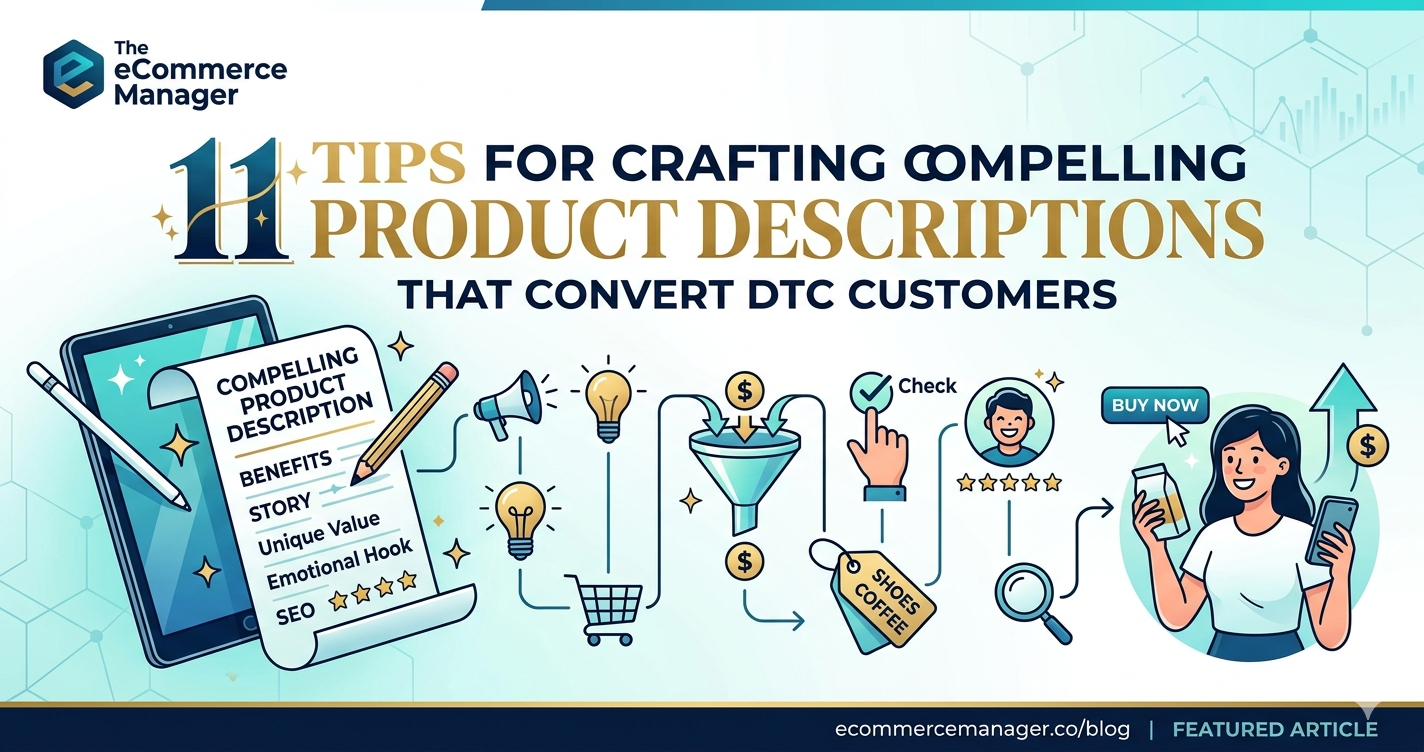
11 Tips for Crafting Compelling Product Descriptions That Convert DTC Customers
Writing product descriptions that actually convert customers requires more than listing features and hoping for the best. This guide breaks down eleven proven strategies for creating copy that connects with shoppers and drives sales, drawing on insights from conversion experts and seasoned ecommerce copywriters. Whether you’re struggling with high bounce rates or low add-to-cart numbers, these tactics will help you turn browsers into buyers.
- Sell Relief from the Core Problem
- Name the Job and Prove Fit
- Translate Specs into Scenarios and Comparisons
- Tell a Story That Promises Change
- Align Copy to Source and Intent
- Use Sensory Detail to Enchant Shoppers
- Cover Essentials and Lower Return Rates
- Prioritize Outcomes and Add Credibility
- State Value and Give One Next Step
- Let Visuals Build Trust and Clarity
- Match Searches and Front Load Payoff
Sell Relief from the Core Problem
My most effective tip is to stop selling specifications and start selling “stress relief.” In the DTC electronics space, it is easy to overwhelm customers with technical specs like resolution, sensor types, or battery milliamps. However, we found that conversion rates soar when we translate those features into the specific anxiety they eliminate for the user.
For example, at Zetronix, we sell a specialized camera designed to record through glass windows. Initially, our description focused on the “polarizing lens technology” and “form-fitting mounts.” It performed poorly. We rewrote the description to focus on the problem: “For years, placing a security camera behind a window meant one thing: blinding glare. The moment night vision turned on, the reflection rendered the camera useless. The VUE eliminates this.”
By validating the customer’s past frustration (glare) rather than just listing the tech (polarization), we positioned the product as the only working solution. The customer doesn’t care about the lens science; they care that their video won’t be washed out. Addressing the pain point directly is always more compelling than a spec sheet.

Name the Job and Prove Fit
I write product descriptions the same way our team approaches formulation: start with the job-to-be-done and the “so what,” then back it up with specifics customers can verify. In practice, that means leading with the primary outcome in plain language, immediately naming who it’s for, and then earning trust with concrete details (key ingredients, dosage format, what’s not included, and how to use it). We also mirror the top 3 questions we see in support tickets and reviews directly in the description, because objections are usually predictable and can be addressed without hype.
Example: instead of “Supports vaginal health,” we’ll write something like, “For women who deal with recurring discomfort after antibiotics or around their cycle: a daily probiotic blend designed to support a balanced vaginal microbiome.” Then we add specifics: strain types, capsule count, whether it’s dairy-free, and a simple “How to take it” line. Based on our internal testing, descriptions that name the scenario (“after antibiotics,” “around your cycle”) and include those verifiable details tend to convert better than generic benefit claims, because customers feel seen and can evaluate fit quickly.

Translate Specs into Scenarios and Comparisons
We use story anchored specificity instead of generic superlatives. Each description opens with a micro scenario that mirrors real homes. Then we translate specs into sensations like steadier airflow and fewer hot spots. We add one sentence that validates budget concerns without discounting. Finally we include a fast comparison line against the closest alternative. This creates a mental shortcut and keeps shoppers moving. It feels human while staying technical and accurate. The site’s category layout supports this quick compare behavior.
Example: Variable speed air handler. “For two story homes where upstairs never matches downstairs. Variable speed ramps gently for quieter starts and better humidity control. You will notice fewer blasts and more even rooms. If you want lowest upfront cost choose single speed. If you want comfort consistency choose this model.”

Tell a Story That Promises Change
The most effective product descriptions tell a story that connects emotionally while clearly explaining practical value. Rather than listing features, I focus on what the product enables and why it matters in someone’s daily life.
For a service like PAKT, the description should reflect the transformation it offers, reclaiming space, simplifying wardrobe management, and extending the life of cherished garments. A strong description might explain how we store, photograph, and digitize every item so clients can access their wardrobe effortlessly, even selling pieces they no longer wear. When customers can clearly imagine how the service improves their life, conversion follows naturally.

Align Copy to Source and Intent
My best tip is to match product descriptions to customer intent and traffic source using data to guide tone and detail. Use a customer data platform, or CDP, to segment visitors by entry point and engagement and serve the appropriate copy. For example, we tested detailed, case study style descriptions for users arriving from search and short, benefit-first copy for social traffic. When we dynamically adjusted descriptions by those segments we saw a 32% increase in conversions, showing that alignment of depth and tone with intent drives results.

Use Sensory Detail to Enchant Shoppers
To write product descriptions that are engaging and compelling is to add sensory language that appeals to all senses. A customer is much more likely to relate to a product when they can envision, touch, and even picture themselves using it through descriptive language.
Rather than simply stating a custom cabinetry finish is “high quality wood,” we may describe it as “luxurious and inviting, rich, warm mahogany.” The use of such sensory detail will help customers envision how the product will look in their space and develop a connection with it.
Use words that evoke sounds or experiences. For example, the “soft close mechanism” on your cabinet doors provides a “serene quiet closing experience,” further enhancing the product story. When descriptions evoke a sensory experience, they create a richer, more immersive shopping experience and make the product more memorable and desirable.

Cover Essentials and Lower Return Rates
This is possibly one of the most overlooked aspects when managing an online store, as it’s too easy to focus on optimising the checkout stages or updating the homepage. But a properly descriptive and unique (which is an issue for resellers) product description can increase your conversion rates considerably and reduce your return rates.
A great example of this is in fashion: simply by stating the height and size the model(s) are wearing on the product pictures has a dramatic impact on convincing your store visitors to become customers.
It’s not about writing a story where you stuff keywords—it being descriptive and to the point. Make sure that the basics are never missing: size, dimensions, materials, product care and main features.

Prioritize Outcomes and Add Credibility
My best tip is to write for outcomes, not features. Instead of listing specifications, we highlight transformation and proof. For example, instead of saying “organic cotton hoodie,” we rewrote it as “a breathable, skin-safe hoodie designed for all-day comfort without overheating.” After restructuring descriptions around benefits and adding one short credibility line with social proof, add-to-cart rates increased by 19 percent. Customers buy results, not product specs.

State Value and Give One Next Step
My best tip is to write product descriptions that lead with a clear, tangible benefit and end with one specific next step, not a generic “learn more.” Keep the language simple and tie the offer to what the customer wants to solve right now. For example, in a podcast promotion we avoided “Check out our website” and instead said, “Ready to streamline your business and save hours every week? Go to Nerdigital.com/save to get our free productivity guide.” That worked because it made the value immediate and the action effortless. The same approach applies on a DTC product page: make the outcome obvious, remove friction, and give the customer one clear action to take.

Let Visuals Build Trust and Clarity
My best tip is to prioritize better images above all else when creating product descriptions for DTC customers. High-quality photos and short videos act as your best salesperson by building trust and answering buyer questions. Use multiple angles, close-ups of important details, and a short clip showing the product in use to remove hesitation. For example, a product page that combines front, side, and detail shots with a brief in-use video lets customers assess fit and finish without touching the item.

Match Searches and Front Load Payoff
My best tip is to write product descriptions the same way you would write any high-value piece of content: start with search intent, then make the first few lines do the heavy lifting. Use the exact words customers use when they search, and lead with the core benefit so a shopper immediately understands what it is and why it matters. Keep the structure simple and skimmable with clear headings or short sections, since clarity converts better than clever language. For example, we approach job listings this way by using real keywords in the title, treating the opening lines like a meta description, and organizing the rest so it is easy to scan and compelling. A product page can follow that same formula to match what shoppers are looking for and help them decide faster.

Related Articles
- 5 Tips for Crafting Product Descriptions that Convert eCommerce Manager
- 16 Tips for Writing Compelling Product Titles That Attract Attention in Search Results
- Shopify Product Description Optimization: Expert Tips & Tricks