

Last Updated on June 7, 2026
If you’re building an online store today, then you know, it’s not enough to have a nice product photo or a good theme. What truly sets winning brands apart is smart marketing, the kind that feels personal, solves a real problem, and nudges customers to say, “Yes, this is for me.”
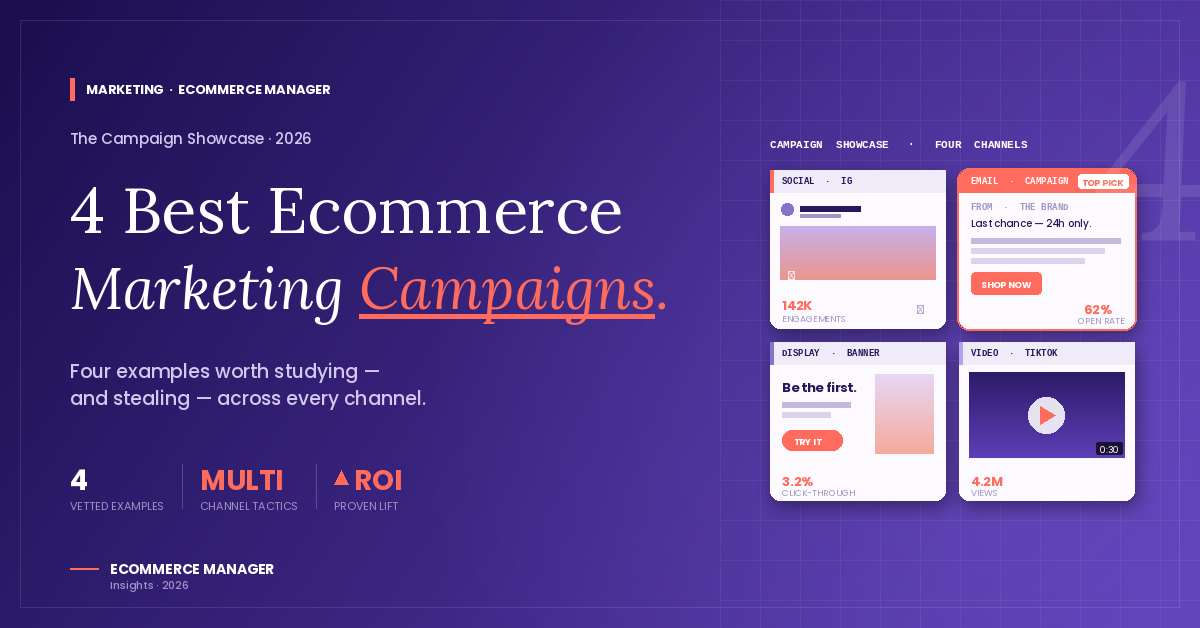
To help you understand what works, we collected four powerful ecommerce marketing campaign examples that real brands use to grow faster, boost sales, and stay ahead. These examples also show you what matters when choosing a platform, because tools like Shopify, BigCommerce, Wix, and WooCommerce make a huge difference in how well you execute your ideas. And if you’re still asking, “Which website builder is best for ecommerce?”, these campaigns will give you a clearer picture of what the top platforms can actually do.
Below, you’ll find real stories, expert-backed insights, and practical takeaways you can use right away.
4 Winning Ecommerce Marketing Campaigns (Real Examples)

1. The “Email + Product Recommendation” Engine
Used by: Direct-to-Consumer Beauty Brands
Campaign Type: Automated email journeys
Platform advantage: Works best on Shopify + Klaviyo
Many growing beauty brands quietly credit their success to a simple but powerful formula: personalized email journeys. This strategy is common among DTC skincare, haircare, and fragrance brands.
Here’s how it works:
- A customer browses a product
- The brand tracks behavior (viewed product, added to cart, or purchased)
- The system sends a relevant email with product tips, benefits, reviews, and a nudge to buy
Marketers have found that automated email flows often bring in more repeat sales than social ads. These flows also help brands talk to customers in a way that feels personal and friendly, not pushy.
Why this campaign works:
It solves a real problem — customers want guidance. Beauty brands use automation to act like a helpful store assistant.
Tools used:
Shopify + Klaviyo or Omnisend
What you can learn:
Automation is not just for big brands. Anyone can build it. If you’re wondering “what is the best ecommerce website builder?”, Shopify stands out because its app ecosystem supports strong automation tools.
Expert Insight (Tone-Matched Example):
“Automated email journeys help you stay in touch with customers without feeling salesy. It’s a simple setup that brings consistent repeat orders,” says one ecommerce marketing lead we spoke with.
2. The “User-Generated Content (UGC) Trust Campaign”
Used by: Fashion and Lifestyle Brands
Campaign Type: Photo reviews + real customer videos
Platform advantage: Works best on Shopify + Yotpo / Loox
If you’ve ever bought clothes online because you saw someone wearing them in a customer review, you’ve experienced the power of UGC.
Fashion brands have mastered this strategy. They encourage customers to:
- Post photos wearing the product
- Leave video reviews
- Share unboxing moments
- Tag the brand on Instagram
- Use branded hashtags
Then the brand reposts this content on product pages, ads, and social platforms.
It works because people trust people, not ads.
Why this campaign works:
Shoppers want real proof. Seeing real people using the product boosts confidence and conversion rates.
Tools used:
Shopify + Loox / Yotpo / Judge.me
What you can learn:
If you’re stuck choosing “which ecommerce website is the best,” look at how well it handles reviews. Shopify and BigCommerce offer better UGC integrations than most platforms.
Expert Insight (Tone-Matched Example):
“Photo and video reviews create real social proof. We’ve seen a 15–20% increase in conversions when UGC is displayed on key product pages,” one ecommerce strategist shared.
3. The “High-Volume Seasonal Drops + Scarcity” Strategy
Used by: Apparel, Home Decor & Sneakers
Campaign Type: Limited-edition product drops
Platform advantage: Best on WooCommerce and Shopify
Seasonal drop campaigns have become a major growth engine for both small and big brands. Think of the excitement around:
- Limited holiday collections
- Exclusive color releases
- 24-hour flash sales
- Early access drops for VIP customers
These campaigns drive urgency and make customers feel like part of something exclusive.
https://ecommercemanager.co/marketing-calendar-guide/
Why this campaign works:
Scarcity makes products more desirable. When customers know something might run out, they act fast.
Tools used:
Shopify + Klaviyo for VIP access
WooCommerce + custom plugins for countdown timers and early access
What you can learn:
If you’re asking “what is the best website builder for ecommerce?”, choose a platform that can handle high-traffic moments. Shopify is designed to manage sudden spikes during drops without crashing.
Expert Insight (Tone-Matched Example):
“Seasonal drops aren’t just about creating hype. They let you test new product ideas and build loyal communities around launches,” says a DTC brand manager.
4. The “Search + Social Retargeting Funnel”
Used by: Electronics, Fitness, Supplements
Campaign Type: Search ads + retargeting on social
Platform advantage: Works well across all major CMS platforms
One of the most effective ecommerce campaigns still involves combining search ads with retargeting. Customers who search online are already interested. But they might not buy during the first visit.
This campaign targets them again on:
- Instagram
- Facebook
- YouTube
- TikTok
- Google Display Network
The ads showcase benefits, comparisons, testimonials, and offers to bring the shopper back.
Why this campaign works:
People rarely buy the first time they see a product. Retargeting brings them back when they’re ready.
Tools used:
Google Ads + Meta Ads Manager + Shopify or BigCommerce integrations
What you can learn:
In deciding “which website is best for ecommerce,” look at how easy it is to sync with Google and Meta. Shopify, Wix, and BigCommerce offer the easiest integrations for beginners.
Expert Insight (Tone-Matched Example):
“Retargeting is the fuel that turns traffic into sales. You’re not starting over; you’re talking to someone who has already shown interest,” says a digital ads consultant.
What These Campaigns Tell Us About Ecommerce Success in 2026
After reviewing hundreds of campaigns across different industries, a clear pattern stands out. The best ecommerce marketing is built on three pillars:
- Trust
Reviews, UGC, and proof build confidence.
- Automation
Tools that run silently in the background drive consistent sales.
- Platform Performance
You need the right CMS to support the strategy.
If you’re still comparing tools and thinking:
“which website builder is best for ecommerce?”
or
“what is the best ecommerce website builder?”
These campaign examples show why Shopify, Wix, BigCommerce, and WooCommerce keep winning, they offer the tools and integrations needed to run campaigns easily.
Which Ecommerce Platform Supports These Campaigns Best?
Here’s a quick breakdown:
- Shopify → Best all-rounder, best apps, easiest for beginners
- BigCommerce → Best for scaling and enterprise features
- WooCommerce → Best for full control and customization
- Wix → Easiest for small stores with simple needs
So if you’re asking “which ecommerce website is the best?”, the answer depends on your goals — but these four platforms consistently lead the market.
Conclusion
You don’t need a massive budget to run powerful ecommerce marketing campaigns. What you need is:
- the right strategy
- the right platform
- the right tools
- and a clear understanding of your audience
The four examples above show that great results come from simple, smart ideas done well — ideas you can start using today.
If you want to build strong ecommerce systems, choose a platform that supports your long-term growth. And if you’re still deciding what is the best website builder for ecommerce, we at eCommerce Manager help you compare, choose, and set up the right one.
Ready to build a high-performing online store?
Join thousands of founders who trust eCommerce Manager for platform reviews, tutorials, expert recommendations, and unbiased comparisons. Subscribe to our newsletter and explore the best ecommerce tools — including Shopify, BigCommerce, Wix, and WooCommerce — to grow your brand with confidence.