

Last Updated on March 29, 2026
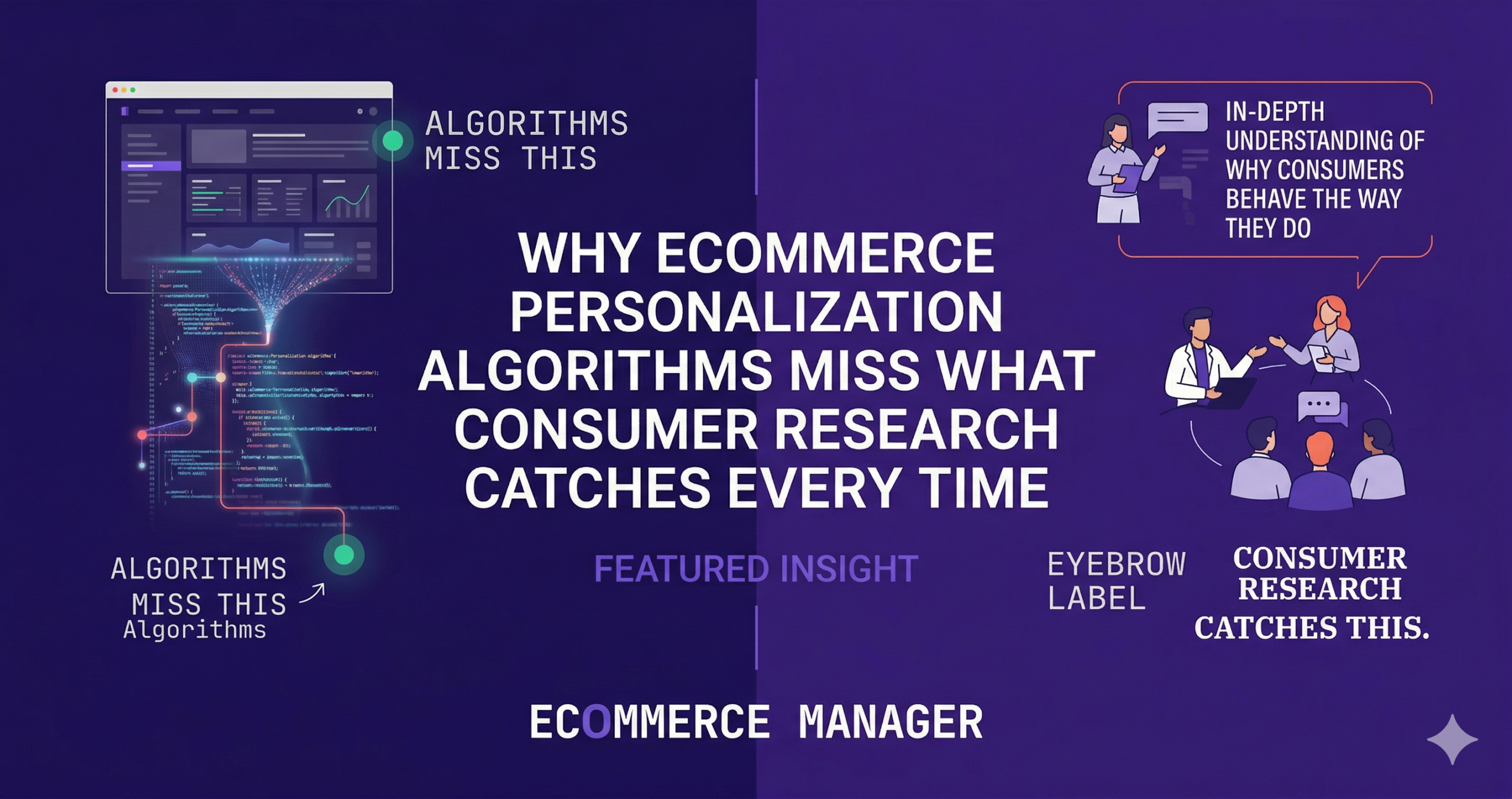
Why eCommerce Personalization Algorithms Miss What Consumer Research Catches Every Time
The eCommerce industry has placed enormous faith in artificial intelligence and machine learning algorithms to deliver personalized shopping experiences. Major retailers invest millions in sophisticated recommendation engines, behavioral tracking systems, and predictive analytics platforms. Yet despite these technological marvels, a significant gap remains between what algorithms predict consumers want and what they actually purchase.

Having spent over a decade in the market research industry through my work at Union Street Enterprises, where I developed consumer services like LevelSurveys.com and FocusGroupPlacement.com, I’ve witnessed firsthand how traditional consumer research consistently uncovers insights that even the most advanced eCommerce algorithms fail to detect. The reason isn’t a lack of computational power—it’s a fundamental misunderstanding of human psychology and decision-making processes.
The Algorithm Advantage: Speed and Scale
Before exploring where personalization algorithms fall short, it’s important to acknowledge their strengths. Modern eCommerce platforms can process vast amounts of data in real-time, analyzing browsing patterns, purchase history, seasonal trends, and cross-customer similarities to generate recommendations instantly. This technological capability has undoubtedly improved the online shopping experience for millions of consumers.
Algorithms excel at identifying obvious patterns: customers who buy running shoes often purchase athletic apparel, or shoppers who browse electronics frequently respond to tech-related promotions. These surface-level correlations can drive incremental sales and improve conversion rates for straightforward purchasing decisions.
However, the limitations become apparent when we examine the complexity of actual consumer behavior. Through my experience connecting consumers with market research opportunities, I’ve observed how people’s stated preferences, emotional drivers, and contextual factors often contradict their digital footprints.
The Human Factor: What Algorithms Miss
Emotional Context and Life Circumstances

Consumer research reveals that purchasing decisions are deeply influenced by emotional states and life circumstances that algorithms simply cannot detect. A mother browsing expensive children’s toys might not be planning a purchase—she could be researching for a future birthday months away, or even dealing with guilt about working long hours. An algorithm interprets this browsing behavior as purchase intent and serves relentless toy advertisements, potentially creating frustration rather than conversions.
In focus groups conducted through platforms like FocusGroupPlacement.com, participants regularly share stories about how their online behavior was misinterpreted by recommendation systems. One memorable example involved a participant who received months of luxury vacation recommendations after researching destinations for a novel she was writing. The algorithm couldn’t distinguish between research intent and purchase intent.
Cultural and Social Nuances
Traditional consumer research excels at uncovering cultural and social factors that influence purchasing decisions. Algorithms may identify that certain demographics prefer specific product categories, but they miss the subtle cultural reasons behind these preferences.
For instance, during market research sessions, we’ve discovered that some consumers avoid certain brands not because of product quality or price, but due to complex social signaling concerns or cultural associations that would never appear in transaction data. A consumer might consistently browse premium brands but purchase mid-tier alternatives due to social anxiety about appearing ostentatious—behavior that confounds algorithmic predictions.
The Research Advantage: Asking the Right Questions
Consumer research’s greatest strength lies in its ability to ask “why” rather than just observing “what.” Through surveys, focus groups, and in-depth interviews, researchers can explore the reasoning behind consumer choices, uncovering motivations that behavioral data alone cannot reveal.
Where Personalization Falls Short
Over-Reliance on Past Behavior
Most personalization algorithms assume that past behavior predicts future preferences. However, consumer research consistently shows that people’s tastes, circumstances, and priorities evolve continuously. A consumer who purchased baby products two years ago may still receive infant-related recommendations, despite their child having outgrown those needs entirely.
This backward-looking approach misses critical life transitions, evolving interests, and changing financial circumstances that market research can easily identify through direct inquiry. In surveys conducted through our platforms, consumers frequently report frustration with recommendations that feel outdated or irrelevant to their current situation.
The Echo Chamber Effect

Algorithmic personalization can create echo chambers that limit consumer exposure to new products or categories. If a customer primarily purchases books, the algorithm doubles down on book recommendations, potentially missing opportunities to introduce complementary products like reading accessories, home organization solutions, or educational materials.
Consumer research, particularly focus groups, reveals that shoppers often discover their most valued purchases through unexpected recommendations or serendipitous browsing—experiences that narrow algorithmic focusing can eliminate.
Inability to Capture Intent vs. Behavior
Perhaps the most significant limitation of personalization algorithms is their inability to distinguish between browsing intent and purchase intent. Consumers browse for numerous reasons: entertainment, research, comparison shopping, gift planning, or simple curiosity. Algorithms interpret all engagement as positive signals, leading to irrelevant targeting.
Through market research, we learn that consumers often browse expensive items as “aspiration shopping” or research products they have no intention of buying. This behavioral nuance, easily captured through surveys or interviews, remains invisible to algorithmic analysis.
The Research Solution: Bridging the Gap
Direct Consumer Feedback Integration
Forward-thinking eCommerce companies are beginning to integrate consumer research methodologies into their personalization strategies. Rather than relying solely on behavioral inference, they’re asking customers directly about their preferences, circumstances, and shopping goals.
Simple post-purchase surveys can reveal whether a recommendation was helpful, whether it reflected the customer’s actual interests, and what factors drove their decision-making process. This feedback loop provides the qualitative context that pure behavioral data lacks.
Segmentation Beyond Demographics
Traditional market research enables sophisticated segmentation based on psychographic factors, lifestyle preferences, and value systems—dimensions that demographic and behavioral data alone cannot capture. A luxury goods company might discover through research that their high-value customers are motivated more by craftsmanship than status, leading to entirely different messaging strategies.
Seasonal and Contextual Research
Consumer research can identify seasonal patterns and contextual factors that may not be apparent in historical data. Understanding that consumers’ willingness to try new products increases during specific times of year, or that certain life events trigger category exploration, enables more sophisticated personalization strategies.
Practical Integration Strategies
Hybrid Approaches
The most effective personalization strategies combine algorithmic efficiency with research-driven insights. Algorithms can handle the heavy lifting of real-time recommendation generation, while periodic consumer research provides course corrections and deeper understanding of segment preferences.
Companies can use research findings to train their algorithms better, incorporating qualitative insights about why certain recommendations succeed or fail. This hybrid approach leverages the speed of automation with the depth of human understanding.
Micro-Segmentation Through Research
Rather than broad demographic targeting, consumer research enables micro-segmentation based on specific needs, preferences, and circumstances. These segments can then inform algorithmic rules, creating more nuanced personalization strategies.
For example, research might reveal that first-time parents have distinctly different purchasing patterns than experienced parents, even within the same demographic categories. This insight can guide algorithm development to recognize and respond to these subtle but significant differences.
The Future of Informed Personalization
As eCommerce continues to evolve, the most successful companies will be those that recognize the complementary nature of algorithmic capability and consumer research insights. Technology provides the infrastructure for personalization at scale, while research provides the human understanding necessary for meaningful relevance.
The goal isn’t to replace algorithms with research, but to inform algorithmic development with deeper consumer understanding. By regularly conducting surveys, focus groups, and in-depth interviews, eCommerce companies can ensure their personalization efforts remain aligned with actual consumer needs and preferences.
Building Research into the Development Cycle
Successful integration requires making consumer research a regular part of the personalization development process. This means conducting research before algorithm development to understand consumer needs, during development to test assumptions, and after implementation to measure effectiveness and identify improvement opportunities.
Companies should also consider establishing ongoing research relationships with their customer base, creating panels of engaged consumers willing to provide regular feedback on personalization effectiveness and preferences.
Conclusion: The Human-Centered Approach
The future of eCommerce personalization lies not in choosing between algorithms and research, but in combining their respective strengths. While algorithms provide the computational power necessary for real-time personalization at scale, consumer research provides the human insights necessary for true relevance and emotional connection.
As someone who has spent years connecting consumers with research opportunities and observing the gap between stated preferences and online behavior, I believe the companies that invest in understanding the “why” behind consumer choices will create the most effective personalization strategies. The consumers who participate in our research platforms consistently demonstrate that their motivations, preferences, and decision-making processes are far more complex than any algorithm can infer from behavioral data alone.
The most successful eCommerce personalization strategies of the future will be those that use technology to deliver human insights at scale, creating experiences that feel genuinely personal rather than merely algorithmic. This approach requires ongoing investment in consumer research, but the payoff—in terms of customer satisfaction, conversion rates, and long-term loyalty—far exceeds the cost.
The State of eCommerce in 2026
Marketing Calendar: A Complete Guide
About the Author: Scott Brown is the founder of MintWit.com and a product innovation expert based in New York City. As Product Owner at Union Street Enterprises, he developed consumer services including LevelSurveys.com, MakeSurveyMoney.com, RealSurveysThatPay.com, and FocusGroupPlacement.com. He previously founded resume distribution services ResumeDirector and ResumeArrow, which were sold to LiveCareer in 2011. His experience spans over a decade in connecting consumers with market research opportunities and developing consumer-focused digital services.