

Last Updated on June 7, 2026
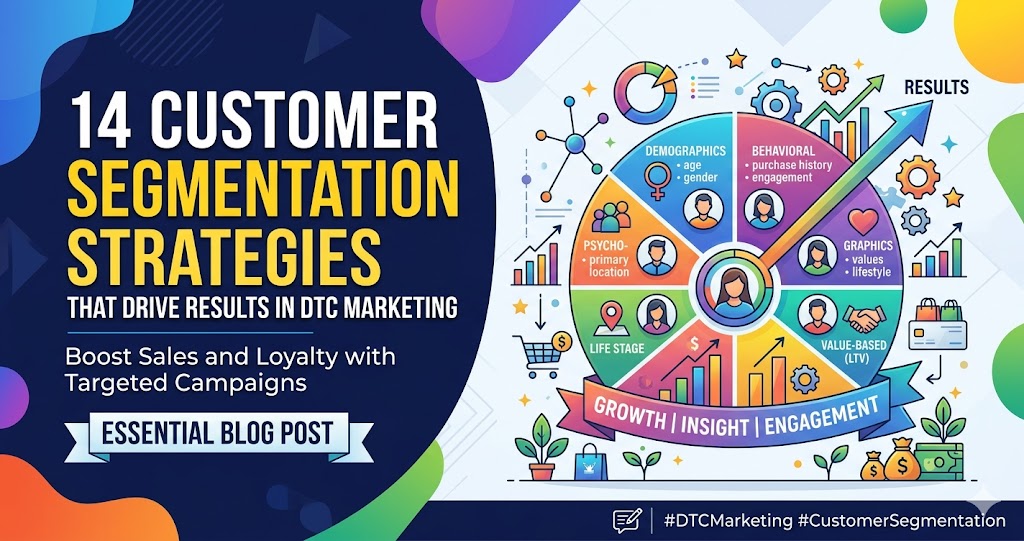
14 Customer Segmentation Strategies That Drive Results in DTC Marketing
Customer segmentation can make or break a direct-to-consumer marketing strategy, yet many brands still rely on basic demographic splits that leave money on the table. This article brings together proven tactics from marketing experts who have successfully segmented audiences to boost conversion rates and customer lifetime value. From behavioral triggers to AI-powered pricing models, these 14 strategies offer practical frameworks that DTC brands can implement immediately.
- Group by Job to Be Done
- Combine Motivation and Worth for Actionable Cohorts
- Use RFM for Dynamic Buyer Groups
- Map Paths to Project Urgency and Timeframes
- Align Copy to Core Emotional Drivers
- Schedule Offers to Purchase Frequency and Seasonality
- Match Messages to Wedding Lead Time
- Cluster Customers by Preferred Design Aesthetics
- Start with Industry and Company Size
- Compare Content Sourced and Paid Channels
- Leverage AI Insights for Price Sensitivity
- Prioritize Intent at First Touch
- Track Wallet Pass Actions for Journey Stage
- Split New and Repeat Visitors with Deals
Group by Job to Be Done
We segment first by “job to be done,” then layer in behavior. In practice, the most impactful strategy for our DTC work has been building cohorts around the primary goal a customer is trying to solve (for example: ongoing maintenance vs. acute flare-up support) and validating that goal using early behavioral signals like what they read, what they add to cart, subscription vs. one-time intent, and whether they return within a short window to consume more education. That approach tends to be more stable than demographics and it maps directly to messaging, product education, and the cadence of follow-ups.
Based on our internal testing, the lift usually comes from aligning the first 2-3 touchpoints to the cohort: maintenance customers want clarity and routine-building, while flare-up customers need fast reassurance, tight FAQs, and confidence around what to expect. We keep the segments small enough to act on (a few cohorts, not dozens), and we re-check them over time so we’re not overfitting to a single campaign or season.

Combine Motivation and Worth for Actionable Cohorts
I start with behaviour, not demographics. Age and location are easy to slice, but in DTC they don’t tell me who’ll buy again, who’ll churn, or who’ll respond to a new offer.
One strategy that’s worked well for me is what I’d call “intent + value” segmentation. I build it from three simple signals: how many orders they’ve made, how recent the last order was, and what type of product they bought.
From that, I sort people into a few key groups: first-time triers, second-order at-risk, loyal high-value, loyal low-margin, and lapsed high-potential. The point is that each group has a different job in the business.
First-time triers need to get to their second order fast, because I’ve seen brands where lifetime value jumps a lot once someone buys twice. Second-order at-risk customers need proof and guidance so they don’t stall (how to use the product, fit, social proof, easy returns). Loyal high-value customers respond better to early access and recognition than to more discounts. Lapsed high-potential buyers need a clear reason to come back, often tied to a new range or a fix to a past pain point.
In practice, I set these segments up in the CRM or email platform with rules like “last order <60 days and orders = 1”, “average order value in top 20%”, or “bought from X category”. Then I match the message and offer to the job of that segment instead of blasting the same campaign to the whole list.
I’ve seen lapsed high-potential winback flows get around 10-20% of those customers buying again when the emails call out the exact product they bought, show how it works with new items, and speak to their original reason for buying, rather than just sending a blanket “here’s 10% off” email.

Use RFM for Dynamic Buyer Groups
I use a strategy called RFM analysis to categorise my customers and boost our sales. In my DTC business, I don’t just group people by where they live or how old they are. In place of that, I pull data from my shop to see what they actually do. I try to look at when they last bought something, how often they shop, and how much they spend. This helps me in creating dynamic groups that shift as my customers change.
I divide my customers into three simple categories to decide what emails to send them. In the first category, I tag people who bought something in the last 30 days and send them “upsell” emails with products that go well with their recent purchase. In the second category, I keep people who shop with me often and get special loyalty perks to keep them coming back. The third category includes my biggest spenders who get “VIP” treatment, like early access to new products. By using these groups, my emails feel personalised, like they’re made just for them. For example, when I sent an exclusive product “drop” to my VIP group, I saw a 35% jump in repeat buys. Overall, this strategy boosted my revenue by 25%.

Map Paths to Project Urgency and Timeframes
We segment by project timeline using behavioral signals across sessions. Cart saves plus quote requests indicate planned installs. Repeated part lookups show urgent repair missions. We label these as Replace Soon or Fix Now journeys. Replace Soon receives financing education and efficiency calculators. Fix Now receives fast compatibility checks and expedited shipping prompts. We reinforce messages with bilingual support invites and simple videos. The result is fewer abandoned carts and cleaner lead qualification. Our emails mirror the same timeline language for consistency. Paid search also shifts bids based on timeline segment performance. This approach turns confusion into progress without adding friction.
We also segment by installer involvement using shipping address patterns. Multiple deliveries to one contractor hub trigger trade ready content.

Align Copy to Core Emotional Drivers
I think the most powerful segmentation strategy is emotional. Demographics and behavioural data tell us who and what. Emotional drivers tell us why.
When we segment by the feeling customers are trying to achieve, we can further understand what is driving the purchase or interest. For example, are they seeking confidence, control, belonging, relief?
Segmenting by emotional motivation and then layering that insight onto transactional and journey data, often surfaces new patterns that can be translated into more relevant messaging to build stronger emotional connections to our brands. Aligning human drivers with behavioural data can positively impact conversion, retention and efficient revenue growth.

Schedule Offers to Purchase Frequency and Seasonality
At Marygrove Awnings our sales were flat for months. We tried reaching everyone with broad ads, but nothing worked. The turning point was grouping customers by purchase frequency and seasonality. Suddenly we weren’t just selling to people, we were talking to them right when they were ready to buy. Stop focusing just on who your customers are and look at when they buy. That was the key for us.

Match Messages to Wedding Lead Time
We started grouping our customers by how far out their wedding is, and it’s made a big difference. People who book a year in advance love seeing design ideas. The ones shopping a month before just want to know how fast we can deliver. It turns out that matching your message to their timeline actually works.

Cluster Customers by Preferred Design Aesthetics
At Aura Modern Home, I found a trick. Instead of looking at broad categories, I group customers by the design styles they actually like. People who love deep woods and velvet go crazy for our moody Japandi stuff. We started sending them more of that and suddenly, our new collections got way more attention. If you aren’t grouping customers by their design interests yet, you should give it a try. It works much better.

Start with Industry and Company Size
Segmenting classified ads by industry and business size was a huge win. We started showing specific ads to local service businesses, like plumbers, and our platform registrations went up. Now we see fewer junk listings and our conversion rates are better. My advice is to start simple with data you already have, like industry or size, before adding anything more complex.

Compare Content Sourced and Paid Channels
I segment customers by acquisition source, separating those who found us through educational content from those acquired via paid advertising. One impactful strategy was creating and tracking a content-sourced segment made up of people who engaged with our articles, talks, and published materials on financial security. By asking new clients during intake where they heard about us and monitoring their tenure and referral behavior, we observed that the content-sourced customers stayed longer and referred more peers than paid-ad customers. We then used those retention and acquisition-cost comparisons to prioritize educational outreach and tailor onboarding to reinforce trust with that segment.

Leverage AI Insights for Price Sensitivity
I approach DTC customer segmentation with a data-first focus on purchase behavior and lifetime value signals. One impactful strategy was segmenting customers by price sensitivity and realized value using AI to analyze historical invoices, conversion rates, churn, deal size, and upsell behavior. That analysis revealed a group that favored lower-priced offerings but delivered high value and low support costs. We used those insights to make targeted pricing adjustments rather than broad price changes, which led to more rational, fact-based decisions.

Prioritize Intent at First Touch
In DTC, I don’t start segmentation with demographics. I start with intent at the moment of first interaction.
One strategy that’s been consistently impactful is segmenting customers based on why they arrived, not who they are.
We separate first-touch users by entry point: problem-aware searches, comparison searches, and brand-aware visits. Each group gets a different message, even if they land on the same product.
Problem-aware users need reassurance and education. Comparison users want proof, specifics, and differentiation. Brand-aware users want speed and clarity.
Treating them the same kills conversion.
This works because DTC buying decisions are emotional first, rational second. Intent tells you what emotion is driving the click.
Once you align messaging with that mindset, everything improves CTR, conversion rate, even retention.
The mistake I see is over-segmentation too early. One clean, intent-based split beats ten shallow personas every time.

Track Wallet Pass Actions for Journey Stage
We provide the tools for D2C marketing segmentation. We do this using wallet passes, which at first glance don’t appear to help you segment your audience. Interestingly, when you combine a wallet pass (or digital loyalty card, as they’re often referred to) with notifications which can be sent from the digital wallet on both Google and Apple wallets, and rewards based on actions such as clicking through to a YouTube video, listening to a podcast, visiting the web store, or, in fact, any action, this allows you to see the engagement of a particular customer or prospective customer.
The key difference here from other direct-to-consumer segmentation approaches is that we collect data on actions, not just purchases. This provides a clear picture of the stage the user is at in the customer journey and how that customer is retained. Our platform, PushPass from FanCircles.com, allows for this.

Split New and Repeat Visitors with Deals
Here’s something that works for my clients at 12 Steps Marketing. I split their audience into two simple groups, people visiting for the first time and people coming back. Giving each group a different offer almost always leads to more sales. You just have to watch your traffic data and change what you’re showing people based on whether they’ve been there before.

Related Articles
- Building Customer Loyalty through DTC Marketing: Approaches & Examples
- DTC Marketing: Campaigns That Resonate With Your Audience
- Measuring DTC Marketing ROI: Key Metrics & Strategies